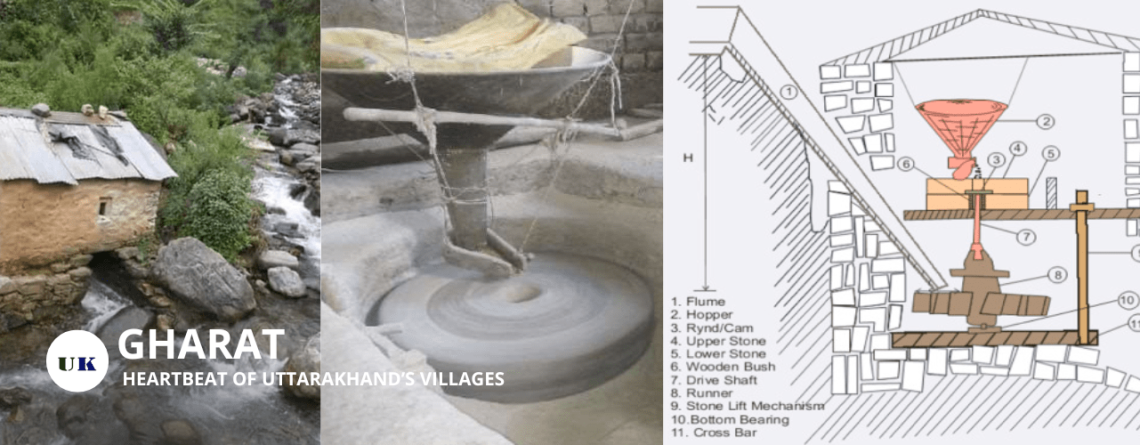
Gharat
Traditional Water-Powered Mill of Garhwal and Kumaon, Uttarakhand
Gharat, an integral part of Uttarakhand’s rural and traditional lifestyle, is a unique device that serves as both a practical tool for grinding grains and a symbol of harmony with nature. In the mountainous regions where electricity and modern facilities are limited, the gharat has sustained self-reliance and livelihood for centuries.
What is a Gharat?
A gharat is a traditional water-powered mill primarily used for grinding grains. It is typically built near streams, rivers, or waterfalls in the hilly regions of Uttarakhand. By harnessing the energy of flowing water, it operates without relying on any external energy source. This technique exemplifies a profound respect for nature and sustainable living.
Structure and Working of a Gharat
The gharat has a simple yet efficient design, comprising several key components that work in perfect coordination:
- Water Flow:
The gharat uses the flow of rivers or streams. Water is channeled through wooden or stone pipes to drive the mill. This flowing water powers the wheel of the gharat. - Water Wheel (Pannduki):
The water wheel, made of wood, is the core component. It is designed to rotate with the force of the water, transferring motion to the millstones. - Grinding Stones:
The gharat has two circular stones. The lower stone remains stationary, while the upper stone rotates, grinding the grains placed between them. - Wooden Framework:
A strong wooden structure supports and connects the wheel and the stones, ensuring the mill functions smoothly.
Uses of Gharat
The gharat is primarily used for grinding grains such as wheat, maize, barley, and finger millet (mandua). In many villages, it is a communal resource, where villagers take turns using it. The flour produced by a gharat is considered more nutritious and flavorful than commercially processed flour.
Features of Gharat
Environmentally Friendly:
The gharat operates entirely on hydropower, eliminating the need for fuel or electricity and causing zero pollution.
Health Benefits:
The slow grinding process of a gharat preserves the nutrients and natural flavor of grains, making it a healthier alternative to modern mills.
A Symbol of Self-Reliance:
It fosters self-sufficiency among villagers, reducing dependency on external resources.
Cultural Heritage:
The gharat represents the rich cultural heritage of the hills and a way of life that is in harmony with nature.
Cultural Significance of Gharat
The gharat is more than just a mill; it is an integral part of Uttarakhand’s cultural and social fabric. In earlier times, it served as a hub of economic and social activity in villages. Special occasions like weddings and festivals often involved grinding grains at the gharat.
Current Status of Gharat
With the advent of technology and electric-powered equipment, the use of gharats has gradually declined. However, in certain remote areas of Uttarakhand, they are still in use. Efforts are being made to preserve gharats as part of the region’s environmental and cultural heritage. Additionally, they are being promoted as tourist attractions, showcasing their unique role in sustainable living.
The Future of Gharat
To ensure the survival of gharats, local authorities and environmentalists must work together. Gharats should not only be preserved as cultural artifacts but also be presented as symbols of sustainable development and ecological balance.
Gharat is a living example of Uttarakhand’s traditional ingenuity, environmental respect, and cultural richness. It teaches us how natural resources can be utilized in a balanced and sustainable manner. Preserving gharats is our responsibility, so future generations can draw inspiration from this remarkable heritage and learn the art of living in harmony with nature.
Gharat, the traditional water-powered mill of Uttarakhand, holds a special place in the cultural and rural life of the Garhwal and Kumaon regions. Here are some frequently asked questions to help you understand its purpose, functioning, and significance.
- What is a Gharat?
A Gharat is a traditional water-powered mill used in the hilly regions of Uttarakhand, specifically in Garhwal and Kumaon, to grind grains like wheat, maize, and millet. - How does a Gharat work?
It uses the energy of flowing water from streams or rivers to rotate a wooden water wheel (pannduki). This motion drives millstones that grind the grains. - Where are Gharats commonly found?
Gharats are commonly found in the mountainous regions of Garhwal and Kumaon in Uttarakhand, near streams, waterfalls, or rivers. - What grains can be processed in a Gharat?
Gharats are used to grind a variety of grains, including wheat, maize, barley, mandua (finger millet), and other local crops. - Why is Gharat considered eco-friendly?
Gharat relies entirely on water power, requiring no electricity or fuel, making it a sustainable and environmentally friendly technology. - Is Gharat still in use today?
Yes, while modern mills have replaced many gharats, they are still used in some remote areas of Uttarakhand and are being preserved as part of the region’s cultural heritage. - What makes Gharat flour special?
Flour from a Gharat is ground slowly, which retains its natural nutrients and flavor, making it healthier compared to flour processed in modern mills. - What is the cultural significance of Gharat?
Gharat is a symbol of self-reliance and sustainability in the Garhwal and Kumaon regions. It has been an integral part of rural life, representing harmony with nature. - Are Gharats used for anything other than grinding grains?
Traditionally, Gharats were used only for milling grains, but some are now being adapted for small-scale hydroelectric power generation. - How can Gharats be preserved?
Preservation efforts include promoting their cultural and environmental value, incorporating them into tourism, and educating communities about their sustainable benefits.
Gharat is not just a tool for grinding grains; it is a testament to the sustainable practices and rich cultural heritage of Uttarakhand’s Garhwal and Kumaon regions. This eco-friendly marvel reflects the wisdom of traditional living, showcasing a harmonious relationship with nature. As modern technology takes over, efforts to preserve and promote gharats are essential to keep this unique legacy alive for future generations.