Badrinath Temple Story
The Story of Badrinath Temple: Origin, Legends, and Significance
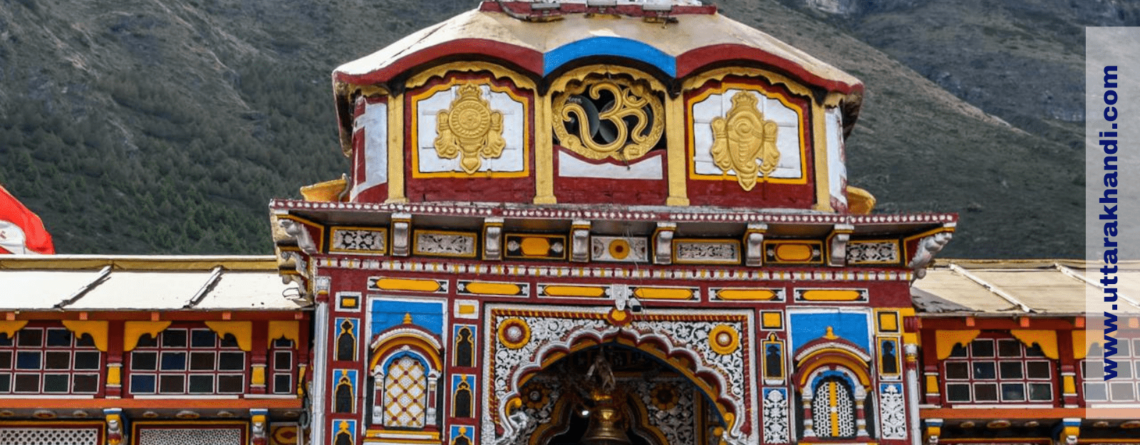
Badrinath, or Badrinarayana Temple, is a prominent Hindu temple located in the Chamoli district of the Indian state of Uttarakhand, situated on the banks of the Alaknanda River. Dedicated to the Hindu deity Vishnu, this temple is one of the Char Dhams, which are considered among the holiest sites in Hinduism. The temple is an ancient one, with evidence suggesting its construction dates back to the 7th to 9th centuries. The town surrounding the temple is also named Badrinath.
Badrinath Name: The Badrinath region in the Himalayas has been known by various names throughout different ages. In the Skanda Purana, the area is referred to as “Mukti-prada,” indicating that this was the name of the region during the Satya Yuga. In the Treta Yuga, the area associated with Lord Narayana was known as “Yog-Siddha,” and later, during the Dvapara Yuga, due to the direct vision of the Lord, it was called “Mani-Bhadra Ashram” or “Vishala Tirtha.” In the current Kali Yuga, this sacred place is known as “Badri-Kashram” or “Badrinath.” The name “Badrinath” is derived from the abundance of Badri (berry) trees in the area. Edwin T. Atkinson mentions in his book, “The Himalayan Gazetteer,” that dense Badri forests were once present here, though no trace of them remains today.
The Story of Badrinath
The story of Badrinath is set in the beautiful and mysterious landscape of the Himalayas. According to the legend, one day Lord Vishnu realized that he was not setting a good example for humanity. He was always reclining on the serpent king Shesha, and his wife Lakshmi was constantly in service to him. Sage Narada told Vishnu, “You are not setting a good example for the creatures of creation. You should undertake some meaningful work for the benefit of all beings.”
To escape this criticism and for his own elevation (even gods have to do this), Vishnu began his quest to find an ideal place for meditation and penance. He traveled to the Himalayas and discovered a small, suitable residence that seemed perfect for his practice. This place was Badrinath, which matched his expectations of an ideal location.
The Story of Shiva and Parvati:
Upon reaching Badrinath, Vishnu entered a house and found that it was actually the residence of Shiva, a figure known for his formidable nature. Vishnu thought that if Shiva got angry, the situation could become severe. So, Vishnu transformed himself into a small child and sat outside Shiva’s residence.
When Shiva and Parvati returned home, they saw a small child crying loudly. Parvati’s maternal instincts were stirred, and she wanted to pick up the child. Shiva stopped her, saying, “Do not touch this child. He is not an ordinary child. There are no signs of parents around, and there are no footprints in the snow. This child is not real.”
Parvati ignored Shiva’s words and said, “How cruel you are! A mother cannot bear to see a child crying like this.” She took the child inside the house. The child was content in Parvati’s lap and looked happily at Shiva. Shiva knew the outcome but decided to do nothing and said, “Alright, let’s see what happens.”
The Outcome:
Parvati fed and comforted the child and left him in the house while she and Shiva went to bathe in a nearby hot spring. When they returned, they found that the house was locked from the inside. Parvati was puzzled and asked, “Who locked the door?” Shiva replied, “I told you not to bring the child inside. Now he has locked the door.”
Parvati, worried, asked, “What should we do now?” Shiva had two options: one was to destroy everything before them and the other was to leave and find another place. He said, “Let’s go somewhere else because this child is dear to you, and I cannot touch him.”
Thus, Shiva and Parvati lost their home and became ‘illegal immigrants’ in a way. They wandered in search of a suitable place and eventually settled in Kedarnath. This story conveys that even gods face unexpected situations and must be prepared to confront new challenges.
The Story of Badrinath From Vishnu Purana
According to another legend from the Vishnu Purana, two sons of Dharma, Nar and Narayan, undertook a long period of penance in this sacred region to expand Dharma. In search of an ideal location to establish their ashram, they visited four places named Vridha Badri, Yog Badri, Dhyan Badri, and Bhavish Badri. Eventually, they discovered a hot and a cold spring behind the Alaknanda River and named the area Badri Vishal.
It is also believed that Maharishi Vyasa composed the Mahabharata at this location. Additionally, it is thought that Nar and Narayan were reborn as Arjuna and Krishna, respectively. Another belief from the Mahabharata era holds that the Pandavas performed the Pind Daan (offering for the souls of ancestors) at this place. As a result, pilgrims still perform Pind Daan in the Brahmakapal area of Badrinath to ensure the peace of their ancestors’ souls.
The Story of the Origin of Badrinath Temple
Several opinions exist regarding the origin of the Badrinath Temple. According to some sources, the temple was originally a Buddhist monastery up until the 8th century, which was converted into a Hindu temple by Adi Shankaracharya. The architectural style of the temple, which resembles that of a Buddhist vihara (monastery) and its ornate façade, is cited as a major reason for this theory. Other sources suggest that Adi Shankaracharya established the temple as a pilgrimage site in the 9th century. There is also a belief that Shankaracharya resided in this area for six years (814 to 820 AD), spending six months in Badrinath and the rest of the year in Kedarnath. Hindu followers claim that the deity’s idol in Badrinath was originally placed by the gods. When the Buddhists were defeated, the idol was discarded into the Alaknanda River. Shankaracharya is said to have recovered this idol from the river and installed it in a cave near the hot spring known as Tapta Kund. Later, the idol was moved again and was reinstalled by Ramanujacharya. According to a traditional story, Shankaracharya expelled all Buddhists from the region with the help of the Paramar king, Kanak Pal. Subsequently, Kanakpal and his successors managed the temple’s administration. The Garhwal kings established a group of villages (goonth) to cover the expenses of temple management. Additionally, several villages were settled along the approach to the temple, with the revenue used to provide for pilgrims’ food and lodging.
Over time, the Paramar rulers adopted the name “Boland Badrinath,” meaning “Speaking Badrinath,” and another title, “Sri 108 Badriśchārāyaparāyaṇa Garhraj Mahimahendra, Dharmavaibhava, Dharmarakṣa Śiromani.” By this time, the Garhwal throne was referred to as the “Badrinath Gaddi,” and pilgrims would offer their respects to the king before entering the temple. This practice continued until the late 19th century. In the 16th century, the then king of Garhwal moved the Badrinath idol from the cave to the present temple. After the temple was completed, Queen Ahilyabai of Indore installed a golden canopy (kalash) there. In the 20th century, when Garhwal was divided into two parts, the Badrinath Temple came under British rule, although the king of Garhwal continued to be the head of the temple management committee.
The Story of the Origin of Badrinath Lord Vishnu
When Lord Vishnu was deep in meditation in the yogic posture, heavy snowfall began, burying him completely. Moved by this, Goddess Lakshmi transformed herself into a Badri tree to shield Vishnu from the harsh conditions. After many years, when Vishnu completed his penance and saw Lakshmi covered in snow, he declared, “O Goddess! You have endured the same penance for me. From now on, you shall be worshipped with me at this holy place, and since you protected me in the form of the Badri tree, I will be known as Badrinath, the Lord of Badri.”
Geographical Location: The Badrinath Temple is located at an altitude of 3,133 meters (10,279 feet) above sea level, nestled among the high peaks of the Himalayas in the Garhwal region. Due to the harsh climatic conditions of the Himalayan region during the winter months, the temple remains open only for a limited period of six months each year (from late April to early November). It is one of the busiest pilgrimage sites in India, with approximately 1.06 million pilgrims visiting in 2012.
Worship and Deity: At the Badrinath Temple, Vishnu is worshipped in the form of “Badrinarayana.” The temple houses a 1-meter (3.3-foot) tall idol made from Shaligram, which is believed to have been installed by Adi Shankaracharya in the 8th century after extracting it from the nearby Narad Kund. This idol is considered one of Vishnu’s eight self-manifested forms (Svayambhu Murti).
Priest Appointment and Management: Although the temple is located in northern India, the chief priests, known as “Rawal,” are Brahmins from the Nambudiri tradition of Kerala in southern India. The temple was included under the Uttar Pradesh Government Act – 30/1948 and later came to be known as the “Sri Badrinath and Sri Kedarnath Temple Act.” Currently, a seventeen-member committee appointed by the Uttarakhand government administers both the Badrinath and Kedarnath temples.
Literary References and Significance: The temple is mentioned in several ancient texts, including the Vishnu Purana, Mahabharata, and Skanda Purana. Its glory is also described in the 8th-century Nalayira Divya Prabandham, composed by the Alvar saints. The town of Badrinath, where the temple is situated, is considered one of the smaller Char Dhams in addition to the main Char Dhams and is also one of the 108 divine abodes dedicated to Vishnu.
Panch-Badri: The Badrinath Temple is also known as Badri-Vishal. It is associated with four other nearby temples dedicated to Vishnu: Yogadhyan Badri, Bhavishya Badri, Vridha Badri, and Adi Badri. Collectively, these temples are referred to as the “Panch-Badri.”