Rajamata Jiya Rani
The Warrior Queen and Justice Goddess of Uttarakhand
The land of Uttarakhand is not just known for its natural beauty and geographic diversity, but also for its rich heritage of valor, sacrifice, and deep-rooted cultural traditions. From the towering Himalayas to the sacred rivers, every corner of this region tells a story of bravery, devotion, and pride. Among the many legendary figures who have shaped the ethos of Uttarakhand, Rajamata Jiya Rani stands tall though lesser known in mainstream historical texts, she remains immortal in the hearts and songs of the people. Her legacy lives on not through monuments or inscriptions, but through folk tales, songs, and sacred gatherings. When someone chants “Jai Jiya,” they invoke not just the name of a goddess but the soul of a courageous woman who defied an empire to protect her dignity and her land. Rajamata Jiya Rani was not merely a queen; she was a symbol of justice, a protector of culture, and an embodiment of spiritual strength. This article delves into her remarkable life her origins, struggles, sacrifices, and cultural significance so that she may be restored to her rightful place in history.
Birth and Background
Rajamata Jiya Rani, originally named Maula Devi Pundir, was born in the region that today encompasses Haridwar, a historically significant area straddling the boundary of Garhwal and the plains. Her father, King Amar Dev Pundir, was a powerful regional ruler belonging to the ancient Pundir dynasty. Maula Devi received a robust education, not only in scriptures and languages but also in warfare, statecraft, and strategic thinking. Raised in her father’s court, she was trained in both intellectual and martial disciplines, making her exceptionally skilled and respected even in her youth.
Her marriage connected her to the prestigious Katyuri dynasty of Kumaon one of the oldest royal lineages in Uttarakhand. She became the second wife of King Pritamdev Katyuri, and was granted residence in a forested area now known as Ranibagh, near present-day Haldwani. There, she established a beautiful royal garden and resided in a cave near the Gaula River. This seemingly peaceful setting would later become the very ground of her resistance, sacrifice, and sanctity. Though her early life was filled with comfort and royalty, it was her unyielding courage during an invasion that immortalized her legacy.
Invasion and Resistance
The defining chapter of Rajamata Jiya Rani’s life was her confrontation with the brutal invasion of Timur the Lame (Tamerlane) in the late 14th and early 15th century. Timur’s armies were infamous for their cruelty, destruction, and mass slaughters. As his forces marched toward North India, the foothills of Uttarakhand, including regions near Haridwar and Kumaon, fell within their sight.
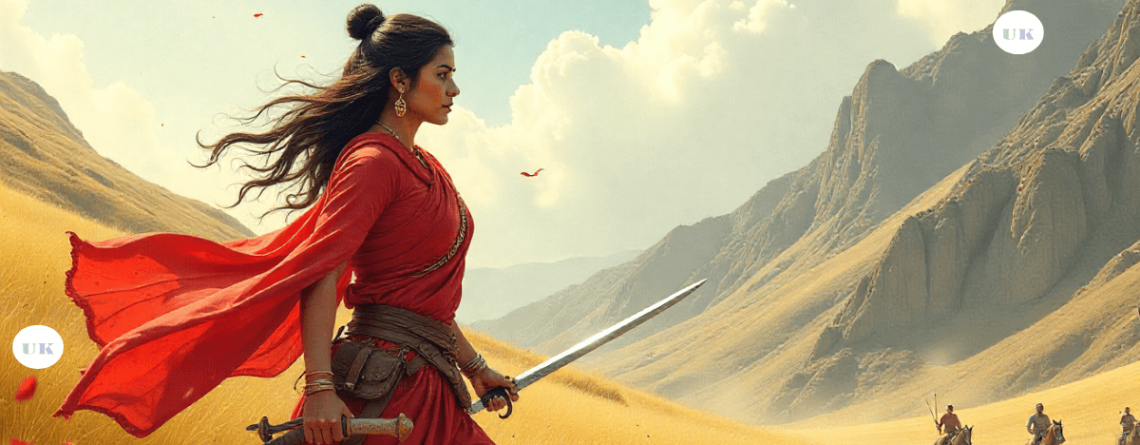
Upon learning of the impending danger, Rajamata Jiya Rani took immediate and decisive action. Lacking a formal army, she rose to the occasion by mobilizing local villagers, women, and youths into a militia. She personally trained them in combat, strategy, and defense. Her leadership was both inspirational and effective, infusing the people with a sense of purpose and courage. Despite limited resources and manpower, the resolve of her improvised force was unwavering.
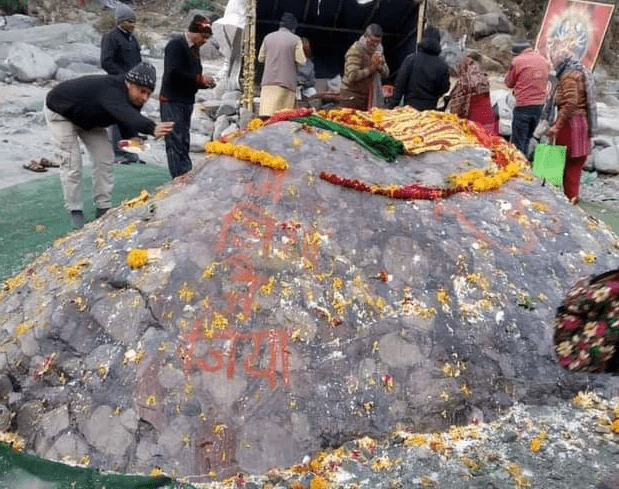
In the first wave of attack, her army successfully repelled Timur’s forces at the Gaula River. The locals still recall how they stood their ground and forced the attackers to retreat. However, a second wave followed soon larger, better equipped, and more brutal. This time, Timur’s army brought cavalry, advanced weaponry, and artillery. Despite the odds, Rajamata Jiya Rani refused to surrender. She fought valiantly, but when defeat seemed inevitable and her personal safety and dignity were at risk, she chose honor over capture. According to local legends, she entered a sacred cave and transformed into stone a divine act of self-sacrifice to preserve her chastity and spirit. Her flowing garment, left partly outside the cave, turned into a stone outcrop known today as “Jiya Rani’s Chitrashila” or “Ghaghra” (her skirt). This moment is not only remembered as a heroic act but as a supreme testament to female dignity and courage.
Folklore and the Jagar Tradition
The rich folklore of Uttarakhand preserves its history not only in books but through its vibrant oral traditions Jagars, folk songs, storytelling, and musical instruments like the Hudka and Dhol. The tale of Rajamata Jiya Rani has survived through such forms, especially through the powerful spiritual ritual known as the Jagar. This is a sacred performance where bards sing of deities, ancestors, and heroes to invoke their presence and seek their blessings.
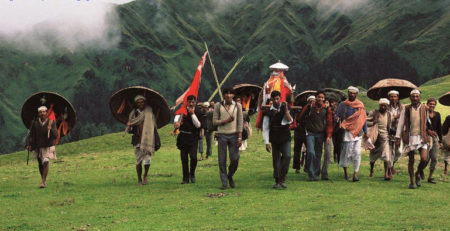
Every year during Makar Sankranti (called Uttarayani in the region), a grand fair is held in Ranibagh at the site of her cave and stone relic. This isn’t just a religious gathering – it’s a vibrant cultural revival. Thousands of devotees, especially descendants of the Katyuri lineage, visit in traditional attire to pay homage, chanting “Jai Jiya!” as they climb the sacred trail.
The Jagar night is emotionally charged and spiritually intense. Folk musicians use traditional instruments like Damua, Masakbeen, and Hudka to create a trance-inducing atmosphere, while singers recount her valor and sacrifice. It is believed that Rajamata Jiya Rani herself descends during this time, and occasionally women go into spiritual trance, channeling her energy and delivering divine insights or blessings.
The Jagar is more than a performance it’s a cultural reenactment, a spiritual connection, and an act of remembrance. At a time when modernity is causing a loss of traditional identity, the Jagar ensures that heroes like Rajamata Jiya Rani are never forgotten. Through these oral traditions, her story continues to inspire strength, unity, and feminine dignity across generations.
Cultural Significance
Rajamata Jiya Rani’s legacy is far more than a local legend – it’s a cornerstone of Uttarakhand’s feminine identity, spiritual justice, and cultural pride. In a society often challenged by migration, modernization, and cultural erosion, figures like Rajamata Jiya Rani serve as pillars of continuity and inner strength. Her story represents an era where women were not just confined to palaces but were also leaders, warriors, and guardians of tradition.
Her cave, now a pilgrimage site, is revered particularly by women, who visit to seek strength, protection, and justice. Though there is no grand temple, the sanctity of the place is deeply ingrained in the collective psyche of the people. Many believe that calling upon her in times of distress can bring courage and clarity. The place is considered spiritually potent, and her story is passed on from mothers to daughters like a sacred family heirloom.
Jiya Rani is also increasingly being acknowledged in folk theatre, regional literature, school curricula, and cultural festivals. Several women’s empowerment programs in Uttarakhand have invoked her name as a symbol of inner strength and resolve. Local artists paint murals of her, and girls are often named “Jiya” in her honor. In recent times, NGOs and cultural societies have begun advocating for more institutional recognition of her contributions -proposing statues, documentaries, and research publications in her name.
Her relevance today is immense. As women across India demand respect, safety, and equality, Jiya Rani stands as an indigenous role model a woman who led a resistance, preserved her self-respect, and became immortal in doing so. Culturally, she is not just a historical figure but a living deity, inspiring not just faith but fearless action and self-awareness. In a world searching for rooted icons of feminine courage, Rajamata Jiya Rani emerges not just as a queen of the past, but a goddess of the present.
Frequently Asked Questions (FAQs)
Who was Jiya Rani?
Rajamata Jiya Rani, originally named Maula Devi Pundir, was a queen from the Katyuri dynasty of Kumaon (in present-day Uttarakhand). She is revered as a brave warrior queen who resisted the invasion of Timur’s forces in the 14th-15th century. She is considered a symbol of feminine courage, justice, and self-sacrifice in Uttarakhand’s folk tradition.
What is the historical significance of Jiya Rani?
Though mainstream history has limited records of her, Rajamata Jiya Rani holds immense importance in regional folklore and oral traditions. She led local resistance against invading forces, inspired people through her leadership, and became a cultural icon of honor and valor. Her story embodies the spirit of Uttarakhand’s women warriors.
Where is Jiya Rani’s place of residence or memorial?
Rajamata Jiya Rani lived in Ranibagh, near present-day Haldwani, Uttarakhand. A sacred cave and a stone formation known as “Jiya Rani’s Chitrashila (painted rock)” or “Ghaghra (her skirt)” are located near the Gaula River. These sites are pilgrimage destinations, especially during the annual Makar Sankranti festival.
What is the Jagar of Jiya Rani?
The Jagar is a traditional folk ritual of Uttarakhand involving singing, music, and spiritual invocation. The Jagar of Jiya Rani is held every year during Makar Sankranti (Uttarayani) at Ranibagh, where thousands gather to celebrate her bravery and seek her blessings. It includes singing her heroic deeds accompanied by traditional instruments like Hudka, Damua, and Masakbeen.
How did Jiya Rani resist Timur’s invasion?
Rajamata Jiya Rani mobilized local villagers, women, and youth to form a militia when Timur’s army threatened the region. She personally trained and led them in battle. After initially repelling the attackers, when defeat became imminent, she chose to protect her honor by entering a sacred cave and sacrificing herself, according to local legends.
Why is Jiya Rani considered a symbol of women’s empowerment?
Rajamata Jiya Rani’s story is a powerful example of female leadership, courage, and sacrifice in a male-dominated era. She transcended traditional gender roles by organizing and leading a defense against invaders, and her commitment to honor even unto death serves as inspiration for women’s strength and dignity.
Is Jiya Rani officially recognized by government or historians?
While she is deeply revered in Uttarakhand’s folk culture and among local communities, official recognition in academic history or government memorials is limited. However, there is growing interest in promoting her legacy through cultural programs, education, and tourism initiatives.
When is the best time to visit Jiya Rani’s memorial or attend her festival?
The best time to visit is during Makar Sankranti (January) when the annual Jiya Rani Jagar festival and fair take place at Ranibagh. This event offers an immersive experience of local culture, music, and devotion.
How can one learn more about Jiya Rani?
You can explore Uttarakhand’s folk literature, attend local jagars, visit Ranibagh and the sacred cave, and study regional historical accounts. Several books, documentaries, and cultural organizations are also increasingly focusing on her story.
Are there any monuments or statues dedicated to Jiya Rani?
Currently, there are no large-scale monuments or statues dedicated to her like other famous Indian warrior queens. Most memorials are natural or folk heritage sites such as her cave and stone formations. There are ongoing efforts by cultural groups to raise awareness and erect memorials.
Rajamata Jiya Rani’s saga is a confluence of history, spirituality, and cultural memory. While historians may not have given her the pages she deserves, the people of Uttarakhand have made her immortal in their hearts. She represents an ideal of womanhood that is fierce, principled, and self-reliant. Her life teaches us that true courage is not just in wielding a sword, but in standing tall for one’s dignity and values even in the face of death. During a time when women had limited rights and little representation in leadership or warfare, Jiya Rani shattered all expectations. She not only organized resistance but personally led it, and when defeat loomed, she chose sacrifice over dishonor. That choice, though tragic, was also transformative – it elevated her from a queen to a symbol of justice and feminine divinity. Even today, her presence echoes in the hills and hearts of Kumaon. When women face injustice, they find strength in her story. When communities gather for her Jagar, they are not just preserving culture but reaffirming their identity and collective resilience. Her relics be it her cave, her stone garment, or her legend are sacred reminders of a time when a woman’s will challenged an empire. It is time now that her story finds a larger audience. As India celebrates women leaders and heroes, Jiya Rani should be rightfully included among the nation’s legendary warrior women alongside Rani Lakshmi Bai, Rani Durgavati, and Chand Bibi. Governments, institutions, and scholars must invest in preserving her story through museums, educational content, and cultural projects. Her life is not just a story of the past – it’s a blueprint for dignity, bravery, and unwavering self-respect. Ultimately, Jiya Rani is not merely a historical memory. She is a living symbol of courage and cultural integrity, a reminder that real queens don’t just rule from thrones-they reign through sacrifice, wisdom, and inner strength.