Famous fruits of Uttarakhand
Uttarakhand is known for its diverse and flavorful fruits, including apples, apricots, plums, litchis, and Hisalu. These fruits thrive in the state’s varied climate and terrain, contributing to its rich agricultural heritage. From sweet apples to tangy Burans, these fruits are an integral part of Uttarakhand’s culture and cuisine.
Uttarakhand’s diverse climate and topography make it a haven for a wide variety of fruits. From the cool hill stations to the fertile Terai plains, the region produces an array of fruits celebrated for their distinct taste, nutritional value, and cultural significance. Whether it’s the tangy Hisalu, the sweet apples of the hills, or the fragrant Burans flowers transformed into a refreshing drink, these fruits not only add to the local cuisine but also support the state’s economy. This article explores some of the most famous fruits of Uttarakhand, offering a glimpse into the region’s agricultural richness and natural beauty.
Kafal (Bay Berry) – Myrica esculenta
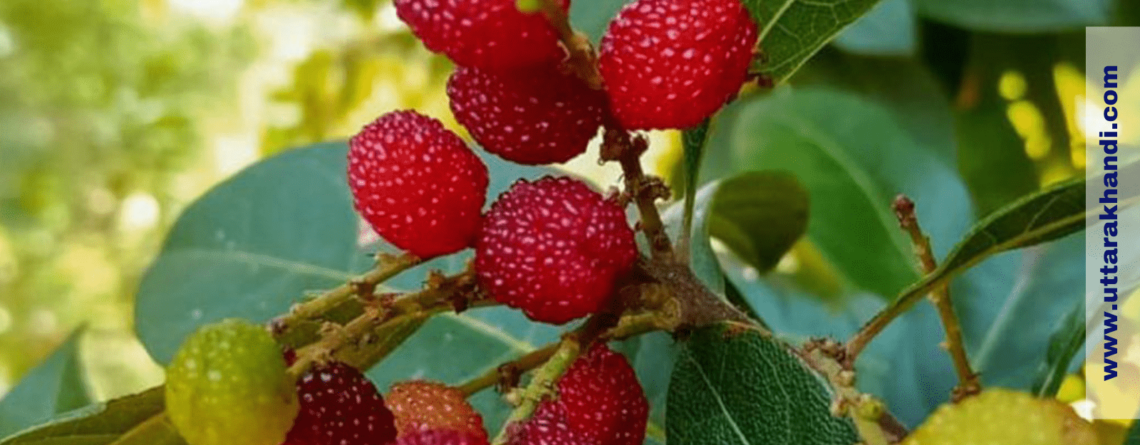
Kafal, also known as Bay Berry (Myrica esculenta), is a fruit native to the hilly regions of Uttarakhand. This small, round, and reddish fruit is known for its sweet and slightly tangy flavor. Kafal grows abundantly in the forests of Uttarakhand during the summer months, and its season is eagerly awaited by locals. Rich in antioxidants, Vitamin C, and other essential nutrients, Kafal is considered to have numerous health benefits, including boosting the immune system and aiding digestion. Traditionally, it is eaten fresh, but it is also preserved in jams and used in local dishes. The Kafal tree, which thrives in the mountainous terrain, has cultural significance in Uttarakhand and is closely tied to the region’s rural lifestyle. The fruit is also known to have medicinal properties, especially in treating ailments like fever and cold. The short harvesting period of Kafal adds to its uniqueness and desirability, making it a cherished fruit in the state.
Hisalu (Himalayan Raspberry) – Rubus ellipticus
Hisalu, also known as the Himalayan raspberry (Rubus ellipticus), thrives in the higher altitudes of Uttarakhand. The fruit is recognized for its rich nutritional content, particularly high levels of Vitamin C and antioxidants. It has long been used in traditional medicine for its ability to aid in digestion and alleviate headaches. Beyond its health benefits, Hisalu is also studied for its ecological importance, as it contributes to the biodiversity of the region’s high-altitude ecosystems. The fruit’s role in maintaining the health of the local flora and fauna cannot be overstated.
Ghingaru (Firethorn Apple) – Pyracantha coccinea
Ghingaru, or Firethorn apple (Pyracantha coccinea), is a wild fruit found in the forests of Uttarakhand. The fruit is known for its health-boosting properties, especially in promoting good digestion and providing essential nutrients like antioxidants. It grows on thorny bushes, and its ecological contribution is significant, as it supports local wildlife by providing food. The fruit’s bright red color and slightly tart taste make it popular in local culinary practices, often being used in jams and juices.
Dadim (Pomegranate) – Punica granatum
Pomegranate (Punica granatum), or Dadim, grows in the drier regions of Uttarakhand, benefiting from the area’s climate and soil. Known for its vibrant red seeds and sweet-tart flavor, this fruit is not only a local delicacy but also holds substantial medicinal value. Rich in antioxidants, pomegranate is believed to promote heart health, reduce inflammation, and improve digestion. Farmers in the region have also been experimenting with improved cultivation techniques to enhance the fruit’s yield and quality, further boosting its significance to the local economy.
Bedu (Mulberry) – Morus alba
Bedu, or mulberry (Morus alba), grows in the forests and orchards of Uttarakhand. The fruit is rich in essential nutrients like Vitamin C, iron, and calcium, making it a valuable addition to the diet of locals. Mulberries are typically eaten fresh, dried, or used in making traditional preserves. The tree also has medicinal uses, especially in treating respiratory and digestive issues. Mulberry cultivation in Uttarakhand is growing, thanks to its suitability for the region’s soil and climate, and it is a fruit of increasing economic importance.
Malta (Sweet Orange) – Citrus sinensis
Malta, or sweet orange (Citrus sinensis), flourishes in the lower altitudes of Uttarakhand, where the warm climate and fertile soil provide an ideal environment for its growth. Known for its sweet, tangy flavor and high Vitamin C content, Malta is a popular fruit in the region. It is often consumed fresh, juiced, or used in culinary dishes. The health benefits of Malta, such as boosting the immune system and promoting skin health, make it a staple fruit in Uttarakhand. Farmers have been adopting improved farming techniques to enhance production and maintain quality.
Aadoo (Peach) – Prunus persica
Aadoo, or peach (Prunus persica), is cultivated in the cool, hilly regions of Uttarakhand, where the temperate climate is perfect for its growth. Known for its sweet, juicy flesh, peaches from Uttarakhand are a delicacy in local markets. Rich in vitamins A and C, peaches help in promoting good skin health, boosting immunity, and aiding digestion. The unique taste of Uttarakhand peaches has garnered attention beyond the region, making them a sought-after fruit for export. The cultivation of peaches is gaining popularity, with efforts being made to improve yield and quality.
Amla (Indian Gooseberry) – Phyllanthus emblica
Amla, or Indian gooseberry (Phyllanthus emblica), is widely cultivated in Uttarakhand and is known for its numerous health benefits. Rich in Vitamin C and antioxidants, Amla is used to boost the immune system, improve digestion, and promote skin health. In Uttarakhand, Amla is often consumed in the form of juices, jams, or pickles. Its role in traditional medicine as a rejuvenating and detoxifying agent has made it an important fruit in the region’s agricultural landscape. The fruit’s ability to grow in the diverse climatic conditions of Uttarakhand adds to its significance.
Apple – Malus domestica
Apples (Malus domestica) are one of the most well-known fruits grown in Uttarakhand, especially in the cooler hill stations. The region’s unique climate helps produce apples that are crisp, sweet, and flavorful. Known for their health benefits, apples are rich in fiber, antioxidants, and vitamins. The apple orchards in Uttarakhand are famous for producing some of the best varieties, which are not only consumed locally but also exported to other parts of India and abroad. The region’s apple cultivation has been studied for its potential to contribute to the local economy and support sustainable farming practices.
Burans (Rhododendron) – Rhododendron arboreum
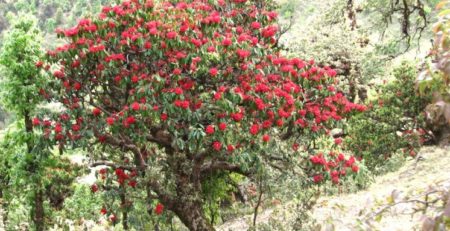
Burans, or rhododendron (Rhododendron arboreum), is both a beautiful flower and an important fruit in Uttarakhand. The fruit of the rhododendron tree has been used in traditional remedies, particularly for digestive problems and inflammation. The bright red flowers are also used to make a refreshing juice that is highly popular in local communities. Rhododendron trees play a crucial role in the local ecosystem, supporting biodiversity and helping prevent soil erosion in the hilly terrains. The fruit’s medicinal and ecological value makes it a significant plant species in the region.
Kilmode (Wild Apricot) – Prunus armeniaca
Kilmode, or wild apricot (Prunus armeniaca), grows in the higher altitudes of Uttarakhand and is known for its small, tart fruit. The wild apricot has a distinctive flavor and is rich in Vitamin C, making it beneficial for the immune system. The fruit is typically used in traditional recipes, including jams, chutneys, and juices. Kilmode trees play an important ecological role in the region, contributing to the maintenance of local biodiversity and providing sustenance for wildlife. The fruit’s use in traditional medicine for treating digestive disorders further adds to its value.
Litchi – Litchi chinensis
Litchis (Litchi chinensis) are grown in the Terai region of Uttarakhand, where the humid climate is ideal for their cultivation. The small, juicy fruit with its translucent white flesh and sweet flavor is highly prized both locally and in markets across India. Litchis are rich in Vitamin C, antioxidants, and minerals, making them a healthy addition to the diet. The cultivation of litchis has been growing in Uttarakhand due to its increasing demand and the favorable conditions provided by the state’s soil and climate.
Strawberry – Fragaria × ananassa
Strawberries (Fragaria × ananassa) are cultivated in Uttarakhand’s cooler hill stations, where the climate is ideal for their growth. Known for their sweet and juicy flavor, strawberries are rich in Vitamin C, antioxidants, and fiber. The fruit is commonly eaten fresh, used in desserts, or made into jams. In recent years, strawberry cultivation has been increasing, with local farmers adopting modern techniques to boost production. The popularity of strawberries is also driven by their health benefits, including supporting heart health and aiding in weight management.
Timla (Wild Apricot) – Prunus armeniaca
Timla, another variety of wild apricot (Prunus armeniaca) found in Uttarakhand, grows in the forests of the higher altitudes. This small fruit is known for its tangy taste and is often used in traditional recipes and medicinal preparations. Timla is rich in Vitamin C and is valued for its ability to support digestion and boost immunity. The fruit plays an essential role in the local ecosystem by providing food for wildlife and contributing to the biodiversity of the region. It is also a source of income for local farmers who cultivate it in the region’s diverse climates.
FAQs About the Famous Fruits of Uttarakhand
What are the famous fruits grown in Uttarakhand?
Uttarakhand is known for its wide variety of fruits, including Hisalu (Himalayan Raspberry), Ghingaru (Firethorn Apple), Dadim (Pomegranate), Bedu (Mulberry), Malta (Sweet Orange), Adoo (Peach), Amla (Indian Gooseberry), Apple, Burans (Rhododendron), Kilmode (Wild Apricot), Litchi, Strawberry, and Timla (Wild Apricot).
Which fruit is native to Uttarakhand?
Fruits like Hisalu (Rubus ellipticus), Ghingaru (Pyracantha coccinea), Burans (Rhododendron arboreum), and Timla (Prunus armeniaca) are native to Uttarakhand and are traditionally found in the wild or cultivated in the region’s forests and hills.
What is the significance of Burans in Uttarakhand?
Burans, or rhododendron (Rhododendron arboreum), is highly significant in Uttarakhand. The fruit and its flowers are used in local traditions for medicinal purposes, particularly for digestive and anti-inflammatory issues. Rhododendron trees also play an important role in the ecosystem, supporting biodiversity and helping prevent soil erosion.
What are the health benefits of Amla (Indian Gooseberry)?
Amla (Phyllanthus emblica) is rich in Vitamin C and antioxidants, making it beneficial for boosting immunity, improving digestion, and promoting skin health. It is also used in Ayurvedic medicine for its rejuvenating and detoxifying properties.
Are the fruits in Uttarakhand used for medicinal purposes?
Yes, many fruits in Uttarakhand, such as Amla (Phyllanthus emblica), Burans (Rhododendron arboreum), and Ghingaru (Pyracantha coccinea), are used in traditional medicine. These fruits have various health benefits, including improving digestion, boosting immunity, reducing inflammation, and promoting skin health.
What makes the apples of Uttarakhand special?
The apples (Malus domestica) grown in Uttarakhand are known for their crisp texture, sweetness, and excellent flavor. The region’s cool climate and fertile soil contribute to the production of high-quality apples that are enjoyed both locally and in national markets.
Which fruit in Uttarakhand is most commonly used in local cuisine?
Fruits such as Amla (Phyllanthus emblica), Dadim (Punica granatum), and Kilmode (Prunus armeniaca) are commonly used in Uttarakhand’s local cuisine. They are often turned into jams, chutneys, juices, and other traditional dishes.
What is the best time to harvest fruits in Uttarakhand?
The harvesting time for fruits in Uttarakhand varies based on the type of fruit and altitude. For example, apples are harvested in late summer to early autumn, while fruits like Amla and Burans are typically harvested in the winter months. Hisalu and Ghingaru are found in the higher altitudes and are usually harvested during the warmer seasons.
Can I find Uttarakhand fruits outside the region?
Yes, many fruits from Uttarakhand, particularly apples, Amla, and peaches, are exported to other parts of India and even internationally. However, some fruits like Hisalu (Rubus ellipticus) and Burans (Rhododendron arboreum) are more commonly found locally due to their regional significance.
How can I cultivate fruits like Aloo and Burans in my own garden?
To cultivate fruits like Aloo (peach) (Prunus persica) and Burans (Rhododendron arboreum), you need to ensure that your garden has the appropriate climate. Peaches grow best in temperate climates with cold winters and warm summers, while rhododendrons thrive in cooler, shaded areas. Ensure that the soil is well-drained and rich in nutrients, and you may need to consult local agricultural experts for more specific growing tips.
What is the role of fruits like Kilmode in Uttarakhand’s ecosystem?
Fruits like Kilmode (Prunus armeniaca) play a crucial role in the local ecosystem by supporting wildlife and maintaining biodiversity. These fruits provide food for local animals and birds, and the trees help in preventing soil erosion in the mountainous regions of Uttarakhand.
Why are Uttarakhand’s fruits considered beneficial for the environment?
Uttarakhand’s fruits, especially those growing in the wild, contribute significantly to the region’s biodiversity. Many of these fruits grow in high-altitude areas, supporting the delicate ecosystems. They help in the regeneration of soil, preventing erosion, and providing essential resources to wildlife. Additionally, cultivating these fruits in the region supports sustainable agricultural practices that benefit both the environment and the local community.
What fruits from Uttarakhand are considered rare or endangered?
Fruits like Hisalu (Rubus ellipticus) and Ghingaru (Pyracantha coccinea) are considered rare and are found in the wild at high altitudes. Due to habitat loss and changing environmental conditions, there are concerns about the sustainability of these species, making them vulnerable. Conservation efforts are necessary to preserve these unique fruits for future generations.
How do the local communities in Uttarakhand benefit from these fruits?
Local communities in Uttarakhand benefit from these fruits in various ways. Many of these fruits are used for local consumption, while others are sold in markets, providing a source of income for farmers. Additionally, fruits like Amla and Burans are part of traditional medicinal practices, and their demand is growing, contributing to the region’s economic growth.
Uttarakhand’s diverse range of fruits not only adds to the region’s natural beauty but also plays a vital role in the local economy, culture, and environment. The unique climatic conditions and fertile soils of the region contribute to the cultivation of a variety of fruits like Hisalu, Amla, Burans, and Apples, each offering significant health benefits and contributing to the rich traditions of Uttarakhand. These fruits are not just a culinary delight but also an essential part of local folklore, medicine, and agriculture. As we continue to appreciate the bounty of Uttarakhand’s fruits, it becomes crucial to preserve these treasures for future generations, ensuring their sustainability and fostering a deeper connection with the environment.