Syalde Bikhauti Mela
A Celebration of Tradition and History in Dwarahat
Dwarahat is a place important from an archaeological point of view. Five kilometers from Dwarahat is Vimandeshwar, also called Brahmandeshwar, which is the location for this important fair. It is hardly 5 kilometers away from Dwarahat, while Dwarahat is about 37 kilometers from Ranikhet on the Ranikhet-Karnaprayag Marg. Every year, at the last gate of the Chaitra month, this fair is held at Vimandeshwar in the evening. In the fair, Lord Shiva is worshipped. This is called the Bikhauti fair. A fair is also held at Dwarahat Bazar on the first gate of the Vaishakh month, known as the Syalde Fair. Thus, both fairs combined are referred to as the Syalde Bikhauti Fair. It is also called the Dwrain Fair. The fairs are held on the 1st gate (14 April) called Chhoti Syalde and on the 2nd and 3rd gates of Vaishakh (15 and 16 April) called Badi Syalde.
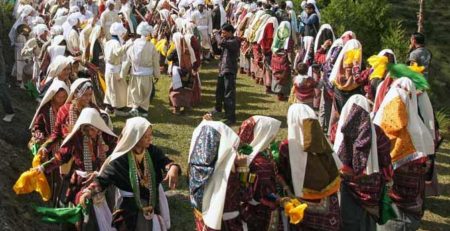
The month of Chaitra is dedicated to folk dances. People dance throughout the month and sing folk songs of Kumaon, such as “O Bhina Kaskai janu Durhata” (O Brother-in-law, how to go to the Dwarahat fair?). The fair is ordinarily held at the house of the village Pradhan.
Syalde Bikhauti Mela Story
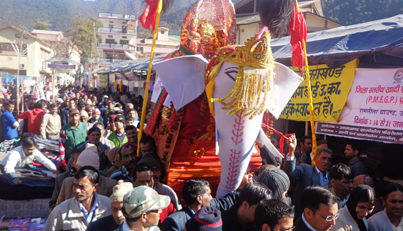
The Syalde-Bikhauti fair has a history dating back to the 14th century. It began during the regime of the Katyuri kings. It is said that once two groups started fighting while worshipping Maa Seetala Devi. The head of the defeated group was chopped off by the winners and dumped into the earth. The place where the head was buried has a stone called Ora as a reminder. People throng around the stone called Ora, fighting from morning to evening. They hit the Ora (stone) with Dandas (logs). This is called Ora Bhaitna. Later, for convenience, the villages were divided into three groups called Aal, Garakh, and Naujyula. People come to meet the Ora stone from noon. These three groups come in different attire with Dhol-Nagre, Ransing, and flags (Dhwaja). The Aal group comes from the central street of the old Dwarahat market, whereas the Garakh and Naujyula groups come from different routes. The chief of the different groups is ordinarily a Thokdar. Since the Syalde fair is connected with Sheetla Maa, people come to Dwarahat to visit Sheetla Pushkar lake, which has now dried up and is situated in the heart of the city. Once upon a time, this was a beautiful lake covered with lotus flowers. On the first day of the Syalde fair, the Baat pujai (worship) is performed by the Naujyula group. After the prayers and worship of Ma Sheetla Devi, the fair starts, and a Bagwal is held.
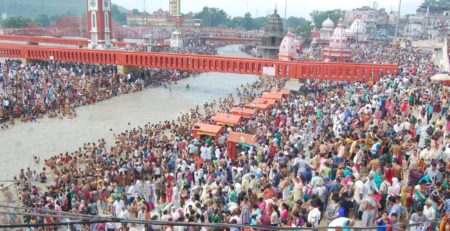
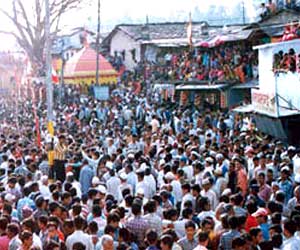
The fair attracts large crowds. The non-resident Doriyals (residents of Dwarahat) also come to witness the fair. Jhora and Bhagnaul are sung on this occasion, and artists start coming to Dwarahat. Villagers sing songs of prayer to the gods. The fair is also called ‘Darre ka Mela.’
The specialty of the fair is Jalebi (sweet), which is sold in large quantities. The Syalde Bikhauti fair has been successful in retaining its old color and gaiety to a large extent.
The fair is not only a celebration of history but also of music and dance, with villagers singing folk songs like Jhora and Bhagnaul, creating an atmosphere of devotion and joy. It attracts a large crowd, including non-resident locals, who come to relive the cultural heritage. A delightful feature of the fair is the widespread sale of Jalebi, a beloved sweet, which adds to the festive spirit. Over the years, the Syalde Bikhauti Fair has successfully retained its charm, offering a blend of historical significance and vibrant festivities.