Roopkund
The Mystery of Skeleton Lake in Uttarakhand Himalayas
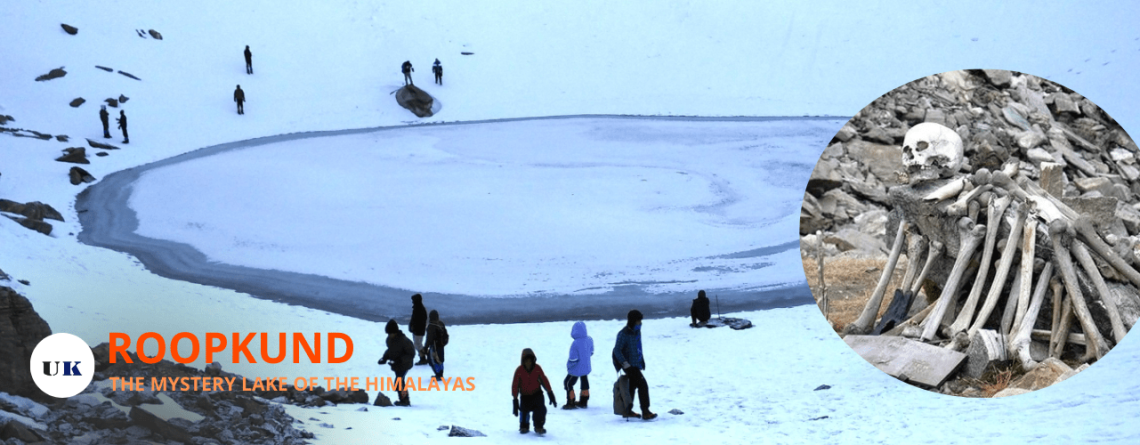
Roopkund, often called Skeleton Lake, is one of the world’s most puzzling archaeological enigmas a place where history, folklore, and science converge at over 16,000 feet above sea level in the Himalayas. Nestled in the lap of the majestic Trishul Massif, Roopkund appears like an ordinary frozen lake for most of the year. But when the ice begins to melt, it reveals a disturbing and fascinating sight: hundreds of human skeletons lying at the bottom and around its shores. The eeriness of these skeletal remains some with flesh still attached, many bearing signs of fatal head injuries has inspired countless theories. Was it a forgotten war, a deadly epidemic, a pilgrimage gone wrong, or nature’s wrath in the form of a violent hailstorm? Why did people of vastly different ethnic backgrounds meet the same fate in this remote and desolate spot? These questions have lured scientists, trekkers, anthropologists, and curious minds from across the world. Roopkund is not just a lake it’s a silent witness to ancient journeys, tragic ends, and unanswered questions. In an age where satellites map the earth and AI mimics the mind, Roopkund still guards its secrets in snow and bone. It’s not just a trek it’s a walk into a real-life mystery.
Roopkund, also known as Skeleton Lake, is not just a stunning high-altitude glacial lake but also one of the most mysterious archaeological sites in the world. Every year, when the ice melts, hundreds of ancient human skeletons resurface, startling trekkers and raising questions that modern science still seeks to answer.
📍 Location & Geography
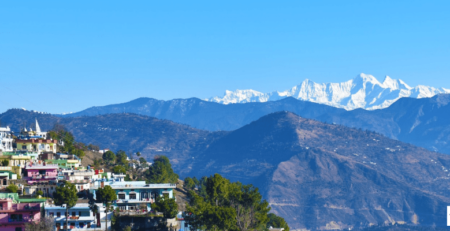
Roopkund lies in the Chamoli district of Uttarakhand, nestled at an altitude of 5,020 meters (16,470 feet). It sits near the base of Trishul Mountain, surrounded by glaciers and snowy peaks.
✅ Key Points:
-
Located in Garhwal Himalayas, India
-
Altitude: 5,020 m where oxygen levels are low
-
Nearby landmarks: Trishul Massif, Bedni Bugyal, Bhagwabasa
-
The lake freezes for most of the year
-
Approx. 40 metres in diameter, shallow depth of about 3 metres
🤯 Fascinating Fact:
The lake is so isolated that there are no human settlements nearby only silence, snow, and skeletal stories
💀 The Skeletons of Roopkund
In the early 20th century, a British forest ranger discovered hundreds of human skeletons around and inside the lake. These remain visible every summer as snow melts.
✅ Key Points:
-
Skeletons date back over 1,000 years
-
Believed to be from multiple time periods
-
Found with wooden artifacts, iron weapons, rings, leather slippers, and even preserved tissue and hair
-
Includes women and children, not just warriors or travelers
🤯 Fascinating Fact:
Many skulls have deep cracks, hinting at violent deaths, likely from above
🧬 Scientific Investigations & Revelations
Modern research has uncovered that the skeletons don’t all belong to a single group or event, but to at least two distinct groups who died roughly 1,000 years apart.
✅ Key Points:
-
Dates of death: Around 800 AD and 1800 AD
-
DNA studies show South Asian and Mediterranean origins
-
Scientists used carbon dating and DNA sequencing
-
Conducted by institutes like Harvard, National Geographic, and ISRO
🤯 Fascinating Fact:
The Mediterranean group had no biological ties to the Indian group, yet both ended up dying at the same location!
🌨️ The Hailstorm Theory & Local Legends
One popular theory suggests that the people died during a massive hailstorm a natural disaster described in local folklore.
✅ Key Points:
-
Many skulls show injuries consistent with blunt trauma from large hailstones
-
Local legend tells of a royal pilgrimage gone wrong
-
Goddess Nanda Devi is said to have punished them for disrespect
🤯 Fascinating Fact:
The size of hailstones that could cause such death is estimated to be the size of cricket balls!
🌍 The Mediterranean Puzzle
The most shocking discovery was that some of the skeletons were not Indian at all they belonged to people of Greek or Eastern Mediterranean origin.
✅ Key Points:
-
DNA points to Mediterranean ancestry possibly Greek, Cretan, or Syrian
-
The mystery: What were Mediterranean people doing at Roopkund?
-
Could be part of a colonial expedition, lost travelers, or even pilgrims
🤯 Fascinating Fact:
No historical record mentions any Mediterranean group traveling in this region, making it one of the most puzzling archaeological cases in India
🧗♂️ Roopkund Today
Roopkund remains a popular destination for high-altitude trekkers and history lovers. However, concerns about damage to the remains and environment have led to restrictions.
✅ Key Points:
-
Trek starts from Lohajung and goes via Didna, Bedni Bugyal, and Patar Nachauni
-
Banned for general tourists in recent years to protect the site
-
Only special eco-tours or research teams are allowed now
🤯 Fascinating Fact:
Roopkund has inspired documentaries, books, and even a forensic thriller TV series idea!
🧠 What Roopkund Teaches Us
Roopkund is more than a mystery it’s a historical, cultural, and scientific marvel. It teaches us that truth often hides in silence, and even the dead can whisper stories to the curious.
✅ Key Points:
-
Connects history, mythology, and science
-
Reminds us of nature’s unpredictable power
-
A symbol of diverse human journeys ending in the same place
-
Calls for preservation of archaeological heritage
🤯 Fascinating Fact:
Roopkund’s mystery has turned it into a case study in international forensic science and anthropology classrooms
❓FAQs
What makes Roopkund Lake so mysterious and globally famous?
Roopkund is known as “Skeleton Lake” because it contains the remains of hundreds of humans dating back over 1,200 years. These skeletons are visible during the summer when the snow melts. What makes the mystery even more fascinating is that scientific studies revealed the skeletons belonged to two or more distinct groups from different time periods and even different parts of the world including South Asia and the Mediterranean region.
Where exactly is Roopkund Lake situated, and what is its geographical importance?
Roopkund Lake is located in the Chamoli district of Uttarakhand, India, at an altitude of approximately 5,020 meters (16,470 feet) above sea level. It lies in the lap of the Trishul Massif in the Garhwal Himalayas, surrounded by glaciers and snow-covered peaks. It is a remote location, with no human settlements nearby. This makes it a breathtaking but challenging destination for trekkers and researchers alike.
How and when were the skeletons at Roopkund first discovered?
The skeletons were first reported in 1942 by a British forest ranger, who came across the lake filled with bones. Over time, mountaineers and scientists investigated further, discovering hundreds of well-preserved skeletons, many with visible hair, flesh, and clothes due to the cold environment which slowed decomposition. Artifacts like wooden tools, iron spearheads, jewelry, and footwear were also found alongside the remains.
What theories exist about the cause of death of the people found at Roopkund?
For many years, the most widely accepted theory was that a massive hailstorm struck a group of pilgrims, killing them instantly. The fractures on the skulls seemed consistent with blunt-force trauma from large hailstones. This theory is also supported by local folklore which speaks of a royal group being punished by the goddess Nanda Devi for disrespecting a sacred area. More recent scientific studies suggest there may have been multiple events of death, possibly due to different disasters or circumstances.
How did people from the Mediterranean region end up dying at Roopkund?
This remains one of the biggest unsolved aspects of the Roopkund mystery. DNA analysis of some skeletons in 2019 revealed that at least 23 individuals had Eastern Mediterranean ancestry, closely matching people from modern-day Greece or Crete. There are no historical records explaining what brought them to such a remote part of the Indian Himalayas, and their presence remains an archaeological enigma.
Is Roopkund still accessible for trekking or tourism today?
Roopkund used to be a popular trekking destination attracting thousands of adventure seekers every year. However, due to the sensitive archaeological nature of the site and to prevent further damage to the remains, the Indian government imposed restrictions on trekking beyond certain points like Bedni Bugyal. Only researchers or specially approved eco-tourism groups may now visit the actual lake.
How well preserved are the skeletons and artifacts found in the area?
The extreme cold and glacial conditions at Roopkund have kept many of the remains in astonishingly well-preserved condition, with some skeletons still showing soft tissue, hair, nails, and even brain matter. Clothing fragments, wooden walking sticks, rings, and leather slippers have also been recovered, giving insight into the attire and tools used by these people.
Are there any religious or cultural beliefs connected with Roopkund?
Yes, Roopkund is associated with the annual Nanda Devi Raj Jat Yatra, a 12-day pilgrimage that honors Goddess Nanda Devi. According to legend, a king and his entourage once undertook the pilgrimage but were punished for disrespecting the sacred land, leading to their mysterious deaths near the lake. Many locals still regard the lake as spiritually significant and believe the skeletons are the remains of that ill-fated royal group.
Have there been any books, documentaries, or media coverage on Roopkund?
Yes, Roopkund has captured the attention of global researchers, documentary filmmakers, and writers. It has been featured in several National Geographic programs, scientific journals, travel books, and YouTube documentaries. Its unique blend of myth, history, and science makes it a favorite topic for explorers and forensic experts alike.
What does the Roopkund mystery tell us about ancient travel and human movement?
Roopkund offers a rare and startling insight into ancient human migration, trade routes, and religious practices. The presence of people from different regions, especially the Mediterranean, suggests that long-distance travel was more common than once believed. It also shows how nature’s fury like hailstorms could bring death to people from different times, leaving behind a frozen mass grave that speaks across centuries.
Roopkund Lake is not just a geographical wonder nestled high in the Indian Himalayas it is a silent, snow-covered storyteller of ancient mysteries and human journeys lost to time. The chilling sight of hundreds of skeletons scattered around a serene glacial lake continues to baffle scientists, historians, and adventurers alike. While local legends speak of divine wrath, and scientific studies point to both natural disasters and multicultural pilgrimages, the full truth behind Roopkund may forever remain hidden beneath layers of ice and centuries. This “Skeleton Lake” challenges our understanding of migration, ancient rituals, and how isolated places can unexpectedly become chapters in global human history. Whether you see it as a spiritual site, a scientific enigma, or a trekking challenge, Roopkund stands as one of the most fascinating and haunting mysteries of the Himalayas.