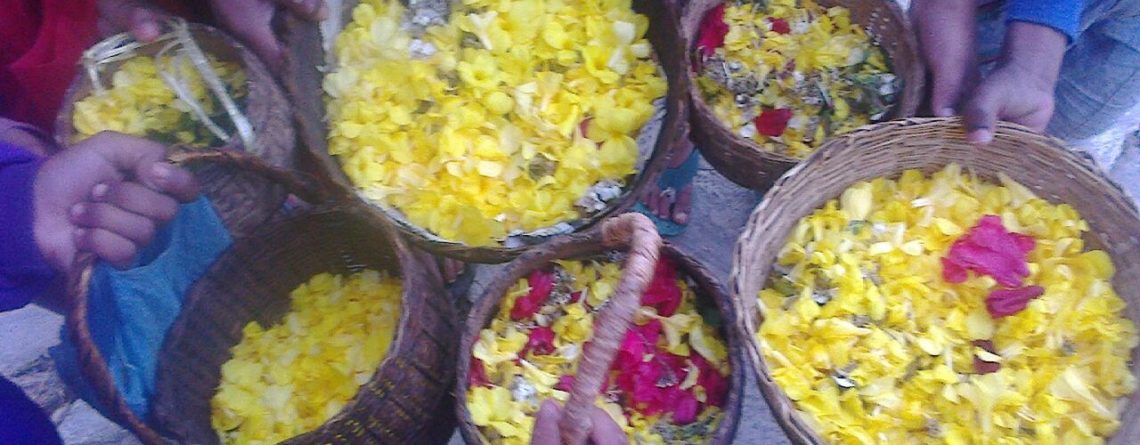
Phool Dei Festival
Celebrating Spring and Tradition in Uttarakhand
Phool Dei is celebrated on the first day of the month of Chaitra in mid March. On this day, young girls conduct most of the ceremonies. In some places this festival is celebrated throughout the month with the advent of spring. During this festival young girls go to all the houses in the muhalla or the village with plates full of rice, jaggery, coconut, green leaves and flowers. They offer their good wishes for the prosperity of the household and are given blessings and presents (sweets, gur, money etc) in return.
Young ladies assemble and go to each house in their town/towns with plates loaded with rice, jaggery, coconut, green leaves, and blossoms. In addition, these young ladies set forward their desires for the success and prosperity of family units while singing “Phool Dei, Chamma Dei, Deno Dwar, Bhur Bhakar”. The wishing and gift part likewise incorporate putting blooms and rice on the doorsteps of the houses by the young ladies. Individuals of town sing and move on their people melodies to commend the celebration of spring alongside trading wishes for prosperity and success of their family and relatives.
In a few places even today they sprinkle flowers and rice on the doorsteps and sing:
phool dei, chamma dei
deno dwar, bhur bhakar
yo dei sei namashkar, puje dwar
The Story of Phool Dei
A Festival of Blossoms and Tradition in Uttarakhand
On the occasion of Phool Dei, a special flower called Piyoli is used, which blooms in the mountains during the spring season. There is a popular folktale associated with this flower. It is said that there was once a princess named Piyoli living in the Himalayan mountains. She fell in love with a prince from another country, who took her away to marry him.
After the prince left, the trees and plants of the mountain began to wither, and the birds became sad, as Piyoli was cherished by all. Meanwhile, Piyoli’s mother-in-law did not allow her to visit her family, which made her even more despondent. Gradually, her sadness turned into illness, and one day, she passed away due to her sickness.
Her in-laws buried Piyoli in a nearby forest. After some time, a yellow flower grew at the spot where she was buried, which was named after her as “Piyoli.” Since then, the festival of Phool Dei has been celebrated in her memory. This festival is not only a tribute to Piyoli but also a symbol of love, joy, and new life.
Phool Dei festival is a vibrant celebration of nature and community in Uttarakhand. Deeply rooted in tradition, it brings people together to welcome the onset of spring with offerings of flowers and cultural rituals. The festival also preserves the touching legend of Princess Piyoli, reminding everyone of the connection between nature, love, and loss. Phool Dei continues to symbolize new beginnings, cultural unity, and the timeless bond between the people and their land.
Frequently Asked Questions (FAQs)
What is Phool Dei?
Phool Dei is a cherished folk festival of Uttarakhand, primarily celebrated by children. Due to its close association with young ones, it is also known as “Lok Bal Parv” (People’s Child Festival).
When is Phool Dei celebrated?
The festival takes place on the first day of the Chaitra month, which usually falls in March each year.
Why is Phool Dei celebrated?
Phool Dei marks the arrival of spring and the Hindu New Year in Uttarakhand. It symbolizes prosperity, good fortune, and harmony with nature. Children participate by offering fresh flowers at doorsteps to bring blessings to homes.
How is Phool Dei celebrated?
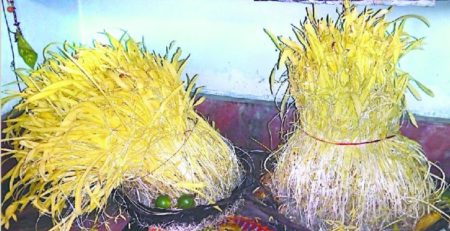
The festival begins with children gathering fresh flowers, especially Pyoli and Buransh (Rhododendron) flowers, from nearby forests. Homes are cleaned, and doorsteps are purified with a mixture of cow dung and clay. Children then visit households, placing flowers on the threshold while singing traditional Phool Dei songs. In return, they receive gifts like jaggery (gur), rice, and money. The collected ingredients are later used to prepare local delicacies such as halwa, chhoi, shai, and sya (in Bhotiya regions).
What are the traditional songs sung during Phool Dei?
Children sing cheerful songs while offering flowers. One of the most popular verses is:
“Phool Dei, Chhamma Dei, Daini Dwaar Bhar Bhakar!”
This song conveys blessings for the household, wishing for abundance and prosperity.
In Garhwal, another well-known song is:
“O Phulari Ghaur, Jhai Mata Ka Bhaur. Kyoli Didi Phulkandi Ghaur.”
This folk verse emphasizes the importance of celebrating nature’s beauty through flowers.
What is the cultural significance of Phool Dei?
Phool Dei is a festival of good luck and prosperity, marking the beginning of spring and the Hindu New Year in Uttarakhand. It encourages generosity and gratitude, teaching children the values of community participation and giving. The festival strengthens social bonds, bringing people together through music, food, and traditional customs.
What are the different names of Phool Dei?
In various regions of Uttarakhand, the festival is known by different names. In Kumaon and Garhwal, it is called Phool Dei, while in the Jaunsar region, it is known as Goga. It is also referred to as Phool Sangraat, Phool Sagna, or Meen Sankranti.
What is the folklore behind Phool Dei?
A touching legend connects the festival to Princess Pyoli, a Himalayan princess. According to the tale, Pyoli was married off to a distant land, leaving behind her homeland. The forests and birds mourned her absence, and she too became deeply homesick. Deprived of visiting her family, she fell into despair and eventually passed away. From her burial site, a beautiful yellow flower (Pyoli) blossomed. In her memory, the Phool Dei festival was established, using Pyoli flowers to celebrate nature’s renewal.
What special dishes are prepared during Phool Dei?
The gifts received from households, including rice, jaggery, and ghee, are used to prepare delightful traditional dishes. These include halwa (a sweet dish made with wheat flour, jaggery, and ghee), chhoi and shai (local delicacies made with rice and pulses), and sya, a special dish of the Bhotiya community made with rice flour and jaggery.
Who is Ghogha Mata, and why is she worshipped during Phool Dei?
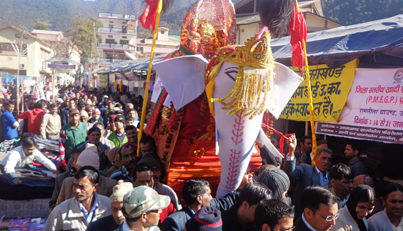
Ghogha Mata is revered as the Goddess of Flowers and is worshipped exclusively by children. On the final day of the festival, a palanquin (doli) is decorated for Ghogha Mata, and children offer the food they have received as prasad. Rituals are performed to seek her blessings for happiness and prosperity.
Is Phool Dei only for children?
Although the festival is mainly celebrated by children, the entire community participates by welcoming them, giving blessings, and offering gifts.
Is Phool Dei unique to Uttarakhand?
Yes, Phool Dei is a regional festival of Uttarakhand, though similar celebrations to welcome spring exist in other parts of India under different names.
Phool Dei is more than just a festival, it is a beautiful celebration of nature, community, and cultural heritage in Uttarakhand. Rooted in traditions of gratitude and generosity, it teaches children the values of sharing, respect for nature, and togetherness. Through flowers, songs, and traditional delicacies, this festival brings joy and strengthens bonds within the community. As a festival that welcomes spring and the Hindu New Year, Phool Dei serves as a reminder of the harmony between humans and nature. By continuing to celebrate and preserve this tradition, we ensure that future generations remain connected to their cultural roots and the beauty of Uttarakhand’s rich folklore.