Kanwar Yatra
A Sacred Journey in the Month of Sawan
India is a land where faith flows as freely as its rivers, and among its many vibrant spiritual traditions, the Kanwar Yatra stands out as a symbol of intense devotion, endurance, and unity. Observed annually during the holy month of Sawan (Shravan), this sacred pilgrimage draws millions of devotees, known as Kanwariyas, who undertake a physically demanding journey to honor Lord Shiva, one of the principal deities of Hinduism.
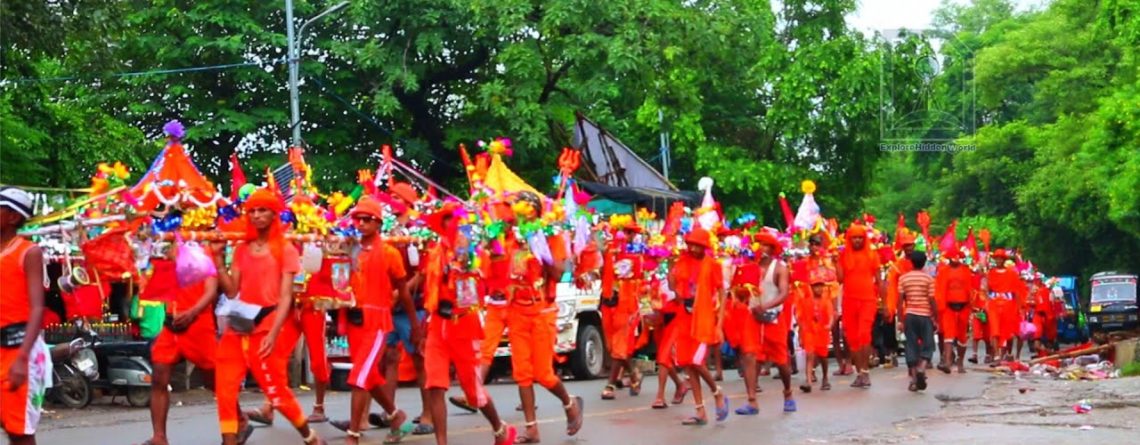
Draped in saffron clothes and often barefoot, Kanwariyas carry sacred water from the Ganga River considered the holiest river in Hindu belief. This water is filled into pots that are tied to either end of a decorated bamboo pole called a kanwar, which is carried across the shoulders. The pilgrims walk sometimes for hundreds of kilometers from pilgrimage sites like Haridwar, Gaumukh, Gangotri, and Sultanganj to offer this holy water at Shiva temples across India, including prominent shrines like Kashi Vishwanath (Varanasi), Baidyanath Dham (Deoghar), and Neelkanth Mahadev (Rishikesh). What makes the Kanwar Yatra particularly special is its deep mythological roots and its connection to the story of Samudra Manthan, the churning of the ocean of milk. When the deadly poison Halahala threatened the universe, it was Lord Shiva who consumed it to save all life. To reduce the poison’s effect, the gods are believed to have poured sacred Ganga water over him. Inspired by this divine act, devotees today continue the tradition with unwavering faith. From humble beginnings with a handful of ascetics and rural devotees, the Kanwar Yatra has transformed over the last few decades into one of the largest religious gatherings in the world, drawing pilgrims from across Uttar Pradesh, Bihar, Delhi, Haryana, Punjab, Jharkhand, and beyond. It is not just a test of physical strength but a spiritual vow an expression of love, humility, and reverence toward Bhole Baba, the innocent one.
As the chants of “Bol Bam” fill the monsoon air, and saffron waves of humanity move toward their sacred destinations, the Kanwar Yatra becomes more than a journey it becomes a living testament to India’s enduring spiritual heritage and collective devotion to Lord Shiva.
What is the Kanwar Yatra?
The Kanwar Yatra is an annual pilgrimage undertaken by devotees of Lord Shiva, one of the principal deities in Hinduism, during the sacred month of Sawan (Shravan), which typically falls in July–August. During this time, millions of devotees, known as Kanwariyas, travel to holy sites along the Ganga River to collect its sacred water and carry it back to their local Shiva temples to offer it during ritual worship known as Rudrabhishek. The pilgrimage is named after the kanwar a traditional bamboo pole carried across the shoulders, with containers tied at either end to hold the Ganga water. This symbolic and sacred load is never allowed to touch the ground once filled, signifying the reverence with which the water is treated.
Kanwariyas generally collect water from major holy locations such as Haridwar, Gaumukh, Gangotri in Uttarakhand, and Sultanganj in Bihar. From there, they walk often barefoot and chanting “Bol Bam” or “Har Har Mahadev” back to their destination temples, which may be hundreds of kilometers away. Some of the most popular temples that receive these offerings include:
-
Kashi Vishwanath in Varanasi
-
Baidyanath Dham in Deoghar
-
Neelkanth Mahadev in Rishikesh
-
Augharnath Temple in Meerut
-
Pura Mahadeva in Baghpat
The Kanwar Yatra is not only a test of physical endurance but also a profound spiritual experience. Devotees observe strict vows, follow a code of conduct, and refrain from worldly pleasures during their journey. The yatra symbolizes devotion, humility, and sacrifice, as pilgrims offer the sacred water to Lord Shiva to seek his blessings for prosperity, good health, and fulfillment of desires. Once a relatively small and localized tradition, the Kanwar Yatra has grown into one of the largest religious movements in the world, drawing tens of millions of participants each year. Supported by elaborate arrangements from local authorities and volunteer groups, the yatra is both a religious and cultural event, reflecting the deep spiritual roots of Indian society.
Mythological Origins of the Kanwar Yatra
The Kanwar Yatra is deeply rooted in Hindu mythology, particularly in the legendary tale of the Samudra Manthan – the cosmic churning of the ocean described in ancient Hindu scriptures. According to the story, during this great churning by the Devas (gods) and Asuras (demons) to obtain Amrit (the nectar of immortality), a deadly poison called Halahala emerged from the depths of the ocean. The poison was so potent that it threatened to destroy all creation. To save the universe, Lord Shiva, in an act of supreme sacrifice, drank the poison. However, to prevent the poison from harming his body, he held it in his throat, which turned blue from the effect earning him the name Neelkanth, meaning the blue-throated one.
Although Shiva saved the cosmos, the poison caused immense heat and pain in his body. To relieve him, the gods and sages began pouring sacred water from the Ganga River over him. This symbolic act of cooling Shiva with holy water forms the basis of the Kanwar Yatra ritual, where devotees carry Ganga water to offer at Shiva temples as a gesture of devotion, healing, and gratitude. Another story associated with the origin of the Kanwar tradition dates back to the Treta Yuga. It is believed that Parshuram, an ardent devotee of Shiva and one of the ten avatars of Lord Vishnu, brought Ganga water in a kanwar and poured it over a Shiva linga at Puramahadev Temple (in present-day Uttar Pradesh) to help ease the effects of the poison. This act is considered the first symbolic Kanwar pilgrimage.
These legends convey a deeper spiritual meaning — selflessness, devotion, and sacrifice. Just as Lord Shiva endured great pain for the welfare of the universe, his devotees undertake the physically demanding journey of the Kanwar Yatra to express their faith and commitment. Over time, what began as a symbolic ritual by sages and devotees evolved into a widespread tradition, embraced by millions each year. Today, the yatra is not just a reenactment of ancient myths, but a living embodiment of India’s rich spiritual heritage and unwavering devotion to Bhole Baba, the innocent and compassionate Lord Shiva.
Etymology and Ritual Practice
The term “Kanwar” (कांवड़) derives from the Sanskrit word “kānvānrathi” (काँवाँरथी), meaning a pole used to carry balanced loads. In the context of the Kanwar Yatra, it specifically refers to a bamboo pole with two water pots or containers tied on either end, carried across the shoulders by devotees. This simple yet symbolic apparatus is central to the pilgrimage, giving the yatra its name. The Kanwariyas, or pilgrims, carry these kanwars as a sacred load, carefully balancing the Ganga water-filled pots as they walk barefoot over long distances. The water is never allowed to touch the ground, underscoring its sanctity. The ritual of carrying the kanwar represents devotion, discipline, and sacrifice.
Key Elements of the Ritual Practice:
-
Attire: Kanwariyas typically wear saffron-colored clothes, symbolizing renunciation and purity. Some also adorn themselves with rudraksha beads and ash marks on their foreheads.
-
Chanting: As they travel, pilgrims continuously chant devotional slogans such as “Bol Bam” or “Har Har Mahadev”, invoking Lord Shiva’s blessings and encouraging fellow devotees.
-
Barefoot Journey: Walking barefoot is both a test of physical endurance and an expression of humility before the divine.
-
Carrying the Kanwar: The kanwar’s bamboo pole is balanced on one or both shoulders, with water pots securely fastened at both ends. Pilgrims must ensure the water does not spill or touch the ground until it reaches the destination temple.
-
Dak Kanwar: Some devotees undertake the more rigorous Dak Kanwar, a non-stop run to and from the pilgrimage site without resting or setting down the kanwar. This extreme form of devotion is seen as a special vow or penance.
-
Offerings: Upon reaching the Shiva temple, the sacred water is poured over the Shiva linga in a ritual called Rudrabhishek, believed to please the deity and grant blessings.
-
Community Spirit: The Kanwar Yatra is also marked by vibrant community participation. Pilgrims often travel in groups, supported by volunteers who provide free food (langars), water, and medical aid along the routes.
This blend of ritual discipline, physical challenge, and communal harmony transforms the Kanwar Yatra from a mere pilgrimage into a profound spiritual journey, reinforcing faith and unity among millions of devotees each year.
Modern-Day Significance and Scale
The Kanwar Yatra, once a humble pilgrimage practiced by a few devoted saints and ascetics, has evolved into one of the largest religious gatherings in the world. Since the late 20th century, especially from the 1980s onwards, the yatra has seen an unprecedented surge in participation, drawing millions of devotees from across India and even abroad.
Scale of the Pilgrimage
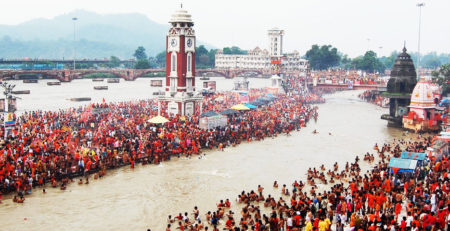
Today, over 30 million pilgrims participate annually, with the majority coming from the states of Uttar Pradesh, Bihar, Haryana, Punjab, Rajasthan, Delhi, Jharkhand, and Madhya Pradesh. The Kanwar Yatra is especially prominent along routes leading to sacred sites such as Haridwar, Sultanganj, and Deoghar. The sheer scale of the event poses enormous logistical challenges. Entire highways, including the Delhi-Haridwar national highway (NH-58), are often closed or traffic is heavily regulated during the pilgrimage period to ensure the safety of Kanwariyas. State governments coordinate extensive arrangements, including:
-
Temporary camps and shelters along the routes
-
Free food distribution centers (langars)
-
Medical aid and emergency services
-
Water stations and sanitation facilities
-
Police and volunteer deployment for crowd and traffic management
These measures are essential to support the vast numbers of pilgrims who endure difficult terrain and often harsh weather conditions.
Social and Cultural Impact
Beyond its religious significance, the Kanwar Yatra fosters a remarkable sense of community and solidarity. Volunteers from all walks of life come forward to assist pilgrims, providing free meals, water, and medical help. The pilgrimage becomes a social festival that unites people across caste, class, and regional differences under the shared banner of devotion.
The yatra also has significant economic implications for the towns and villages along the route, boosting local businesses and creating temporary employment opportunities during the pilgrimage season.
Spiritual Renewal and Personal Vows
For individual Kanwariyas, the pilgrimage is a time of spiritual renewal and self-discipline. Many undertake the journey as part of a personal vow or penance, seeking blessings for health, prosperity, and the fulfillment of wishes. The physical rigor involved – walking barefoot for days, carrying heavy loads, and braving monsoon rains – symbolizes their commitment and devotion.
Spiritual Importance of the Kanwar Yatra
The Kanwar Yatra is much more than a physical journey—it is a profound spiritual experience that embodies the core values of devotion, sacrifice, humility, and purification. For millions of devotees, undertaking this pilgrimage is a sacred vow, a way to deepen their connection with Lord Shiva, who is revered as the destroyer of evil and the source of ultimate liberation.
Devotion and Surrender
At its heart, the Kanwar Yatra is an expression of bhakti—devotional love and surrender to Shiva. By carrying the holy water of the Ganga River on their shoulders and offering it to the Shiva linga, Kanwariyas participate in a ritual that symbolizes washing away of sins, both personal and cosmic. The pilgrimage becomes an act of gratitude and a plea for divine blessings.
Endurance and Discipline
The physical hardships endured during the journey walking barefoot over long distances, often in scorching heat or heavy rains are acts of tapasya (austerity) and self-discipline. This willingness to face discomfort willingly is believed to purify the body and mind, helping the devotee transcend worldly attachments and ego.
Purification and Renewal
The month of Sawan is considered highly auspicious for worshiping Lord Shiva. Participating in the Kanwar Yatra during this time is believed to bring spiritual cleansing and renewal. The waters of the Ganga themselves are revered as purifying, and carrying and offering them is symbolic of cleansing one’s soul and renewing faith.
Fulfillment of Vows and Wishes
Many devotees undertake the pilgrimage as part of a personal vow or prayer—promising to complete the journey if their wishes are granted. Completing the Kanwar Yatra is seen as an act of faithfulness that attracts Shiva’s grace, bringing health, prosperity, and relief from suffering.
Community and Collective Faith
Beyond individual spirituality, the Kanwar Yatra fosters a sense of community and shared faith. The collective chanting, the shared hardships, and mutual support create a powerful spiritual atmosphere where personal devotion merges into a universal experience of faith and hope.
Why Some Media Outlets Seem to Target the Kanwar Yatra
The Kanwar Yatra is one of India’s largest annual religious pilgrimages, where millions of devotees, known as Kanwariyas, undertake a journey on foot to collect holy water from the Ganges and offer it to Lord Shiva at their local temples, especially during the auspicious month of Shravan. For most devotees, it is a deeply spiritual, peaceful, and disciplined expression of faith. Yet, year after year, some sections of the media seem to focus disproportionately on the controversies, disruptions, or conflicts associated with the yatra — often giving an impression that the event is being unfairly targeted.
This perception isn’t unfounded. But why does it happen?
Media’s Preference for Sensationalism
Modern news media is driven largely by the logic of TRPs, views, and clicks. Peaceful religious observance rarely makes headlines. However, road blockages, clashes, noise complaints, or police confrontations during the yatra often turn into prime-time material. As a result, the coverage leans heavily toward the negative or controversial aspects, overshadowing the spiritual core of the event.
The Political Angle
Over the years, the Kanwar Yatra has taken on political dimensions in some regions. With increasing public visibility and support from political parties, especially those aligned with Hindu nationalist sentiments, the event can become a focal point in the broader culture and identity debates. Media outlets with opposing ideological leanings may scrutinize it more harshly, portraying it as disruptive or provocative, especially in contrast with how they cover events of other communities.
Law and Order Issues
Given the massive scale of the Kanwar Yatra — with lakhs of people walking on highways, often barefoot, over long distances — logistical challenges are inevitable. There are sometimes reports of unruly behavior by a small section of participants, which, while not representative of the majority, becomes a talking point for media. Any road rage incident, damage to public property, or disruption is often amplified and repeated across channels, creating a skewed perception.
Communal Framing
In an increasingly polarized environment, even religious events are viewed through a communal lens. If Kanwariyas pass through mixed-population areas, media may frame minor frictions as communal tensions. Unfortunately, this kind of framing can deepen divides and create mistrust, instead of fostering mutual respect for each other’s traditions.
Neglect of Positive Coverage
What often goes underreported is the remarkable discipline, charity, and devotion shown by lakhs of Kanwariyas — many of whom clean roads, distribute free food (langars), or walk with deep reverence without causing any disturbance. Numerous local communities and authorities work together to ensure safety and support. But such stories rarely trend unless accompanied by conflict.
Religious freedom and peaceful expression of faith are constitutional rights in India. The Kanwar Yatra, like many other religious events, is a cultural and spiritual pillar for millions. While it is fair for the media to highlight issues when they occur, focusing only on negatives creates a distorted narrative. Balanced journalism should neither glorify nor vilify but present the full picture – one that includes the challenges but also acknowledges the devotion, the discipline, and the deep-rooted faith of those who walk hundreds of kilometers in Lord Shiva’s name.
Frequently Asked Questions (FAQs) about Kanwar Yatra
What exactly is the Kanwar Yatra, and why do devotees undertake this pilgrimage?
The Kanwar Yatra is an annual Hindu pilgrimage during which devotees of Lord Shiva, called Kanwariyas, travel to sacred sites along the Ganga River to collect holy water. They carry this water on specially made bamboo poles called kanwars and offer it to Shiva lingas at temples. The pilgrimage expresses deep devotion, sacrifice, and faith, and is performed mainly in the auspicious month of Sawan.
When is the Kanwar Yatra held each year, and how is its timing determined?
The Kanwar Yatra usually takes place during the Hindu month of Sawan (Shravan), corresponding to July–August in the Gregorian calendar. The exact dates vary every year according to the lunar calendar and are aligned with important Shiva-related festivals like Shivratri.
What is the significance of carrying Ganga water during the Kanwar Yatra?
Carrying water from the Ganga River symbolizes purity and devotion. According to Hindu mythology, Lord Shiva drank poison to save the universe and was soothed by the sacred waters of the Ganga. Devotees reenact this divine act by offering Ganga water to Shiva, believing it cleanses sins and brings blessings.
How far do Kanwariyas typically travel on foot during the Yatra, and what challenges do they face?
The distances covered vary widely some pilgrims walk a few kilometers, while others trek hundreds of kilometers barefoot, carrying heavy kanwars. The journey can be physically demanding, especially during monsoon rains and harsh weather, testing the endurance and devotion of the participants.
Can you explain what a “kanwar” is and how it is used during the pilgrimage?
A kanwar is a bamboo pole with two containers or pots tied at either end, balanced across the shoulders by the devotee. It is used to carry holy water from the Ganga River throughout the pilgrimage without spilling or letting the water touch the ground.
What are the main rituals and practices Kanwariyas follow during the Yatra?
Devotees wear saffron-colored clothes symbolizing purity, walk barefoot, and continuously chant slogans like “Bol Bam” or “Har Har Mahadev.” Upon reaching their destination, they perform Rudrabhishek by pouring the sacred water over the Shiva linga in the temple, completing their offering.
How large is the Kanwar Yatra in terms of participant numbers, and what makes it one of the biggest pilgrimages globally?
The Kanwar Yatra attracts over 30 million devotees every year, making it one of the largest religious gatherings in the world. Its growth from a small ascetic ritual to a mass movement reflects the deep cultural and spiritual significance it holds across northern India.
What measures do governments and local communities take to ensure the safety and well-being of the pilgrims?
Authorities set up temporary shelters, free food stalls (langars), medical camps, and water points along the routes. They regulate traffic, deploy police and volunteers for crowd control, and ensure sanitation facilities to handle the vast influx of pilgrims during the Yatra.
Is the Kanwar Yatra open to all people, including women, elderly, and children? Are there any restrictions?
The pilgrimage is open to anyone who wishes to participate regardless of age, gender, or background. However, the journey can be physically taxing, so participants should be prepared for the rigorous walk and challenging conditions. Some devotees choose to travel in groups for safety and support.
What spiritual benefits and blessings do devotees believe they receive by completing the Kanwar Yatra?
Pilgrims believe that undertaking the Yatra cleanses their sins, fulfills personal vows and wishes, and brings Lord Shiva’s blessings for health, prosperity, and peace. The physical austerity and devotional chanting during the journey are seen as acts of penance that aid in spiritual growth and renewal.
How do Kanwariyas prepare themselves before starting the pilgrimage?
Many devotees observe strict spiritual disciplines before beginning the Kanwar Yatra. This includes fasting, abstaining from alcohol and non-vegetarian food, practicing meditation or prayers, and mentally preparing for the physical and spiritual challenges of the journey. Some also take vows (mannat) to complete the pilgrimage in exchange for blessings.
Are there any specific rules or codes of conduct that pilgrims must follow during the Yatra?
Yes, Kanwariyas are expected to maintain purity and discipline throughout the pilgrimage. They usually refrain from smoking, drinking, and other worldly pleasures. Respectful behavior, chanting devotional songs, and helping fellow pilgrims are encouraged. Many consider carrying the kanwar without resting it on the ground a sacred rule.
What role do local communities and volunteers play during the Kanwar Yatra?
Local communities and countless volunteers provide critical support by organizing food distribution centers (langars), medical aid, water stations, and resting spots along the route. They also assist in crowd management and ensure safety, making the pilgrimage accessible and manageable for millions.
Is the Kanwar Yatra celebrated or recognized in regions outside northern India?
While the main routes are concentrated in northern states, the Kanwar Yatra is recognized and followed by Shiva devotees across India. In some places, local versions or smaller pilgrimages inspired by the Kanwar tradition take place, especially where there are significant Shiva temples.
How has the Kanwar Yatra evolved with modern times and technology?
With the increasing number of participants, governments and organizations have implemented technologies like GPS tracking for pilgrims, mobile apps for route information, emergency hotlines, and better transportation logistics. Social media also plays a role in organizing volunteers and sharing updates during the yatra.
Are there any environmental concerns associated with the Kanwar Yatra?
Given the massive scale, waste management, water pollution, and littering are ongoing challenges. Efforts by authorities and NGOs aim to promote cleanliness, proper waste disposal, and eco-friendly practices to minimize environmental impact.
Can foreigners or non-Hindus participate in the Kanwar Yatra?
Yes, the pilgrimage is open to all regardless of nationality or religion. Visitors interested in experiencing Indian spiritual traditions often join in or observe the yatra, provided they respect the customs and practices.
What kinds of accommodations are available to pilgrims during the journey?
Temporary tents, dharamshalas (pilgrim rest houses), and community halls are set up along the pilgrimage routes. These provide basic shelter, food, and medical facilities, often free of cost, supported by government and charitable organizations.
Are there any famous stories or miracles associated with the Kanwar Yatra?
Many devotees recount personal stories of spiritual transformation, answered prayers, or miraculous healings attributed to completing the Kanwar Yatra. These testimonies strengthen the faith of new pilgrims and keep the tradition alive.
The modern Kanwar Yatra is thus a grand expression of faith that combines ancient tradition with contemporary scale and organization, continuing to inspire millions with its message of devotion, sacrifice, and unity. The Kanwar Yatra is a powerful expression of faith, tradition, and collective devotion. Rooted in mythology and sustained by millions of modern-day devotees, it represents India’s living spiritual heritage. As each Kanwariya walks the sacred path with chants of “Bol Bam” echoing in the air, the journey becomes more than a pilgrimage – it becomes a moving river of devotion flowing toward the feet of Lord Shiva.