Jim Corbett
The Legendary Hunter, Naturalist, and Conservationist
Jim Corbett, born Edward James Corbett on July 25, 1875, in Nainital, British India, was a man whose life spanned the diverse and fascinating worlds of hunting, conservation, and writing. He is best known for his extraordinary skills as a hunter of man-eating tigers and leopards, but his legacy extends far beyond this. A naturalist, author, and pioneer in wildlife conservation, Jim Corbett’s impact on India’s natural heritage continues to be felt, especially through the establishment of the country’s first national park, which now bears his name Jim Corbett National Park. His life story is not only a testament to his bravery and skill but also to his deepening respect for the wildlife and the environment that shaped his destiny.
Early Life and Background
Jim Corbett was born into a family of British descent in the hill station town of Nainital, which was part of the United Provinces in British India. The Corbett family was originally from the United Kingdom, and Jim’s father, William Corbett, worked as a civil servant in India. Growing up in the forests of the Kumaon region, Corbett developed a fascination for the natural world at a young age. His childhood was marked by long treks through the forests, where he developed the keen observational skills that would serve him throughout his life.
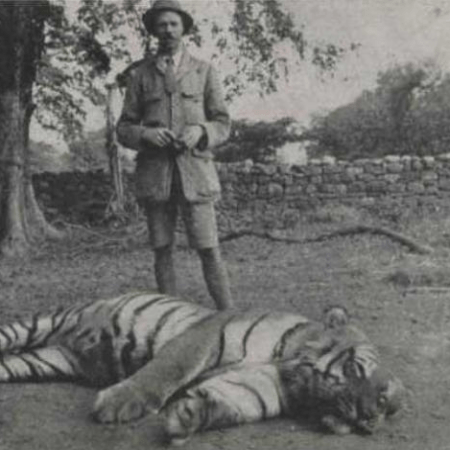
Corbett early education took place in India, though his schooling was often disrupted due to his frequent excursions into the forests. His exposure to the rich biodiversity of the region especially the tigers, leopards, and elephants that roamed the landscape shaped his future pursuits. The wildlife around him, along with the rugged and isolated terrains, became a central part of his formative experiences.
The Hunter of Man-Eating Tigers and Leopards
Corbett’s career as a hunter began in earnest when he was asked to track down and kill man-eating tigers and leopards that were terrorizing local villages. These animals were believed to be responsible for numerous human deaths, often attacking people as they went about their daily activities. In those days, hunters like Corbett were seen as essential for maintaining order and safety in the rural areas of India.
His most famous exploits involve the killing of the man-eating Champawat Tiger and the Leopard of Rudraprayag. The Champawat Tiger, which was responsible for over 400 deaths, is one of the most notorious man-eaters in history. Corbett tracked and killed the tiger in 1907, an act that cemented his reputation as one of the foremost hunters of his time. Similarly, the Leopard of Rudraprayag, which had taken the lives of over 125 people, was hunted down by Corbett after months of patient tracking and careful planning.
What made Corbett’s approach to hunting unique was his deep respect for the animals he hunted. Unlike many hunters of his era, who were motivated by the thrill of the chase or the desire for trophies, Corbett always viewed his role as a necessary intervention in the natural order. He hunted only when absolutely necessary and took great care to avoid unnecessary suffering for the animals he pursued.
Transition from Hunter to Conservationist
While Corbett was renowned for his hunting prowess, he eventually began to view wildlife and the environment from a different perspective. His personal experiences with man-eaters had a profound impact on his understanding of the fragile balance between humans and animals. He came to realize that the real problem was not the animals themselves but the encroachment of human settlements into their habitats, which often led to conflict.
Corbett became an advocate for the preservation of India’s forests and wildlife, recognizing the dangers posed by hunting, deforestation, and the spread of human settlements. He strongly believed that wildlife should be protected, not hunted for sport. In the later years of his life, Corbett shifted from being a hunter to becoming a dedicated conservationist, working to safeguard the habitats of the animals he once hunted.
This shift in perspective led Corbett to become involved in the creation of India’s first national park. In 1936, the Indian government established the Hailey National Park in the Kumaon region to protect the wildlife of the area. This park would later be renamed Jim Corbett National Park in honor of his contributions to wildlife conservation. The park became a sanctuary for the Bengal tiger, as well as many other species of flora and fauna, and remains a symbol of Corbett’s legacy as one of India’s foremost wildlife conservationists.
Jim Corbett’s Writing
Alongside his work as a hunter and conservationist, Jim Corbett was also a prolific writer. His books, particularly Man-Eaters of Kumaon (1944), brought him international recognition. In this memoir, Corbett recounts his experiences tracking and killing man-eating tigers and leopards. However, it is more than just a hunting story; the book also reflects Corbett’s growing appreciation for the animals he pursued and his concerns about the environmental degradation caused by human expansion. Corbett’s writing also includes The Temple Tiger and More Man-Eaters of Kumaon (1954), which continues the story of his life in the forests. His works combine personal anecdotes, detailed accounts of his hunts, and reflections on the balance between man and nature. These books are not just action-packed tales of adventure but also meditative pieces on the impact of human activities on wildlife and the environment.
His writing helped to change public perception of wildlife. Corbett did not glorify killing animals but instead highlighted the complex dynamics of human-animal conflict. He advocated for a more respectful relationship with nature, where people coexisted with wildlife rather than fearing or exploiting it.
The Legacy of Jim Corbett
Jim Corbett’s legacy is multifaceted. While he is best remembered for his exploits as a hunter, his later work as a conservationist has had a far-reaching impact on the protection of wildlife in India. His efforts in establishing Jim Corbett National Park provided a model for future wildlife conservation initiatives in India and worldwide. Corbett’s contributions to wildlife conservation were not limited to the park itself. He also advocated for better management of India’s wildlife and forest resources and worked closely with local communities to promote coexistence with wildlife. Corbett’s influence extends to the modern-day conservation efforts that continue to shape the management of national parks, wildlife sanctuaries, and protected areas across India.
The Indochinese tiger, Panthera tigris corbetti, was named in his honor, cementing his status as one of the most important figures in the history of Indian wildlife conservation. Jim Corbett passed away on April 19, 1955, but his work continues to inspire generations of wildlife enthusiasts, conservationists, and environmentalists.
The Jim Corbett National Park
Jim Corbett National Park, established in 1936, was the first national park in India and remains one of the most visited wildlife destinations in the country. It is located in the foothills of the Himalayas in Uttarakhand and spans an area of 1,318 square kilometers. The park is home to a rich variety of flora and fauna, including the Bengal tiger, Asiatic elephants, leopards, wild boar, and numerous species of birds. The park serves as a sanctuary for the endangered Bengal tiger, and its success in tiger conservation has made it a model for other wildlife reserves in India. Jim Corbett National Park also plays a significant role in the education of visitors about wildlife conservation and the importance of preserving natural habitats.
FAQs
Who was Jim Corbett?
Jim Corbett, born Edward James Corbett, was an Anglo-Indian hunter, naturalist, and author, renowned for hunting man-eating tigers and leopards in Northern India and later becoming a prominent conservationist.
When was Jim Corbett born?
Jim Corbett was born on July 25, 1875, in Nainital, British India.
What was Corbett’s most famous hunt?
Corbett is most famous for hunting and killing the Champawat Tiger, which was responsible for over 400 deaths.
What is the significance of the Leopard of Rudraprayag?
The Leopard of Rudraprayag was another notorious man-eater killed by Corbett, having claimed the lives of over 125 people.
What was Corbett’s attitude toward hunting?
Initially, Corbett hunted man-eaters to protect local villagers but later became a strong advocate for conservation and the protection of wildlife.
What is Jim Corbett National Park?
Jim Corbett National Park, located in Uttarakhand, is India’s first national park and was established in 1936, later named after Corbett for his contributions to wildlife conservation.
What did Jim Corbett do after his hunting career?
After his hunting career, Corbett focused on conservation, advocating for the preservation of wildlife habitats and becoming involved in the establishment of Jim Corbett National Park.
What is Corbett’s most famous book?
Corbett’s most famous book is Man-Eaters of Kumaon, published in 1944, where he recounts his experiences with man-eating tigers and leopards.
What was Corbett’s role in wildlife conservation?
Corbett played a significant role in India’s wildlife conservation efforts, advocating for the creation of protected areas and the preservation of tigers and other wildlife.
What animal species is named after Jim Corbett?
The Indochinese tiger (Panthera tigris corbetti) was named after Jim Corbett in recognition of his contributions to tiger conservation.
When did Jim Corbett pass away?
Jim Corbett passed away on April 19, 1955.
What led Corbett to become a conservationist?
Corbett’s transition to conservationism was influenced by his growing realization of the damage caused by hunting and deforestation, and his respect for the animals he once hunted.
Where did Jim Corbett spend much of his childhood?
Jim Corbett spent much of his childhood in the Kumaon region, surrounded by the forests and wildlife that would shape his future work.
What was Corbett’s view on trophy hunting?
Corbett did not support trophy hunting for sport, emphasizing the need for wildlife conservation and the protection of natural habitats.
What other works did Corbett write besides Man-Eaters of Kumaon?
Besides Man-Eaters of Kumaon, Corbett wrote The Temple Tiger and More Man-Eaters of Kumaon, published in 1954, which continued his accounts of hunting and his evolving views on wildlife conservation.
Why was Jim Corbett a significant figure in India?
Jim Corbett is considered a significant figure in India due to his contributions to wildlife protection, his role in the creation of Jim Corbett National Park, and his advocacy for tiger conservation.
What kind of wildlife did Corbett focus on protecting?
Corbett focused on protecting tigers, leopards, elephants, and other species that inhabited the forests of Northern India.
What is the historical importance of Jim Corbett National Park?
Jim Corbett National Park is historically important as India’s first national park, which set the foundation for future wildlife reserves and conservation efforts across the country.
How did Corbett contribute during World War I?
During World War I, Corbett served by recruiting and commanding a labor corps, contributing to the logistical support for the British Army.
How did Corbett’s attitude toward animals change over time?
Corbett’s attitude evolved from seeing himself as a necessary force in controlling dangerous animals to becoming a passionate conservationist, advocating for the protection and preservation of wildlife.
Jim Corbett life was a unique blend of adventure, courage, and wisdom. He was not only a legendary hunter but also a pioneer in the field of wildlife conservation. His transition from hunter to conservationist was a reflection of his evolving understanding of the natural world and his deep respect for the animals he once pursued. Today, Jim Corbett is remembered not just for his man-eating hunts, but for his lasting contributions to the preservation of India’s natural heritage. Through his writings, his conservation efforts, and his legacy in the form of Jim Corbett National Park, he remains an iconic figure in the history of wildlife protection.