Swami Vivekananda in Uttarakhand
Swami Vivekananda visited Uttarakhand multiple times, meditating at places like Kakrighat, Almora, and Mayawati, where he experienced profound spiritual realizations. He established Advaita Ashram in Mayawati (1899), promoting Vedanta. His visits influenced the region’s spiritual landscape, inspiring seekers and strengthening India’s cultural and philosophical heritage.
Swami Vivekananda, one of the greatest spiritual leaders of modern India, had a deep connection with Uttarakhand, also known as Devbhoomi (Land of the Gods). The land, filled with sacred temples, ashrams, and the divine beauty of the Himalayas, has been a center of meditation for sages and seekers for centuries. Swami Vivekananda found solace and enlightenment in this land, where he meditated and deepened his knowledge of Vedanta and spiritual awakening.
His visits to places like Almora, Mayawati, and Kakrighat were significant milestones in his spiritual journey. The tranquil atmosphere of these locations allowed him to reflect deeply on his mission, which later influenced the establishment of Advaita Ashram. Even today, thousands of devotees and spiritual seekers visit these places, hoping to experience the divine energy that inspired Swamiji.
🏔️ Swami Vivekananda Spiritual Inclination Towards the Himalayas
Swami Vivekananda always emphasized the importance of the Himalayan mountains for spiritual growth. He believed that these sacred peaks had been the abode of great sages, rishis, and enlightened beings for thousands of years.
He once said:
“The Himalayas are not just mountains; they are the very embodiment of spirituality. Their silence speaks volumes, their stillness encourages contemplation, and their energy uplifts the soul.”
Why the Himalayas?
1️⃣ Seclusion and Peace: The Himalayas provide an isolated and distraction-free environment, allowing monks and seekers to focus entirely on meditation.
2️⃣ Historical Significance: Many great saints, including Adi Shankaracharya, Guru Nanak, and Swami Vivekananda, sought enlightenment here.
3️⃣ Powerful Energy Centers: Places like Kedarnath, Badrinath, and Kailash Mansarovar are believed to radiate divine energy, helping individuals progress on their spiritual path.
Swami Vivekananda love for the Himalayas remained with him throughout his life. Even after his return from America, he encouraged his disciples to seek wisdom in the mountains and dedicate themselves to higher spiritual pursuits.
🛕 Swami Vivekananda Meditation at Kakrighat
One of the most profound spiritual experiences of Swami Vivekananda life occurred at Kakrighat, a small village between Nainital and Almora. He arrived here on August 29, 1890, along with his guru-brother Swami Akhandananda.
Under the shade of an ancient Peepal tree, Swami Vivekananda entered deep meditation. It was here that he experienced an extraordinary spiritual revelation—the realization that the microcosm and macrocosm are one.
His Vision at Kakrighat
Swami Vivekananda later described his experience, saying:
“I saw the entire universe within a single atom. The entire cosmos is reflected in every speck of matter.”
This realization strengthened his faith in Advaita Vedanta, the philosophy that teaches the oneness of the self and the universe. Today, thousands of seekers visit Kakrighat to meditate under the same Peepal tree, hoping to experience the spiritual energy that transformed Swamiji’s life.
🏕️ Swami Vivekananda Visits to Almora
Almora, with its serene landscapes and spiritual heritage, became one of Swami Vivekananda favorite places. He visited Almora three times in 1890, 1897, and 1898 each visit leaving a lasting impact on his spiritual mission.
First Visit (1890) – The Seeker’s Journey
- Swami Vivekananda arrived in Almora as an unknown monk, traveling with Swami Akhandananda.
- He spent time meditating and reflecting on the teachings of Sri Ramakrishna.
- This journey helped him prepare for his global mission, which would later unfold in America.
Second Visit (1897) – Return as a World Leader
- After his historic speech at the World Parliament of Religions in Chicago (1893), Swami Vivekananda returned to India as a revered spiritual leader.
- In Almora, he delivered powerful lectures on Vedanta, nationalism, and social service.
- His teachings inspired many young men to dedicate their lives to the service of humanity and spirituality.
Third Visit (1898) – Strengthening the Mission
- Swami Vivekananda spent more time in Almora, further spreading the message of Advaita Vedanta.
- He interacted with disciples, discussing philosophy, meditation, and the upliftment of Indian society.
- This visit helped establish a strong foundation for the Ramakrishna Mission’s work in North India.
Even today, Almora remains an important pilgrimage site for those who seek inspiration from Swamiji’s life and teachings.
🌍 Advaita Ashram, Mayawati – A Dream Realized
Swami Vivekananda always envisioned a monastery in the Himalayas, where monks could practice the teachings of Advaita Vedanta without distractions. This dream was realized with the establishment of Advaita Ashram, Mayawati, in 1899.
Foundation of the Ashram
🏡 Who established it? Captain and Mrs. Sevier, devoted disciples of Swami Vivekananda, built the ashram with his blessings.
📍 Location: Mayawati, in the dense forests of Uttarakhand’s Champawat district.
📜 Purpose: A dedicated center for the study, meditation, and practice of non-dualism (Advaita Vedanta).
Swami Vivekananda Visit (1901)
- On January 3, 1901, Swamiji personally visited the Advaita Ashram.
- He engaged in deep meditation and discussions with monks and disciples.
- The ashram became a beacon of spiritual enlightenment, attracting seekers from around the world.
Even today, the Advaita Ashram remains an active spiritual center, publishing books, journals, and teachings on Vedanta.
🏥 Social and Medical Initiatives Inspired by Swami Vivekananda
Swami Vivekananda believed in serving humanity as the highest form of worship. Inspired by his ideals, many social and medical initiatives have been established in Uttarakhand:
✔ Free Healthcare Services: Medical camps offering free treatments to villagers.
✔ Education for Underprivileged Children: Schools and scholarship programs for tribal and rural students.
✔ Food Distribution Programs: Kitchens serving free meals to those in need.
✔ Women Empowerment Programs: Vocational training centers for self-reliance.
These efforts reflect Swami Vivekananda vision of practical Vedanta where spirituality and service go hand in hand.
🌟 Swami Vivekananda Legacy in Uttarakhand
Swami Vivekananda time in Uttarakhand left an indelible mark on the region’s spiritual and social fabric. His teachings continue to inspire:
📖 Spiritual Seekers – Encouraging deep meditation and self-inquiry.
🎓 Students & Youth – Motivating them to work hard and serve society.
🏛️ Ramakrishna Mission – Carrying forward his mission of education, health, and selfless service.
Many spiritual groups, yoga retreats, and educational initiatives in Uttarakhand draw inspiration from Swamiji’s words, ensuring that his message of strength, wisdom, and unity reaches generations to come.
🔥 Swami Vivekananda Message to the Youth from Uttarakhand
Swami Vivekananda strongly believed that India’s future depended on its youth. During his time in Uttarakhand, he addressed young seekers, inspiring them with the message of self-confidence, patriotism, and spiritual strength.
Key Messages for the Youth
📌 Arise, Awake, and Stop Not Till the Goal is Reached – A call for relentless pursuit of knowledge and self-improvement.
📌 Be Strong Like a Lion – Encouraging young minds to develop physical, mental, and spiritual strength.
📌 Service to Humanity is the True Worship of God – Urging the youth to serve the nation and its people.
📌 Education Must Be Based on Character Building – Highlighting the importance of value-based education over rote learning.
Even today, Uttarakhand hosts youth conferences, Vivekananda study circles, and spiritual retreats, where his ideas continue to inspire generations.
🕉️ Influence of Uttarakhand on Swami Vivekananda Philosophy
Swami Vivekananda experiences in Uttarakhand shaped many of his philosophical ideas. The serenity of the Himalayas, the wisdom of the sages, and the ancient spiritual traditions of the region played a crucial role in strengthening his faith in Advaita Vedanta.
How Uttarakhand Shaped His Ideas
📖 Deepened His Understanding of Vedanta – Strengthened his belief in oneness of existence.
🧘 Encouraged Him to Promote Practical Spirituality – He saw how true spirituality lies in service to mankind.
🏕️ Inspired the Concept of Monastic Life – The Advaita Ashram, Mayawati, was a direct result of his experiences in the Himalayas.
🌎 Gave Him the Vision of a Global Spiritual Movement – He realized that India’s spiritual wisdom could guide the world.
His time in Uttarakhand laid the foundation for the global expansion of Vedanta and the Ramakrishna Mission.
⛰️ Sacred Places in Uttarakhand Associated with Swami Vivekananda
There are several places in Uttarakhand that still carry the energy and inspiration of Swami Vivekananda.
🏞 Kakrighat
- The site of his deep meditation and realization of Advaita Vedanta.
- Home to an ancient Peepal tree, where seekers still meditate.
🏕 Almora
- He delivered powerful lectures on Vedanta and nationalism here.
- Inspired many youth and spiritual seekers.
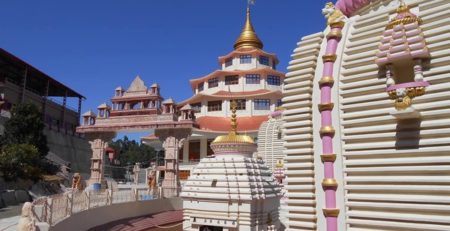
🏡 Advaita Ashram, Mayawati
- A monastery dedicated to non-dualism (Advaita Vedanta).
- A center for spiritual retreats and study.
🏔 Nainital
- Swami Vivekananda visited Nainital on multiple occasions, engaging in deep contemplation and discussions.
- Inspired local scholars and seekers with his profound knowledge.
These locations continue to attract seekers who wish to connect with Swami Vivekananda spiritual legacy.
💡 Why Uttarakhand Holds a Special Place in Swami Vivekananda Legacy
Swami Vivekananda connection with Uttarakhand is not just historical. it is spiritual and eternal. The Himalayas gave him strength, vision, and deep insights into Vedanta, which he later shared with the world. His teachings continue to guide seekers, students, and social workers, making Uttarakhand a beacon of spiritual wisdom and self-realization.
Even today, his presence is felt in the monasteries, ashrams, and sacred spaces of Uttarakhand, reminding us of his message to awaken the divinity within and serve humanity with strength and wisdom.
📖 Learn Success Mantras from the Stories of Swami Vivekananda
Swami Vivekananda was not just a spiritual leader but also a source of inspiration who provided invaluable lessons on success in every aspect of life. His life stories hold deep messages of patience, self-confidence, service, dedication, and hard work.
Let’s explore some of his inspiring anecdotes and understand the success mantras hidden within them.
❓ FAQs on Swami Vivekananda and His Spiritual Connection with Uttarakhand
Why did Swami Vivekananda visit Uttarakhand, and what was its significance in his life?
Swami Vivekananda visited Uttarakhand not just as a traveler but as a spiritual seeker searching for deeper truths about life and existence. The Himalayas have always been a sacred region for saints, sages, and monks, and Uttarakhand, known as Devbhoomi (Land of Gods), provided the perfect setting for meditation and self-discovery. His travels here helped him experience spiritual realizations that later shaped his philosophy of Advaita Vedanta. The peace and divine aura of Uttarakhand made a lasting impact on him, influencing his mission of spreading universal spirituality and selfless service worldwide.
Which important places did Swami Vivekananda visit in Uttarakhand, and why are they significant?
Swamiji traveled to multiple spiritually important locations in Uttarakhand, each holding deep significance:
- Kakrighat – A life-changing spot where he meditated under a Peepal tree and had a profound spiritual experience about the unity of the universe.
- Almora – A place he visited three times, delivering inspiring speeches and interacting with scholars and devotees.
- Mayawati (Advaita Ashram) – A secluded monastery he envisioned, dedicated to the practice of Advaita Vedanta, which is still operational today.
- Nainital – A hill town where he sought peace and had important discussions with his disciples.
- Rishikesh and Haridwar – Ancient centers of Hindu spirituality where he meditated and deepened his knowledge of Vedic scriptures.
Each of these places became important milestones in his journey, shaping his thoughts and reinforcing his spiritual mission.
What was the spiritual realization Swami Vivekananda had at Kakrighat?
Kakrighat, a serene village between Nainital and Almora, was where Swami Vivekananda had one of his deepest spiritual insights. While meditating under a Peepal tree, he experienced a moment of enlightenment where he realized that the macrocosm (universe) and the microcosm (individual soul) are the same. This realization affirmed his understanding of Vedanta, where he saw that the entire universe exists within every living being. This experience further strengthened his belief in the oneness of all existence a philosophy that became the foundation of his teachings. Today, thousands of visitors come to Kakrighat to meditate under the same tree, seeking inspiration from Swamiji’s experience.
Why did Swami Vivekananda choose Almora for his retreats, and what impact did it have on him?
Almora, with its breathtaking landscapes and serene environment, was a favorite retreat for Swamiji. He visited this place three times in 1890, 1897, and 1898 finding it to be an ideal location for deep contemplation. He once described Almora as “a land of peace, wisdom, and divine beauty.” It was here that he had intense discussions on Vedanta, interacted with seekers, and strengthened his vision for spiritual awakening in India. The natural beauty of Almora, combined with its deep-rooted spiritual traditions, made it a significant part of his spiritual journey.
What was Swami Vivekananda vision behind the Advaita Ashram in Mayawati, and how is it connected to his teachings?
Swami Vivekananda always believed in the practical application of Vedanta, and he wanted to create a space where monks could meditate, study, and spread the philosophy of non-dualism (Advaita Vedanta) without the distractions of rituals or sectarian differences. In 1899, his disciples established the Advaita Ashram in Mayawati, near Lohaghat in Uttarakhand, based on his vision. This ashram became a center for spiritual practice, where self-realization and selfless service were emphasized. Even today, the ashram continues to spread Swamiji’s teachings through its publications and spiritual activities.
How did Swami Vivekananda teachings influence the spiritual and cultural heritage of Uttarakhand?
Swami Vivekananda left a lasting impact on Uttarakhand’s spiritual and cultural landscape. His emphasis on self-realization, fearlessness, and social service inspired many followers in the region. Several monasteries, meditation centers, and educational institutions have been established in his memory. His powerful words continue to inspire youth, monks, and spiritual seekers, encouraging them to embrace courage, wisdom, and dedication in their lives. His visits to Uttarakhand helped revitalize interest in Vedanta, yoga, and meditation, making the region a global destination for spiritual seekers.
Did Swami Vivekananda interact with any notable personalities during his travels in Uttarakhand?
Yes, Swami Vivekananda engaged in deep discussions with scholars, saints, and common people during his time in Uttarakhand. He met several spiritual seekers who later became his disciples. He was also warmly welcomed by local intellectuals and devotees who were deeply influenced by his ideas. His interactions in places like Almora, Rishikesh, and Mayawati helped spread his vision of practical spirituality, selfless service, and universal brotherhood.
How can one experience Swami Vivekananda spiritual journey in Uttarakhand today?
To follow Swamiji’s spiritual footsteps, one can visit the places where he meditated and taught. Some ways to connect with his journey include:
🧘 Meditating at Kakrighat under the sacred Peepal tree, where he had his realization.
📖 Exploring Advaita Ashram in Mayawati, where his dream of a spiritual retreat was realized.
🌿 Visiting Almora, where he spent significant time contemplating and discussing Vedanta.
🔆 Joining spiritual retreats and reading his works, which are widely available in Uttarakhand’s monasteries and libraries.
What is Swami Vivekananda lasting legacy in Uttarakhand?
Swami Vivekananda presence in Uttarakhand continues to inspire spiritual seekers, scholars, and the youth. His vision of fearless spirituality, selfless service, and universal brotherhood has left a profound impact on the state. The ashrams, meditation centers, and social organizations established in his memory continue to uphold his ideals. His philosophy of Vedanta, meditation, and the unity of all beings remains deeply embedded in the spiritual essence of Uttarakhand.
What impact did Swami Vivekananda visit have on Uttarakhand’s spiritual landscape?
Swami Vivekananda visit played a crucial role in shaping Uttarakhand’s spiritual identity. His presence and teachings reinforced the state’s significance as a center for meditation, self-realization, and Vedantic studies. The spiritual vibrations he left behind continue to attract thousands of seekers who come to experience the divine energy of places like Kakrighat, Almora, and Mayawati. His influence also encouraged the establishment of ashrams and spiritual centers dedicated to Vedanta philosophy, meditation, and selfless service, making Uttarakhand a sought-after destination for spiritual growth.
Did Swami Vivekanandaa write any books or give lectures in Uttarakhand?
During his stay in Uttarakhand, Swamiji engaged in deep contemplation, wrote insightful letters, and held discussions that later influenced his writings. While he did not write a full book in Uttarakhand, his experiences in places like Almora and Mayawati significantly shaped the content of his later works. His stay in the Himalayas reinforced his vision of Advaita Vedanta, which he later shared in his lectures, letters, and teachings. Many of these thoughts are now part of books like Letters of Swami Vivekanandaa and Lectures from Colombo to Almora, where he discusses the power of self-realization and India’s spiritual heritage.
Why did Swami Vivekanandaa choose Mayawati for Advaita Ashram?
Swami Vivekanandaa was deeply moved by the serene and untouched environment of Mayawati, near Lohaghat in Uttarakhand. He wanted a place where spiritual seekers could practice Advaita Vedanta in its purest form, without distractions. The Advaita Ashram was established here with the vision of creating a retreat for meditation, scriptural studies, and self-realization. Unlike traditional ashrams, this one was unique because it had no idols or rituals focusing solely on the study of Vedanta philosophy. The peaceful surroundings of Mayawati perfectly matched his idea of a meditative sanctuary free from material distractions.
How long did Swami Vivekanandaa stay in Uttarakhand, and what were his key activities?
Swamiji visited Uttarakhand multiple times between 1890 and 1898, spending significant time in Almora, Mayawati, and Kakrighat. Each visit had its own spiritual significance:
- In 1890, he traveled through the Himalayas with his guru-brother Swami Akhandananda, meditating and contemplating the deeper aspects of Advaita Vedanta.
- In 1897, after returning from the West, he revisited Almora and gave powerful speeches on India’s spiritual and cultural revival.
- In 1898, he helped establish the Advaita Ashram in Mayawati, setting the foundation for a center of Vedantic studies.
Throughout his visits, he engaged in meditation, discussions, and spiritual discourses, which laid the groundwork for many of his later teachings.
What are the key teachings of Swami Vivekanandaa that relate to his Uttarakhand journey?
Swami Vivekananda journey through Uttarakhand deeply influenced his philosophy. His experiences in the Himalayas reinforced his core teachings, which include:
- The Unity of the Universe – He realized that the microcosm and macrocosm are one, and that everything in the universe is interconnected.
- Meditation and Self-Realization – He emphasized that true knowledge comes from introspection and deep contemplation, something he practiced extensively in Uttarakhand.
- Service to Humanity – He urged people to apply Vedantic principles in daily life, advocating selfless service and compassion.
- Fearlessness and Strength – He encouraged individuals, especially the youth, to develop inner strength and confidence to overcome challenges.
- Universal Acceptance – His travels strengthened his belief that all religions lead to the same truth, and he promoted the idea of tolerance and respect for all faiths.
Did Swami Vivekanandaa face any hardships during his travels in Uttarakhand?
Yes, Swamiji’s journey through Uttarakhand was not easy. He traveled mostly on foot through the rugged terrain of the Himalayas, often enduring harsh weather, lack of food, and physical exhaustion. Despite these challenges, he remained determined and focused, seeing these difficulties as opportunities for inner growth and spiritual awakening. His hardships in the mountains deepened his understanding of renunciation, perseverance, and the power of meditation.
Are there any monuments or memorials dedicated to Swami Vivekanandaa in Uttarakhand?
Several places in Uttarakhand honor Swami Vivekananda legacy:
- Advaita Ashram, Mayawati – Established under his guidance, this ashram continues to be a center for Vedanta studies and meditation.
- Kakrighat Peepal Tree – The sacred tree where he attained a profound spiritual realization. Pilgrims visit this spot to meditate and experience the divine energy.
- Vivekanandaa Kutir, Almora – A small house where he stayed and gave inspirational talks. It remains a popular pilgrimage site for spiritual seekers.
- Various meditation centers and temples across the state that honor his teachings and contribution to Indian spirituality.
How can one reach Swami Vivekananda spiritual sites in Uttarakhand?
- Kakrighat – This place is accessible via road from Nainital and Almora. Buses and taxis are available from both towns.
- Almora & Mayawati – The nearest railway station is Kathgodam, from where taxis and buses can take visitors to Almora and Lohaghat (Mayawati).
- Mayawati Advaita Ashram – A short trek from Lohaghat town leads to this peaceful retreat.
- Nearest Airport – Pantnagar Airport is the closest airport, making it easier for visitors traveling from distant places.
Is meditation still practiced at the places Swami Vivekanandaa visited?
Yes, meditation is a common practice at all the major locations associated with Swami Vivekanandaa. Spiritual seekers and devotees from around the world visit places like Kakrighat, Mayawati, and Almora to meditate, seek inspiration, and experience inner peace. The atmosphere in these places is deeply spiritual, offering a perfect environment for introspection and self-discovery.
How can Swami Vivekananda teachings inspire today’s youth?
Swamiji’s teachings remain highly relevant for today’s youth, as he encouraged self-confidence, self-discipline, and fearless pursuit of knowledge. His message motivates young people to:
- Believe in their potential and never give up.
- Balance education with spiritual wisdom to develop a strong character.
- Serve society with dedication and selflessness.
- Adopt a disciplined lifestyle based on truth, courage, and hard work.
- Meditate and reflect on life’s deeper meaning instead of just chasing material success.
His famous quote, “Arise, awake, and stop not till the goal is reached,” continues to ignite passion and determination in young minds around the world.
Swami Vivekananda journey through Uttarakhand was not just a personal spiritual quest but a transformative experience that strengthened his vision for India and the world. The sacred Himalayas, the serene landscapes of Almora, and the meditative silence of Kakrighat played a crucial role in shaping his philosophical outlook and deepening his understanding of Advaita Vedanta. His teachings continue to guide spiritual seekers, scholars, and social reformers, emphasizing that true spirituality lies in self-realization and selfless service. The Advaita Ashram in Mayawati stands as a testament to his mission, promoting Vedantic wisdom in its purest form. Even today, Uttarakhand remains a beacon of spirituality, drawing thousands of devotees who seek to walk in the footsteps of Swamiji.