Steve Jobs in Uttarakhand
How a Small Ashram in Uttarakhand Inspired Apple Minimalism
Steve Jobs was born on February 24, 1955, in San Francisco, California, and was adopted by Paul and Clara Jobs. As a child, he was fascinated by electronics and engineering, often working on projects in his garage. Jobs briefly attended Reed College but dropped out after one semester, realizing that formal education was not the path he wanted to take. Instead, he explored his passions—calligraphy, design, and spirituality. In 1974, he traveled to India, seeking enlightenment at Neem Karoli Baba’s ashram in Kainchi Dham, Uttarakhand. This journey influenced his philosophy on simplicity, focus, and innovation, which later became the core principles of Apple’s design.
🍏 The Birth of Apple & Industry Revolution
In 1976, Jobs co-founded Apple Inc. with Steve Wozniak in his parents’ garage. Their first creation, the Apple I, revolutionized the personal computing industry. However, it was the launch of the Macintosh in 1984 that introduced the world to a graphical user interface, changing the way people interacted with computers. Despite his success, Jobs was forced out of Apple in 1985 due to internal conflicts. He didn’t give up—he went on to found NeXT Inc., which developed advanced computer systems, and acquired Pixar, transforming it into a leading animation studio that later created classics like Toy Story. In 1997, Apple was struggling, and Jobs was brought back as CEO. Under his leadership, Apple introduced revolutionary products like the iPod (2001), iPhone (2007), and iPad (2010), shaping the future of technology.
Steve Jobs is often remembered as a visionary, innovator, and perfectionist, the mind behind Apple’s game-changing products like the iPhone, iMac, and iPad. But few know that in the mid-1970s, before he became the iconic CEO, Jobs embarked on a deeply personal spiritual journey to India a journey that shaped his thinking, philosophy, and ultimately, Apple’s minimalist design ethos.
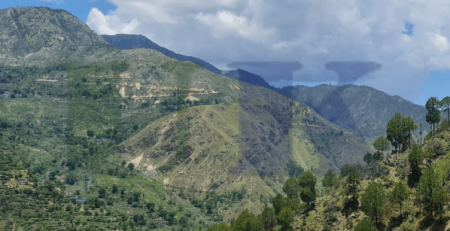
One of the key places Jobs visited was Kainchi Dham, a serene ashram nestled in the Kumaon hills of Uttarakhand, India. The ashram was founded by Neem Karoli Baba, a revered saint known for his teachings on devotion, simplicity, and selflessness. Though Jobs arrived after Neem Karoli Baba had passed away, his visit had a profound impact on him.
🌍 Steve Jobs Spiritual Quest in India
In 1974, Steve Jobs was just a 19-year-old college dropout struggling to find his purpose. He had quit Reed College after just one semester but continued attending calligraphy and philosophy classes out of curiosity. He was deeply influenced by Zen Buddhism, meditation, and Indian spiritual teachings, which led him to explore India.
Jobs and his friend Daniel Kottke (who later became Apple first employee) set out on a journey to India in search of enlightenment. The duo traveled through cities like Delhi, Haridwar, Varanasi, and Bodh Gaya, experiencing the stark contrast between Western materialism and Eastern spirituality.
At the time, Jobs was fascinated by the teachings of Neem Karoli Baba, a mystic whose followers included famous spiritual teachers like Ram Dass (Richard Alpert), Krishna Das, and Larry Brilliant (who later became a key figure in Google’s philanthropy projects).
🏕 Arrival at Kainchi Dham: A Missed Meeting with Neem Karoli Baba
Located 38 km from Nainital, Kainchi Dham is a Hanuman temple and ashram, founded by Neem Karoli Baba in 1962. It is known for its spiritual energy and has been a retreat for seekers from around the world.
Jobs and Kottke made their way to the ashram, but upon arrival, they learned that Neem Karoli Baba had passed away in 1973, just a year before their visit. Disappointed but still intrigued, Jobs spent time at the ashram, meditating, observing the lifestyle of the disciples, and absorbing the peaceful environment.
Though he never met Neem Karoli Baba, the experience left a deep impression on him.
💡 Lessons Jobs Learned from Kainchi Dham
Even though Jobs’ stay at the ashram was short, the spiritual principles he encountered continued to influence his personal philosophy and Apple corporate culture for decades.
🧘 The Power of Simplicity
Neem Karoli Baba emphasized the importance of simplicity, devotion, and selfless service. Jobs saw how a simple life, free from unnecessary distractions, led to greater focus and clarity. This realization played a key role in Apple product philosophy.
✔ iPhones, MacBooks, and iPads are designed with simplicity and minimalism—removing unnecessary buttons, features, and complexities.
✔ Apple user interfaces (iOS, macOS) focus on clean, intuitive design, reducing clutter and enhancing usability.
✔ Jobs often said, “Simple can be harder than complex.” His time at the ashram reinforced the idea that simplicity requires deep thought and refinement.
🎯 Focus and Clarity
Kainchi Dham provided an atmosphere of stillness and contemplation, which helped Jobs realize the importance of focusing on a few things and doing them exceptionally well.
✔ At Apple, Jobs eliminated unnecessary product lines and focused only on a handful of revolutionary products.
✔ This intense focus helped Apple achieve its legendary success.
✨ Intuition Over Rational Thinking
Neem Karoli Baba and other Indian saints often spoke about the power of intuition a belief that deep insight often comes from within rather than from logic. Jobs absorbed this idea and frequently relied on his gut feelings rather than just data and market research.
✔ He trusted his instincts when designing Apple’s products.
✔ He often said, “People don’t know what they want until you show it to them.”
🖤 The Zen-Like Discipline of Perfection
Jobs black turtleneck, jeans, and sneakers became his signature look. This was not just a fashion statement it reflected his minimalist philosophy. He believed in removing distractions and focusing only on what truly mattered.
✔ Similarly, at Apple, he instilled a perfectionist culture, ensuring that every detail, from product design to packaging, was flawless.
🌍 Steve Jobs’ Advice to Mark Zuckerberg: Visit Kainchi Dham
Years later, when Mark Zuckerberg (co-founder of Facebook) was going through a difficult phase, Jobs advised him to visit Kainchi Dham. Zuckerberg later revealed that this visit helped him gain clarity and refocus on Facebook’s mission.
This demonstrates how Kainchi Dham has remained a source of inspiration for global tech leaders.
🏕 Kainchi Dham Today: A Spiritual Hub for Entrepreneurs
Even today, Kainchi Dham continues to attract seekers, including business leaders, entrepreneurs, and technology pioneers who come looking for clarity and inspiration.
✔ Every year on June 15, a large gathering takes place at Kainchi Dham, attended by thousands of devotees.
✔ Many Silicon Valley entrepreneurs continue to draw inspiration from Neem Karoli Baba’s teachings.
✔ It remains a symbol of inner clarity, focus, and minimalist philosophy values that shaped some of the biggest tech innovations in the world.
📌 FAQs
📍 Why did Steve Jobs visit India, and what was he searching for?
Steve Jobs traveled to India in 1974 with a deep desire to explore spirituality, enlightenment, and self-discovery. At that time, he was questioning the purpose of life beyond material success and was heavily influenced by Eastern philosophy, Hinduism, and Buddhism. He believed that India, with its rich spiritual traditions, could provide him with the wisdom he was looking for.
He specifically wanted to visit Neem Karoli Baba’s ashram at Kainchi Dham, as he had heard about the saint’s teachings on compassion, simplicity, and devotion from friends, including Robert Friedland, a spiritual enthusiast who later became a billionaire businessman.
🛕 What is Kainchi Dham, and why is it significant?
Kainchi Dham is a spiritual ashram and Hanuman temple located in the Kumaon region of Uttarakhand, India. It was established in 1962 by Neem Karoli Baba, a revered Indian saint who was known for his teachings on love, devotion, and selfless service.
The ashram is famous because of its connection to several influential personalities, including:
✔ Steve Jobs – The visionary behind Apple Inc.
✔ Mark Zuckerberg – The founder of Facebook, who visited on Jobs’ recommendation.
✔ Larry Page & Sergey Brin – Co-founders of Google, who were inspired by Indian spirituality.
Every year, thousands of devotees visit Kainchi Dham on June 15, the day of its establishment, to experience the same peace and divine energy that once inspired Jobs.
🧘 Did Steve Jobs meet Neem Karoli Baba during his visit?
No, Jobs did not get to meet Neem Karoli Baba. The saint had passed away in 1973, just a year before Jobs arrived in India. However, Jobs spent time at the ashram, interacting with Baba’s disciples and absorbing the teachings that had influenced many spiritual seekers before him.
Although he did not meet Neem Karoli Baba personally, the peaceful atmosphere, simplicity, and wisdom of the place had a lasting impact on him.
📱 How did Steve Jobs visit to Kainchi Dham influence Apple design philosophy?
Jobs experience at Kainchi Dham played a crucial role in shaping his philosophy on simplicity, minimalism, and clarity values that later became the foundation of Apple’s product design and company culture.
Here’s how his spiritual journey influenced Apple:
✔ Minimalist Design – Inspired by the simplicity of Indian spirituality, Apple products are sleek and clutter-free.
✔ Focus & Intuition – The idea that “less is more” helped him create devices that were intuitive and easy to use.
✔ Perfectionism – His experience taught him the value of precision and purpose, leading to Apple’s seamless user experience.
✔ User-Centric Approach – He believed that technology should serve people effortlessly, just like spiritual teachings guide life.
Job’s fascination with Zen Buddhism, which he later practiced, also reinforced his belief in elegant and functional design, making Apple stand out from its competitors.
🌍 Did Steve Jobs recommend Kainchi Dham to other entrepreneurs?
Yes! Steve Jobs personally recommended Kainchi Dham to Mark Zuckerberg, the founder of Facebook.
When Zuckerberg was struggling with the direction of Facebook, Jobs advised him to visit India and seek inspiration at Neem Karoli Baba’s ashram. Zuckerberg followed Jobs’ advice and traveled to Kainchi Dham, later stating that the visit helped him refocus on Facebook’s mission and gave him a new perspective on leadership.
📍 Where is Kainchi Dham located, and can people visit it today?
✔ Location: Kainchi Dham is located in the Kumaon region of Uttarakhand, India, about 38 km from Nainital.
✔ How to Reach: It is easily accessible by road from major cities like Delhi, Haldwani, and Nainital.
✔ Best Time to Visit: The ashram is open throughout the year, but June 15 is a special day when thousands of devotees visit for blessings.
✔ Rules for Visitors: The ashram maintains a quiet and disciplined environment where visitors are encouraged to meditate and absorb the peaceful surroundings.
🏕 What were the key teachings of Neem Karoli Baba that influenced Jobs?
Although Jobs never met Neem Karoli Baba, he was deeply influenced by his philosophy and teachings, which emphasized:
✔ Simplicity & Devotion – Living with minimal desires, which shaped Apple’s elegant product designs.
✔ Intuition & Focus – Trusting one’s inner calling, which Jobs relied on while creating breakthrough technology.
✔ Selfless Service – The belief that work should benefit society, which Jobs integrated into Apple’s mission.
These teachings aligned with Jobs growing interest in Zen Buddhism, which later guided his leadership and business decisions.
📖 Are there books or resources that talk about Steve Jobs India trip and its impact?
Yes! Some books and articles detail Jobs’ spiritual journey in India:
✔ “Steve Jobs” by Walter Isaacson – The official biography that discusses Jobs’ trip to India and its impact.
✔ “Be Here Now” by Ram Dass – A book that explores Neem Karoli Baba’s teachings and spiritual wisdom.
✔ Interviews & Articles – Various tech journals and magazines have covered the connection between Jobs’ Indian visit and Apple’s philosophy.
🚀 How does Kainchi Dham continue to influence modern entrepreneurs and tech leaders?
Kainchi Dham remains a powerful spiritual center that attracts entrepreneurs, startup founders, and innovators from around the world. Many believe that visiting the ashram helps them gain clarity, reduce stress, and refocus on their goals.
Tech leaders and business executives continue to draw inspiration from the simplicity, mindfulness, and wisdom that shaped Steve Jobs vision.
Steve Jobs journey was one of passion, resilience, and innovation. From co-founding Apple to being ousted from his own company and then making one of the greatest comebacks in history, his story is a testament to the power of perseverance. His ability to embrace failure, think differently, and push boundaries led to groundbreaking innovations like the iPhone, iPad, and Mac, which revolutionized technology and shaped the modern world. Jobs proved that setbacks are not the end but rather opportunities to grow stronger. Beyond technology, Jobs’ visit to Kainchi Dham in India was a profound experience that influenced his leadership style and Apple’s philosophy. The principles of simplicity, clarity, and focus that he absorbed at Neem Karoli Baba’s ashram became the foundation of Apple’s design and corporate culture. His legacy is more than just cutting-edge products it is a philosophy of innovation, spirituality, and the relentless pursuit of excellence.
As he famously said, “The people who are crazy enough to think they can change the world are the ones who do.” His story continues to inspire dreamers, entrepreneurs, and innovators worldwide.