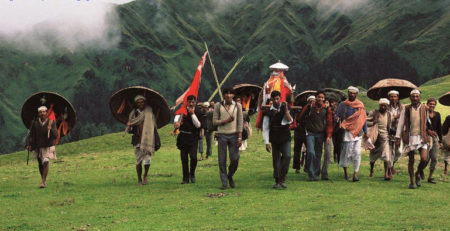
Nanda Devi Raj Jat Yatra 2014
Experience the divine Nanda Devi Raj Jat Yatra 2014, a once-in-12-years pilgrimage in Uttarakhand. Discover its history, rituals, challenges, and cultural significance as devotees trek 280 km through the Himalayas, honoring Goddess Nanda Devi.
The Nanda Devi Raj Jat Yatra 2014 was a deeply spiritual journey undertaken by thousands of devotees to honor Goddess Nanda Devi. This sacred pilgrimage, held once every 12 years, is often called the “Mahakumbh of the Himalayas” and is one of the most challenging Hindu religious treks. The journey symbolizes the farewell of Goddess Nanda Devi as she departs for her heavenly abode. Over the course of 19 days, pilgrims endured harsh terrains, extreme weather, and high altitudes, all while chanting prayers and carrying sacred offerings.
📅 Date: 18 August – 6 September 2014
📌 Key Points:
✅ Once-in-12-years grand pilgrimage dedicated to Goddess Nanda Devi
✅ Covers 280 kilometers through the Himalayas over 19 days
✅ Begins at Maa Nanda Devi Siddhpeeth Mandir Kurur (Chamoli) and ends at Homkund
✅ Devotees follow a four-horned ram, considered the goddess’s divine guide
✅ A blend of faith, endurance, and cultural heritage
📍 Journey Route and Key Stops
The route of the Nanda Devi Raj Jat Yatra is a combination of devotion and adventure, stretching 280 km through some of Uttarakhand’s most breathtaking landscapes. Pilgrims pass through dense forests, alpine meadows, glacial terrains, and ancient temples while offering prayers at each stop. Vedni Bugyal is one of the most sacred halts, where pilgrims stay for religious rituals. The trek to Roopkund, the famous “Skeleton Lake”, is particularly challenging due to the high altitude and rough terrain. The final destination, Homkund, marks the emotional farewell of Goddess Nanda Devi as her idol is submerged in the holy waters.
📌 Key Points:
✅ Starts from Maa Nanda Devi Siddhpeeth Mandir Kurur in Chamoli district
✅ Major stops: Koti, Mundoli, Bedni Bugyal, Roopkund, and Homkund
✅ Ends at Homkund, where the four-horned ram disappears
✅ Journey involves glacier crossings, river fording, and high-altitude trekking
🌿 Unique Aspects of Nanda Devi Raj Jat Yatra 2014
The 2014 Yatra witnessed a blend of ancient traditions, spiritual faith, and communal harmony. One of the most mystical aspects is the appearance of a four-horned ram, which is said to be a divine messenger guiding the devotees. Pilgrims bring beautifully decorated chhantolis (sacred umbrellas) from their villages, symbolizing their participation in the goddess’s farewell. Despite the hardships, the entire route is filled with devotional songs, folk dances, and community prayers, making the Yatra a once-in-a-lifetime experience.
📌 Key Points:
✅ The four-horned ram leads the yatra, considered an incarnation of the goddess
✅ Pilgrims walk barefoot as a mark of devotion
✅ Villages bring chhantolis (sacred umbrellas), symbolizing their participation
✅ Folk songs, dances, and rituals create a spiritual atmosphere
🌊 2013 Disaster and Challenges of the 2014 Yatra
The 2013 Kedarnath floods devastated many regions of Uttarakhand, including areas on the Nanda Devi Raj Jat Yatra route. With landslides, washed-out trails, and damaged infrastructure, there were serious concerns about whether the 2014 Yatra could take place. However, dedicated efforts by the government, local communities, and volunteers ensured that the path was cleared and secured in time. Medical teams, disaster response units, and helicopter services were also deployed to ensure the safety of thousands of pilgrims. Despite these challenges, the Yatra was completed successfully, proving the unwavering faith and resilience of devotees.
📌 Key Points:
✅ 2013 Uttarakhand floods caused massive destruction to the pilgrimage route
✅ Bridges, trails, and shelters were washed away, making the 2014 Yatra difficult
✅ Government and volunteers worked to restore the path before the Yatra
✅ Special medical camps, rescue teams, and satellite communication were arranged
🛤️ The Final Farewell – Goddess Nanda Devi Departure
The final day of the Nanda Devi Raj Jat Yatra is an intensely emotional and spiritual moment for devotees. At Homkund, the sacred idol of Goddess Nanda Devi is given a ceremonial farewell, symbolizing her return to her divine consort, Lord Shiva. According to tradition, the four-horned ram vanishes into the wilderness, never to be seen again, reinforcing the belief in its divine origin. Pilgrims offer prayers, light lamps, and collect sacred water and soil as a symbol of their successful journey. This moment of divine farewell leaves a lasting impact on every participant, strengthening their faith and connection to the goddess.
📌 Key Points:
✅ The Yatra culminates at Homkund, a sacred lake
✅ The four-horned ram mysteriously disappears, marking the goddess’s departure
✅ Pilgrims collect sacred water and soil as blessings
✅ Devotees experience spiritual fulfillment and emotional connection
🎯 Nanda Devi Raj Jat Yatra 2026 – The Next Pilgrimage
The next Nanda Devi Raj Jat Yatra is scheduled for 2026, offering another opportunity for devotees to undertake this sacred and physically demanding journey. Those planning to participate should begin preparing well in advance, as the trek requires stamina, mental resilience, and proper guidance. The Uttarakhand government and local communities will provide updates on registration, route planning, and safety measures as the date approaches. This pilgrimage is not just an act of faith but also an opportunity to witness the majestic beauty of the Himalayas and experience the ancient traditions of Uttarakhand.
📌 Key Points:
✅ The next Nanda Devi Raj Jat Yatra will be held in 2026
✅ Advanced physical and mental preparation is recommended
✅ Registration and route details will be announced closer to the event
✅ A rare opportunity to experience Uttarakhand’s cultural and spiritual heritage
❓ FAQs – Nanda Devi Raj Jat Yatra 2014
🔹 What is the Nanda Devi Raj Jat Yatra, and why is it significant?
The Nanda Devi Raj Jat Yatra is a once-in-12-years pilgrimage in Uttarakhand, India, dedicated to Goddess Nanda Devi, who is considered the daughter of the Garhwal and Kumaon regions. The Yatra symbolizes her farewell journey to her husband’s abode (Lord Shiva) at Homkund. It is one of the toughest and most revered pilgrimages in India, covering 280 km through rugged Himalayan terrain. The Yatra is deeply rooted in faith, devotion, and centuries-old traditions, bringing together thousands of devotees, sages, and cultural enthusiasts.
🔹 When was the last Nanda Devi Raj Jat Yatra held, and when is the next one?
The most recent Nanda Devi Raj Jat Yatra was held from 18 August – 6 September 2014. It witnessed thousands of devotees from across India and abroad. The next Yatra is scheduled for 2026, following the traditional 12-year cycle.
🔹 What is the historical and mythological background of the Yatra?
The Yatra is associated with King Jasdhaval of Kannauj, who, according to legend, disrespected the sacred rituals and was punished by divine forces, leading to his kingdom’s downfall. The journey has been conducted for centuries by the Rajputs of Garhwal and Kumaon, maintaining the sacred tradition. Mythologically, it is believed that Goddess Nanda Devi, the revered deity of the Himalayas, embarks on her celestial journey to reunite with Lord Shiva at Mount Kailash.
🔹 Where does the Yatra start and end, and what are the key locations?
The pilgrimage starts from Maa Nanda Devi Siddhpeeth Mandir Kurur near Karnaprayag in Chamoli district and concludes at Homkund, passing through Mundoli, Wan, Bedni Bugyal, Roopkund, and other high-altitude regions. Each site has religious and cultural significance, with ancient temples, sacred water bodies, and legends associated with them.
🔹 Why is the Yatra held only once every 12 years?
The Yatra follows astrological and religious customs, and its timing is determined by sacred Hindu calculations. The most mystical aspect is the appearance of the four-horned ram (chausingha), which is believed to be sent by the goddess herself. It leads the pilgrimage and disappears into the Himalayas at Homkund, marking the end of the journey.
🔹 What is the importance of the four-horned ram (chausingha)?
This rare four-horned ram, considered divine, magically appears in the village of Kansuwa before the pilgrimage and leads the entire journey. It is believed to be the chosen vehicle of Goddess Nanda Devi, guiding devotees along the sacred path before disappearing into the mountains at Homkund. Scientists have rarely recorded such a species, adding to its mythical aura.
🔹 What are the key rituals performed during the Yatra?
The Yatra includes various religious ceremonies, prayers, and processions, such as:
✅ Installation of Chhantolis (Sacred Umbrellas): Representing different villages, these are carried along the journey.
✅ Holy Dip at Roopkund: Devotees take a sacred dip in the lake, believed to cleanse sins.
✅ Folk Songs & Chants: Special Kumaoni and Garhwali devotional songs are sung throughout the journey.
✅ Puja at Homkund: The final offering to Goddess Nanda Devi is made before concluding the Yatra.
🔹 Why do some devotees walk barefoot during the Yatra?
Many pilgrims choose to walk barefoot as an act of devotion, penance, and sacrifice. It is believed that enduring the harsh journey without shoes pleases Goddess Nanda Devi and brings spiritual blessings.
🔹 What are the major challenges faced during the Yatra?
The trek is one of the most physically demanding pilgrimages in India, with extreme challenges such as:
🔥 Harsh Weather Conditions – The Yatra takes place in monsoon season, leading to unexpected rains, landslides, and cold temperatures.
🧗 Tough Terrain – The route covers dense forests, steep climbs, glaciers, and high-altitude passes, with elevations over 5,000 meters (16,400 feet).
😰 Altitude Sickness – Many devotees experience breathlessness, nausea, and fatigue due to the high altitude.
🏕 Basic Facilities – Accommodation is temporary, with basic tents and food supplies available along the route.
🔹 Is prior trekking experience required for the Yatra?
Though prior trekking experience is not mandatory, it is highly recommended. Devotees should prepare by:
✔️ Practicing daily walking/jogging for stamina
✔️ Doing yoga and breathing exercises to prevent altitude sickness
✔️ Carrying essential trekking gear for comfort and safety
🔹 What kind of accommodation is available during the Yatra?
Due to the remote nature of the trek, accommodation includes:
🏕 Temporary Camps & Tents – Set up by local authorities
🏡 Dharamshalas & Lodges – Available in villages along the way
🍲 Free Langars (Community Kitchens) – Serve simple vegetarian food to devotees
🔹 What food is available during the Yatra?
Meals primarily consist of simple, high-energy vegetarian food like:
🍚 Dal-Chawal (Lentils & Rice)
🍞 Roti-Sabzi (Indian Bread & Vegetables)
🍵 Tea & Herbal Drinks for warmth
🍪 Dry Fruits & Snacks for energy
🔹 What medical facilities are available during the Yatra?
🩺 Medical Camps & First Aid Stations are set up along the route.
💊 Basic medicines, oxygen cylinders, and emergency aid are available.
🚁 In case of extreme emergencies, evacuation by helicopter is possible.
🔹 What safety precautions should pilgrims follow?
✅ Acclimatize before reaching high-altitude zones
✅ Travel in groups and follow instructions from local guides
✅ Carry warm clothing, trekking gear, and rain protection
✅ Avoid polluting the environment and respect local customs
🔹 How did the 2013 Uttarakhand floods impact the Yatra?
The 2013 Kedarnath floods caused massive destruction in Uttarakhand, leading to concerns about the 2014 Yatra’s feasibility. However, extensive route restoration efforts ensured the successful execution of the Yatra in 2014, with improved safety measures.
🔹 How can devotees register for the 2026 Yatra?
Registration details for the 2026 Yatra will be announced by:
📢 Uttarakhand Tourism Development Board (UTDB)
📢 Local Government & Temple Committees
📢 Official Websites & Religious Groups
🔹 What should I pack for the Yatra?
🎒 Essential items for the journey include:
✅ Warm jackets, gloves, and trekking shoes
✅ Sleeping bag, flashlight, and walking stick
✅ Energy bars, dry fruits, and water bottles
✅ First-aid kit, personal medicines, and altitude sickness tablets
✅ Spiritual items like incense, prayer books, and offerings
The Nanda Devi Raj Jat Yatra is not just a pilgrimage, it is a test of faith, endurance, and spiritual awakening. If you’re planning to participate in 2026, start preparing early for this once-in-a-lifetime experience! 🚶♂️🏔️🙏
Nanda Devi Raj Jat Yatra is more than just a pilgrimage, it is a sacred odyssey of faith, endurance, and devotion. Taking place once every 12 years, this spiritually and physically demanding journey unites thousands of devotees in honoring Goddess Nanda Devi. The challenging trek through the rugged Himalayan terrain, glacial lakes, and high-altitude meadows symbolizes the deep-rooted cultural and religious heritage of Garhwal and Kumaon. Despite the extreme difficulties harsh weather, tough climbs, and high-altitude sickness devotees undertake this journey barefoot, guided by faith and tradition. The mystical presence of the four-horned ram (chausingha) adds to the spiritual aura, making this Yatra one of the most unique and revered pilgrimages in India. With its rich history, deep cultural significance, and breathtaking landscapes, the Nanda Devi Raj Jat Yatra remains an unforgettable experience. As the next Yatra approaches in 2026, preparations are already underway for another soul-stirring journey to the abode of the goddess. For those who seek spiritual enlightenment, cultural immersion, and a once-in-a-lifetime adventure, the Nanda Devi Raj Jat Yatra is a pilgrimage like no other.