Musk Deer
Uttarakhand’s State Animal and Its Spiritual Significance
Musk Deer (Moschus moschiferus) holds a special place in the biodiversity of Uttarakhand, a state known for its high-altitude ecosystems and rich cultural heritage. Revered as the state animal of Uttarakhand, the Musk Deer not only symbolizes the natural beauty and wildlife of the region but also carries a deeper, spiritual significance that resonates with the people and traditions of the area.
The Musk Deer: A Unique Creature
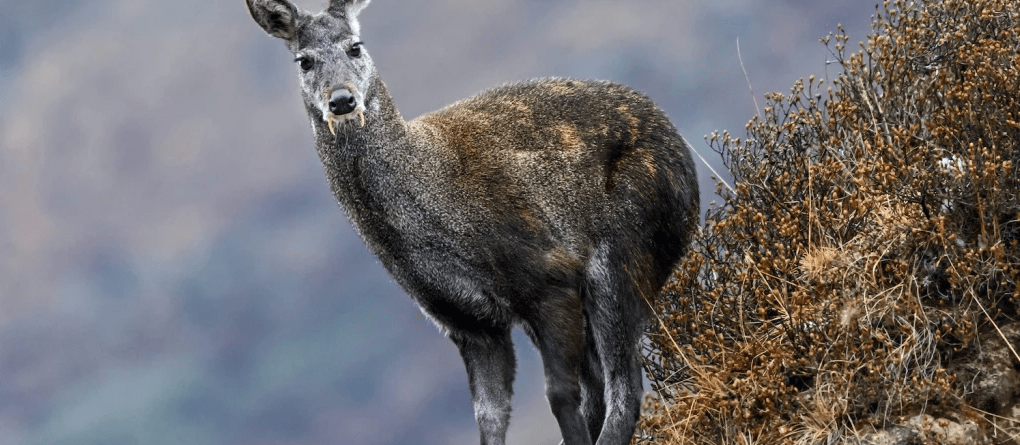
The Musk Deer is a small, elusive herbivore that primarily inhabits the high-altitude forests and alpine meadows of the Himalayas. It is a creature that thrives in the rugged, cold environments between 2,000 and 4,500 meters above sea level, which makes it perfectly adapted to the challenging terrains of Uttarakhand.
Known for its stocky body, slender legs, and large, bright eyes, the Musk Deer is a solitary animal, typically seen alone. Unlike other deer species, it does not have antlers. Instead, the male Musk Deer possesses tusks on its upper jaw, which it uses in social interactions during the mating season. Despite its small size, the Musk Deer has a significant place in the ecosystem, as it contributes to the balance of vegetation in the high-altitude forests by feeding on grasses, herbs, and mosses.
The musk produced by the male deer from its special musk gland is highly valued in traditional medicine and perfumery. The substance is aromatic and is used in many cultural practices, making the deer not just an ecological asset but also a cultural symbol.
The Spiritual Significance of the Musk Deer
While the Musk Deer is often associated with ecological and environmental importance, it also holds a spiritual significance in Uttarakhand’s culture and folklore. The region, home to numerous temples and sacred sites, is steeped in spirituality, with nature playing a key role in the beliefs and practices of its people. The Musk Deer, as a representative of the region’s wild beauty, is intertwined with the spiritual identity of the land.
- Symbol of Purity and Elusiveness: The Musk Deer is often seen as a symbol of purity due to its elusive nature. Much like the way this animal stays hidden in the dense forests of the Himalayas, its presence is subtle, reminding people of the delicate balance of nature. In the spiritual context, this aligns with the Hindu belief in the sacredness of all living beings and the need to protect and respect the natural world as part of divine creation.
- Connection to Lord Shiva: Uttarakhand is often called “Devbhoomi” (Land of the Gods) due to its association with numerous deities, particularly Lord Shiva. The Musk Deer has connections to the spiritual realm in Hinduism, especially in the stories and depictions of Lord Shiva. According to some traditions, Lord Shiva is believed to wear a musk-scented garment or “jata” (hair), which has associations with the musky scent of the deer. This connection elevates the Musk Deer to a symbol of spiritual purity, asceticism, and the connection between the earthly and divine realms.
- Symbol of Ecological Harmony: The Musk Deer, in its natural habitat, represents the harmony between man, nature, and the divine. Uttarakhand’s residents, often deeply connected to their natural surroundings, see the Musk Deer as a reminder of the importance of preserving the environment for spiritual and physical well-being. The reverence for the animal and its habitat is part of the broader spiritual belief in protecting nature as a form of honoring the divine.
- Sacredness of the Himalayas: The Himalayas, where the Musk Deer resides, are considered a sacred realm in many spiritual traditions, particularly in Hinduism and Buddhism. These mountains are often viewed as the abode of the gods, and animals like the Musk Deer are seen as spiritual guardians of the region. The presence of the Musk Deer in the remote, untamed parts of the mountains reinforces the idea that the Himalayas are a place of divine energy, where the sacred and natural worlds converge.
Conservation and Spiritual Responsibility
The Musk Deer’s status as Uttarakhand’s state animal is not only a matter of ecological importance but also a spiritual call to action. The decline in Musk Deer populations due to poaching for their musk, habitat destruction, and the impacts of climate change pose a direct threat to the spiritual and ecological balance that the animal represents. In response, efforts are being made to protect the species and its natural habitat, ensuring that the connection between nature, spirituality, and community is maintained.
Local communities are increasingly recognizing their spiritual responsibility to protect the Musk Deer and the natural world it inhabits. By strengthening laws against poaching, promoting habitat conservation, and raising awareness about the ecological and spiritual importance of the Musk Deer, Uttarakhand is striving to preserve both its natural and cultural heritage.
The Musk Deer is more than just a state animal of Uttarakhand; it is a symbol of purity, spirituality, and ecological balance. Its role in the spiritual landscape of Uttarakhand, especially in relation to its connection with Lord Shiva and the sacredness of the Himalayas, underscores the deep reverence that the people of the region have for nature. Protecting the Musk Deer is not only a conservation imperative but also a spiritual duty to preserve the delicate balance of life in the majestic landscapes of Uttarakhand.