Story of Kedarnath Temple
The Sacred Story of Kedarnath Temple: Legend of the Pandavas and Lord Shiva
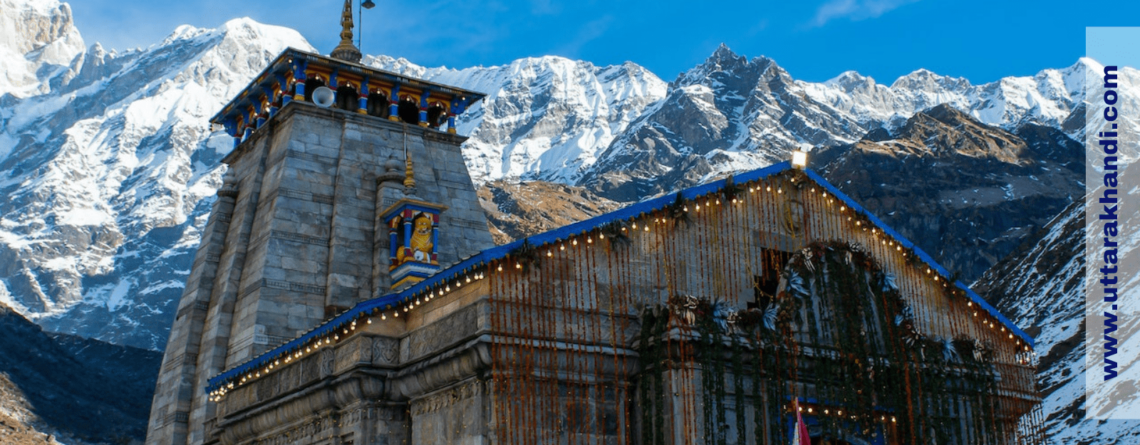
The Kedarnath Temple, nestled in the Himalayas of Uttarakhand, is a revered Hindu shrine dedicated to Lord Shiva. Its origins are steeped in legend, reflecting the deep spiritual significance and ancient traditions associated with this sacred site. The Kedarnath Temple, built in honor of this legend, is an important pilgrimage site for Hindus. The temple’s architecture and the rituals performed there are deeply influenced by this mythological tale. The shrine’s location, high in the mountains, reflects the arduous journey the Pandavas undertook and emphasizes the temple’s sacredness.
The Story of Kedarnath Temple: The Significance of the Buffalo
According to the legend associated with Kedarnath Temple, Lord Shiva, pleased by the devotion of the Pandavas, decided to grant them his blessings to free them from the sins of the Mahabharata war. After their victory in the war, the Pandavas sought Lord Shiva’s blessings to absolve them of the sin of killing their own kin. However, Lord Shiva, wanting to avoid their request, took the form of a buffalo and hid among other animals in the region.
When the Pandavas arrived in Kedarnath in search of Lord Shiva, He had already taken the form of a buffalo and mingled with other animals to avoid detection. Bhima, known for his immense strength, spread his legs between two mountains to allow all the animals to pass through. During this effort, one buffalo (which was actually Lord Shiva in disguise) remained behind.
As Bhima tried to capture the buffalo, it began to sink into the ground. During the struggle, Bhima managed to grab the back part of the buffalo’s body. According to the legend, Lord Shiva, having taken the buffalo’s form, allowed this part of His form to be captured while retreating into a cave in the Himalayas.
The area where the buffalo’s back was captured is considered sacred and is revered as a symbol of Lord Shiva. Consequently, at the Kedarnath Temple, the back part of the buffalo is worshipped as part of the ritualistic practices, symbolizing Lord Shiva’s presence and His divine blessing.
Thus, the story of the buffalo’s role in the Kedarnath Temple legend highlights the temple’s deep connection with Lord Shiva and the intricate rituals that are part of its worship.
Nar-Narayan’s Penitence
According to ancient lore, on the Kedara peak of the Himalayas, the great ascetics Nar and Narayan, who are incarnations of Lord Vishnu, engaged in intense penance. They chose this remote and austere location for their spiritual practices, dedicating themselves to the worship of Lord Shiva with unwavering devotion. Their penance was so profound and sincere that it captured the attention of the divine.
Pleased by their dedication and fervent prayers, Lord Shiva manifested himself in response to their devotion. He granted them a boon to remain there eternally in the form of a Jyotirlinga, a radiant symbol of his divine presence. This divine manifestation was not just a blessing but a confirmation of the sacredness of the location, which came to be known as Kedarnath.
The Kedarnath Temple, situated on this sacred peak, has become a major pilgrimage site, drawing devotees from all over the world. It is believed that Lord Shiva, in his Jyotirlinga form, resides here, making the temple a significant site for worship and spiritual enlightenment. The temple’s location amidst the majestic Himalayas adds to its sanctity and allure, offering a serene and powerful backdrop for spiritual practices.
The Shrine Behind the Temple: The Samadhi of Adi Shankaracharya
Adi Shankaracharya is credited with the renovation of the Kedarnath Temple, and his legacy is an integral part of its history. His samadhi, or final resting place, is located behind the temple complex. According to tradition, Adi Shankaracharya chose this sacred site to merge into the earth, signifying his deep spiritual presence.
In addition to the temple’s renovation, Adi Shankaracharya is believed to have established a hot spring for the benefit of pilgrims. This spring was intended to provide relief from the harsh winter conditions, allowing pilgrims to stay warm and comfortable during their visit.
Thus, the samadhi of Adi Shankaracharya and the facilities he established add to the religious and historical significance of the Kedarnath Temple, preserving his cultural heritage and enhancing the pilgrimage experience.
Historical and Spiritual Significance
Kedarnath Temple, situated at a high altitude in the Himalayas, has faced numerous natural calamities over the centuries, including earthquakes and floods. Despite these challenges, the temple has been rebuilt and restored, maintaining its sacred status and continuing to attract pilgrims from all over the world. The journey to Kedarnath, often arduous and challenging, is seen as a path to spiritual enlightenment and divine blessings.
The temple remains a central hub for the worship of Lord Shiva, and its significance is deeply rooted in both mythology and religious practice. The Kedarnath Temple continues to be a symbol of enduring faith and a beacon of spiritual devotion, inspiring countless devotees who make the pilgrimage to this sacred site.