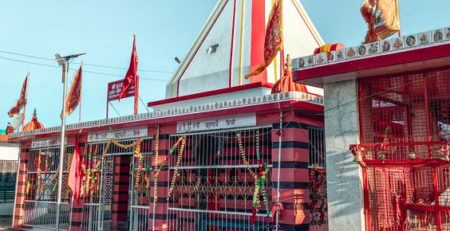
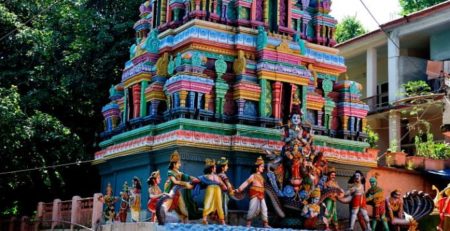
Dronagiri Mountain (Dronagiri Parvat)
Dronagiri Parvat, also known as Dronagiri Mountain, is a revered peak located in the Chamoli district of Uttarakhand, India. It is part of the Himalayas and is famous in Hindu mythology as the site where Hanuman lifted the entire mountain to carry the Sanjeevani herb, a life-saving plant, to save Lakshmana, Lord Rama’s brother, during the battle in the Ramayana.
In the timeless tale of the Ramayana, one of the most cherished stories is that of Hanuman, the devoted hindu god, who performed a miraculous act to save Lakshmana, Lord Rama’s beloved brother. When Lakshmana was struck down in battle by a powerful weapon, it was Hanuman who, with his immense strength and unshakeable devotion, saved the day. The story, which involves the lifting of the Dronagiri mountain to retrieve the life-saving Sanjeevani herb, is not only a profound testament to Hanuman’s power but also a symbol of unwavering loyalty, courage, and selfless service.
The Quest for the Sanjeevani Herb
The Ramayana, one of the greatest epics of ancient India, tells the story of Lord Rama, his exile to the forest, and his battle to rescue his wife, Sita, from the demon king Ravana. During the fierce battle, Lakshmana, Rama’s loyal brother, was critically wounded by a weapon of great potency. As Lakshmana’s life hung in the balance, it became clear that the only remedy that could save him was the rare and powerful Sanjeevani herb, which grew on the slopes of the distant Dronagiri mountain.
The Sanjeevani herb had miraculous healing properties, known for its ability to revive those near death. When the urgency of the situation became apparent, Lord Rama turned to Hanuman, asking him to fetch the herb and bring it back in time to save Lakshmana. Without hesitation, Hanuman set off on this perilous mission, knowing that his success was crucial to Lakshmana’s survival.
Hanuman’s Heroic Journey to Dronagiri Mountain
Hanuman’s journey to retrieve the Sanjeevani herb was one of great determination. Reaching the towering Dronagiri mountain in the Himalayas, Hanuman faced an unexpected challenge. There, amidst the vast array of plants on the mountain, he could not identify the life-saving herb. Time was running out, and Lakshmana’s condition continued to deteriorate.
In an act of divine ingenuity, Hanuman decided to lift the entire Dronagiri mountain. Recognizing that there was no time to carefully search for the herb, he uprooted the whole mountain, holding it firmly in his grasp. With the mountain securely in hand, Hanuman flew back to the battlefield, crossing vast distances with unimaginable speed and power.
The Divine Act of Lifting the Mountain
As Hanuman soared through the skies, holding the entire mountain aloft, the landscape below seemed to celebrate his divine mission. Clouds parted, and the world seemed to pause in reverence of his strength and dedication. The sight of the mighty Hanuman, carrying the mountain with ease, became a symbol of selfless devotion and divine strength.
Upon reaching the battlefield, Hanuman presented the Dronagiri mountain to Lord Rama, who, with the help of the wise healer Sushena, was able to identify the Sanjeevani herb and use it to restore Lakshmana’s life. The miraculous revival of Lakshmana was a turning point in the battle and a moment of immense joy and relief for Lord Rama and his allies.
Dronagiri Mountain: A Sacred Symbol
Dronagiri, also known as Mahodaya or Gandhamardan, is more than just a geographical feature; it is a sacred place in Hindu mythology. The mountain is often associated with the divine and with the healing power of the Sanjeevani herb. Though the exact location of Dronagiri remains a subject of debate, many believe it is situated in the Himalayan region of Uttarakhand, India, particularly near the Valley of Flowers, a UNESCO World Heritage site renowned for its stunning beauty and rich biodiversity. Some also associate the mountain with the Gandhamardan hills, located on the border between Uttar Pradesh and Uttarakhand, which is equally known for its healing plants and spiritual significance.
The Local Beliefs and Mysticism
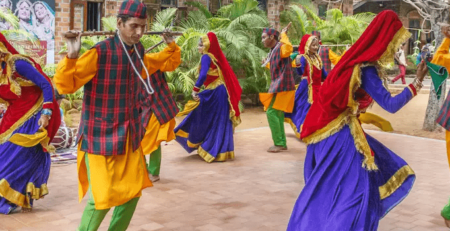
While the mythological importance of Dronagiri is widely acknowledged, the mountain also holds a place in the local folklore of Uttarakhand and neighboring regions. Some believe that Hanuman, in his haste, accidentally broke off the top of the mountain while lifting it. This act of disruption is said to have caused the spirits residing on the mountain to become upset.
In certain villages surrounding Dronagiri, there were traditional beliefs that prohibited the worship of Hanuman. The locals, out of respect for the mountain’s sanctity, would banish anyone who worshipped Hanuman, as they believed his actions to be a violation of the natural order. However, over time, these restrictions faded, and the worship of Hanuman became widespread in the region. His qualities of loyalty, strength, and devotion are now revered, and Hanuman temples and shrines can be found across Uttarakhand.
Hanuman’s Symbolism: Strength, Devotion, and Selflessness
The tale of Hanuman lifting the Dronagiri mountain is rich in symbolism, representing not just physical strength but also emotional and spiritual fortitude. Hanuman’s unwavering devotion to Lord Rama is a central theme in the story. His act of lifting the mountain was not just a display of power; it was a manifestation of his deep love and commitment to Rama.
In Hindu philosophy, Hanuman is revered as the epitome of selfless service. His story teaches that true strength comes not only from physical power but from inner devotion and the willingness to sacrifice for a higher cause. His dedication to Lord Rama, even in the face of adversity, serves as an inspiration for all those who seek to live a life of purpose, humility, and service.
The Enduring Legacy of Dronagiri
The legacy of Dronagiri mountain, and the story of Hanuman’s miraculous feat, continues to inspire countless individuals. In the hearts of the people, the mountain symbolizes divine strength, protection, and healing. The sacredness of Dronagiri transcends its physical form, becoming a beacon of faith for those who believe in the power of devotion and selfless love.
The mountainous terrain of Uttarakhand, with its rugged beauty and spiritual significance, continues to draw pilgrims, mountaineers, and spiritual seekers. While Dronagiri itself may not be a common destination for tourists, the nearby Valley of Flowers and the revered Badrinath temple attract thousands of visitors each year, all seeking a connection to the divine energy that is said to permeate the region.
A Testimony to Hanuman’s Heroism
The story of Hanuman lifting the Dronagiri mountain remains one of the most powerful tales of heroism in Hindu mythology. It is not just a story of physical feats, but a profound example of how devotion, strength, and selflessness can change the course of events. Hanuman’s determination to save Lakshmana, despite the odds, showcases the depth of his commitment and his willingness to do anything for his Lord.
As this legend continues to be passed down through generations, the Dronagiri mountain and Hanuman’s extraordinary act serve as reminders of the virtues that define true heroism: unwavering loyalty, boundless courage, and a heart full of love for a higher purpose. Whether one visits the sacred lands of Uttarakhand, or simply reflects on Hanuman’s actions, the story of Dronagiri and the heroism of Hanuman will remain a timeless inspiration for all.
FAQs about Dronagiri Mountain and Shri Hanuman Ji Feat
Here are some frequently asked questions (FAQs) about the connection between Hanuman and Dronagiri Mountain (Dronagiri Parvat) in Uttarakhand:
Where is Dronagiri Parvat located?
Dronagiri Parvat is located in the Chamoli district of Uttarakhand, India, in the Garhwal Himalayas. It is part of the Nanda Devi Biosphere Reserve, which is a UNESCO World Heritage Site. The peak stands at an elevation of 7,066 meters (23,177 feet).
Why is Dronagiri Parvat famous in Hindu mythology?
Dronagiri Parvat is famous for its association with the Ramayana. According to the legend, Hanuman was sent to fetch the Sanjeevani herb, which was believed to grow on Dronagiri, to save the life of Lakshmana, who had been severely wounded in battle. Unable to identify the specific herb, Hanuman lifted the entire mountain and carried it back to the battlefield to restore Lakshmana’s health.
What is the significance of the Sanjeevani herb in the Ramayana?
The Sanjeevani herb in the Ramayana is a magical herb with the power to cure fatal wounds and ailments, especially those related to the nervous system. It played a pivotal role when Lakshmana was mortally injured, and Hanuman was tasked with retrieving it from Dronagiri.
What other names are associated with Dronagiri Mountain?
Dronagiri Parvat is also referred to as Mahodaya and Gandhamardan. These names are symbolic of its importance in Hindu mythology and its connection to the mountain of medicinal herbs.
Is the Valley of Flowers near Dronagiri Parvat?
Yes, the Valley of Flowers, a UNESCO World Heritage Site known for its rich biodiversity, is believed by some to be located near Dronagiri Parvat. The valley is often identified as the “mountain of herbs” mentioned in the mythological tale.
What is the local belief about Hanuman and the mountain?
Some locals in the region believe that Hanuman, in his rush to retrieve the Sanjeevani herb, broke off the flat top of the Dronagiri mountain. This act is thought to have angered the mountain and its spirits. In the past, locals would reportedly banish anyone who worshipped Hanuman from their village as a result.
Can I visit Dronagiri Parvat?
While Dronagiri Parvat is an awe-inspiring peak, it is not an easy destination to access due to its challenging terrain and high altitude. Treks to the base camp of Dronagiri are popular among adventurous trekkers, but summiting the peak itself requires technical mountaineering skills. The surrounding areas, like the Valley of Flowers, are more accessible and popular among tourists.
What is the best time to visit Dronagiri Parvat?
The best time to visit the region around Dronagiri Parvat is during the summer months (May to June) or in early autumn (September to October). These months offer clear skies and pleasant weather, ideal for trekking and exploring the surrounding areas. The monsoon season (July to August) and winter (December to February) are not recommended due to heavy rains and snow, which make the terrain treacherous.
What is the cultural importance of Dronagiri in Uttarakhand?
Dronagiri Parvat holds immense cultural and spiritual significance in Uttarakhand, especially due to its mythological connection to Lord Hanuman and the Ramayana. It is revered by locals as a sacred site, and many pilgrimage routes pass through the region. The surrounding forests, valleys, and alpine meadows are also of ecological importance, making the area a hub for both spiritual and natural exploration.
What are the trekking routes around Dronagiri Parvat?
The trek to the base of Dronagiri Parvat offers breathtaking views of the surrounding peaks and valleys. The trek can be challenging due to its high-altitude terrain, and trekkers often pass through lush meadows, alpine forests, and traditional Garhwali villages. Some popular trekking routes to explore include the trek to the Valley of Flowers and Hemkund Sahib, which is nearby.
What role does Hanuman play in the local culture?
In the local culture of Dronagiri, Hanuman is primarily associated with the legend of him lifting the Dronagiri mountain to retrieve the life-saving Sanjeevani herb from its peak, a story from the Ramayana. However, due to the belief that he accidentally damaged the local deity’s mountain while doing so, the villagers of Dronagiri do not worship Hanuman and consider this act a negative event in their local lore.
Are there any myths about the mountain in local folklore?
Yes, according to local folklore, the most prominent myth about Dronagiri mountain is that Lord Hanuman once lifted the entire mountain to retrieve the life-saving herb “Sanjeevani” to save Lakshmana’s life during the Ramayana epic, essentially “breaking off” the top of the mountain to carry it back to the battlefield because he couldn’t identify the exact herb; this is why some locals believe the mountain has a distinctive flat top today.
Is there a connection between Dronagiri Parvat and the Nanda Devi Temple?
Both Dronagiri Parvat and the Nanda Devi Temple are located in the Nanda Devi Biosphere Reserve, which is significant in the cultural and religious landscape of Uttarakhand. The Nanda Devi Temple, dedicated to the goddess Nanda, is a popular pilgrimage site and holds immense importance among the local people. The proximity of these sacred sites suggests that both Dronagiri Parvat and the Nanda Devi Temple are interconnected in the spiritual and mythological traditions of the region.
These FAQs provide insights into the connection between Hanuman and Dronagiri Mountain, highlighting both its mythological importance and its significance in the Himalayan landscape.