Dhol and Damau
The Soul of Uttarakhand’s Folk Culture
Different regions use different musical instruments, which have been in practice since ancient times. Their importance is based on the environment, culture, and heritage of that particular region, and this regional craftsmanship, which has continued for centuries, holds special significance in the field of art.
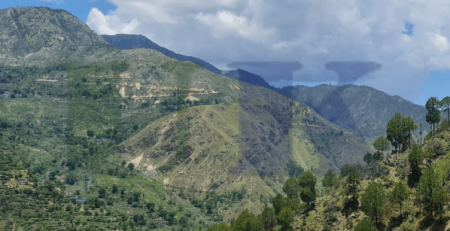
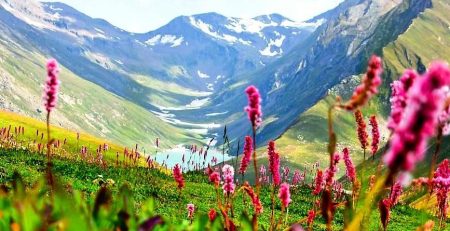
In Uttarakhand, the Himalayas, mountains, rivers, lakes, waterfalls, and forests together create a unique environment. The musical expression of this environment is represented through certain traditional instruments. This environment also resembles that of several other states and countries. This is why a remarkable similarity can be observed in the folk music of the Himalayan states of India and the Himalayan regions of neighboring countries.
“Dhol and Damau are the heartbeat of Uttarakhand folk culture, carrying its spiritual heritage, traditions, and identity across generations.”
– Dr. Nidhi Sajwan, Expert in Uttarakhand Culture and History.
Traditional Musical Instruments of Uttarakhand
The traditional musical instruments of Uttarakhand give concrete expression to the geographical, social, and cultural landscape of the region. Some important instruments include the Mashakbeen, Dhol-Damau, Hudka, bronze plate (Kanse ki Thali), and conch (Shankh).
Among the musical instruments of Devbhoomi Uttarakhand, the most prominent are the Dhol and Damau. These instruments preserve the folk art of the mountain society and are deeply connected to its cultural soul. From birth to death, from household life to forest-related rituals, and in every social and cultural ceremony, these instruments have been continuously used. No auspicious event is considered complete without their sound. Therefore, it is often said that festivals in the mountains, especially in Uttarakhand, begin with the sound of Dhol and Damau.
These are among the oldest and most popular musical instruments of Uttarakhand and are also known as “Mangal Vadya” (auspicious instruments). According to folklore, they were initially used on battlefields to guide soldiers and boost their morale. Gradually, this tradition moved from battlefields into social life and eventually became a symbol of auspicious occasions. With this, folk art began to develop in the mountainous regions, and these instruments established their important place in cultural traditions. Even today, people give great importance to these arts, as the identity of any region depends on its folk art, traditions, and culture.
Various special rhythms are played through the Dhol and Damau, and the collection of these rhythms is known as the “Dhol Sagar.” It is believed that the Dhol Sagar contains approximately 1200 verses describing different rhythms. These rhythms are also used for communication and for conveying special messages. Different rhythms are played at different times, which helps identify the type of ritual or occasion being performed.
Among these rhythms, the “Mangal Badhai Taal” is played first to invoke the presence of deities. In addition, special rhythms are played during all auspicious occasions such as weddings, Haldi ceremonies, departure of the wedding procession, various life-cycle rituals, and religious ceremonies.
Structure of Dhol and Damau
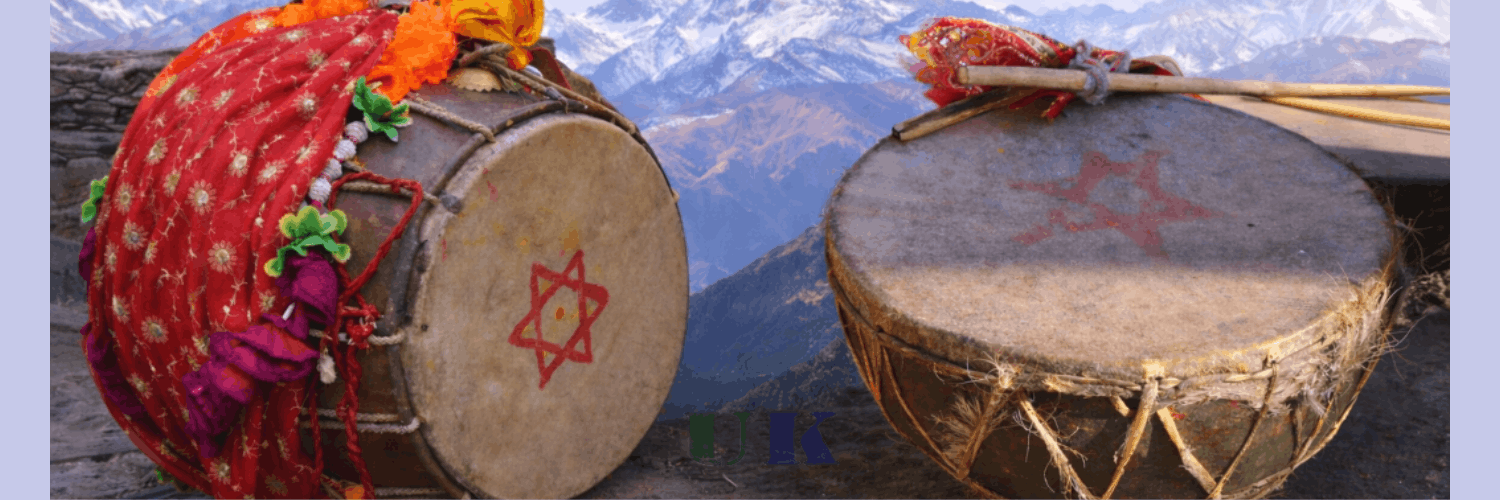
The Dhol is a double-sided drum. Two people are required to play the Dhol and Damau, as both instruments complement and support each other. The Dhol is played with a wooden stick on one side and with the hand on the other side. It is made of copper and Sal wood. The left side of the Dhol is covered with goatskin, while the right side is covered with the skin of a buffalo or barasingha (swamp deer).
The Damau, on the other hand, is made of copper and is shaped like a bowl, approximately one foot in diameter and about 8 inches deep. It is covered with thick leather, which produces its distinctive sound.
History
Historians believe that the Dhol originated in West Asia and was brought to India in the 15th century. The Dhol is mentioned for the first time in the historical text “Ain-i-Akbari.” Therefore, it can be said that the Dhol was first introduced in the Garhwal region around the 16th century. Among the many musical instruments in history, the Dhol and Damau gained significant importance and became widely recognized throughout the region.
Importance
Dhol and Damau are included among the most important musical instruments because they are used to invoke deities. According to folklore, they are believed to have originated from Lord Shiva’s Damru. It is said that Lord Shiva first played it for Goddess Parvati, and one of his attendants present there memorized its sound. Since then, this tradition has been passed down orally from generation to generation, with specific rhythms used for different ceremonies and occasions.
The players of Dhol and Damau are traditionally known as Auji, Dholi, Das, or Bajgi. It is believed that Goddess Saraswati herself resides in these musicians. The term “Auji” is also considered another name for Lord Shiva. These instruments are regarded as highly auspicious. At the beginning of each Indian month, the Auji (Dhol player) visits every household in the village and plays the instrument to announce the start of the new month of the Indian calendar.
In today’s modern world, people often use DJs or bands (modern musical instruments) during weddings and parties. However, in Garhwali culture of Uttarakhand, people still use Dhol and Damau and enjoy dancing to their traditional rhythms.
In the region considered to be the abode of millions of deities, traditional beliefs regard the Damau as a symbol of Lord Shiva and the Dhol as a symbol of energy. Since energy represents power (Shakti), the relationship between Dhol and Damau is considered similar to that of husband and wife, symbolizing the divine union of Shiva and Shakti.
Preservation
In the mountainous culture of Uttarakhand, Dhol and Damau are played in rhythm and melody on various occasions. Today, the mountain culture of Uttarakhand has been significantly influenced by Western culture. As a result, in this modern era, many people of the region are gradually forgetting Dhol and Damau, and the younger generation is no longer interested in learning or playing these instruments.
This centuries-old art is now on the verge of extinction, and its preservation is the only solution. For this purpose, awareness programs should be promoted by the state government and at the regional level. Uttarakhand, being a mountainous state, is rich in diverse cultures, music, art, and traditions. Therefore, it is essential to preserve these ancient arts and traditions and protect them from disappearing due to social and governmental neglect.
It is necessary to preserve these instruments and their traditional musicians; otherwise, we will lose an important part of our cultural heritage, and future generations will remain completely unaware of and disconnected from their existence.
FAQs
What are Dhol and Damau?
Dhol and Damau are traditional percussion instruments and are considered the most important folk musical instruments of Uttarakhand, India. The Dhol is a double-sided cylindrical drum, while the Damau is a bowl-shaped copper drum. These instruments are played together as a pair and produce a powerful and rhythmic sound. They are widely used in the Garhwal and Kumaon regions and are an essential part of religious ceremonies, festivals, and social rituals. They are also known as “Mangal Vadya,” meaning auspicious instruments, because they symbolize celebration, positivity, and divine presence.
What is the cultural significance of Dhol and Damau in Uttarakhand?
Dhol and Damau play a vital role in preserving the cultural identity and traditions of Uttarakhand. They are used in important life events such as birth ceremonies, weddings, religious rituals, village festivals, and other social occasions. Their sound is believed to create a spiritual atmosphere and invite divine blessings. In earlier times, these instruments were also used to communicate messages and announcements across villages in mountainous areas. They reflect the deep connection between music, religion, and everyday life in Uttarakhand.
What is Dhol Sagar and why is it important?
Dhol Sagar is an ancient traditional knowledge system that contains about 1200 verses explaining the rhythms, playing techniques, and spiritual importance of Dhol and Damau. It provides detailed guidance on which rhythm should be played for specific occasions such as weddings, religious ceremonies, and festivals. This knowledge has been preserved through oral tradition and passed down from one generation of musicians to another. It is considered sacred and forms the foundation of Uttarakhand’s traditional percussion music.
What materials are used to make Dhol and Damau?
The Dhol is made from wood, usually Sal wood, and sometimes copper, and both sides are covered with animal skin such as goat skin, buffalo skin, or deer skin. The Damau is made of copper and is covered with thick leather. These natural materials help produce a deep and powerful sound that can travel long distances, which is suitable for the mountainous environment. Both instruments are handmade by skilled artisans using traditional methods.
Who are the traditional players of Dhol and Damau?
The traditional musicians who play Dhol and Damau are known as Auji, Dholi, Das, or Bajgi. These musicians have an important cultural and social role in the community. They are respected for their knowledge of traditional rhythms and rituals. They often perform during religious ceremonies, weddings, and festivals and help preserve the cultural heritage of Uttarakhand.
What is the historical origin of Dhol and Damau?
Historians believe that the Dhol originated in West Asia and was brought to India around the 15th century. It is mentioned in the historical text Ain-i-Akbari, written during the Mughal period. Over time, the Dhol and Damau became an essential part of Uttarakhand’s folk music and cultural traditions. Their use gradually expanded from military and communication purposes to religious and social ceremonies.
On which occasions are Dhol and Damau played?
Dhol and Damau are played during weddings, religious rituals, temple ceremonies, festivals, village fairs, and various life-cycle events such as birth and death ceremonies. Different rhythms are played for different occasions. For example, special rhythms are used to welcome wedding processions, invoke deities, and celebrate festivals. They are also used during traditional dances and cultural performances.
What is the religious importance of Dhol and Damau?
According to mythology, Dhol and Damau are believed to have originated from Lord Shiva’s Damru. The Damau is considered a symbol of Lord Shiva, while the Dhol represents energy or Shakti. Their combined sound represents the balance between divine energy and power. They are used in religious ceremonies to invoke deities and create a sacred atmosphere.
Why are Dhol and Damau important for cultural identity?
Dhol and Damau represent the cultural heritage, traditions, and identity of Uttarakhand. They preserve centuries-old musical practices and reflect the social and spiritual life of the people. These instruments are symbols of the region’s rich cultural history and help maintain its traditional values.
Why is the Dhol and Damau tradition declining?
Due to modernization, urbanization, and the growing use of DJs and electronic music, fewer young people are learning to play traditional instruments. Migration from villages to cities has also contributed to the decline of traditional musicians. As a result, this ancient musical tradition is gradually disappearing.
What steps can be taken to preserve Dhol and Damau?
The preservation of Dhol and Damau can be achieved through government support, cultural awareness programs, and music education. Including traditional music in school and college curricula can help promote interest among young people. Organizing cultural festivals and supporting traditional musicians financially and socially can also help protect this important cultural heritage.
Why are Dhol and Damau called auspicious instruments?
Dhol and Damau are called auspicious instruments because their sound is believed to bring positivity, prosperity, and divine blessings. They are played at the beginning of ceremonies and festivals to create a joyful and sacred environment. Their presence is considered essential for completing important rituals and celebrations in Uttarakhand.
Dhol and Damau are not just musical instruments but powerful symbols of Uttarakhand’s cultural heritage, spiritual traditions, and social identity. For centuries, they have played a vital role in religious rituals, festivals, and life-cycle ceremonies, preserving the region’s rich folk culture. Guided by the traditional knowledge of Dhol Sagar and passed down through generations of Auji, Dholi, and Bajgi musicians, these instruments represent continuity, devotion, and cultural unity. However, modernization and declining interest among the younger generation threaten their survival. Therefore, preserving and promoting Dhol and Damau is essential to protect Uttarakhand’s cultural legacy and ensure that this valuable heritage continues to inspire future generations.