Rudranath Temple
Spiritual Haven in Uttarakhand’s Himalayas
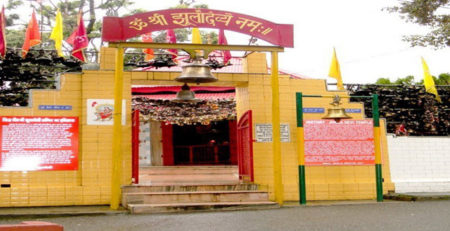
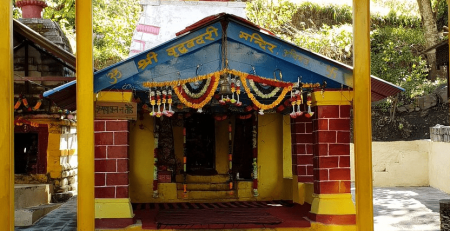
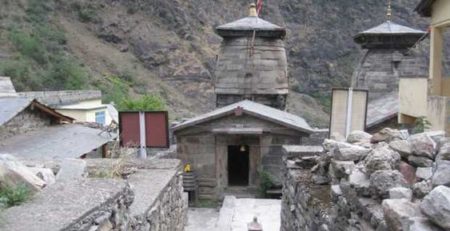
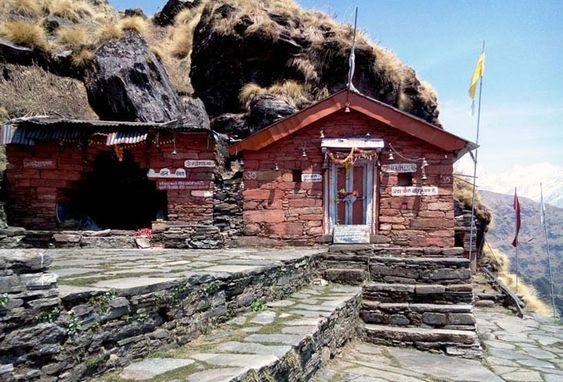
The Rudranath Temple is a significant Hindu shrine located in the Chamoli district of Uttarakhand, India, and is one of the five temples collectively known as the Panch Kedar. Situated at an elevation of 2,290 meters above sea level, the temple is renowned for its stunning natural surroundings.
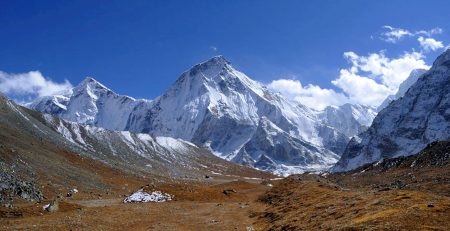
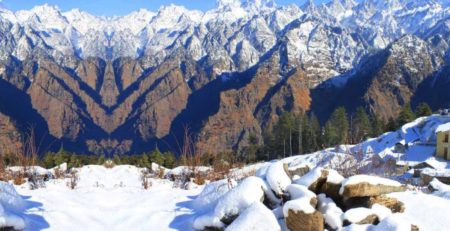
At Rudranath Temple, the worship is dedicated to Lord Shiva’s face (or “ekananda”), while the worship of his entire body is conducted at the Pashupatinath Temple in Kathmandu, Nepal. The temple is set against a backdrop of breathtaking vistas, including the snow-capped peaks of Nanda Devi and Trishul, which add to its allure and spiritual significance.
The temple’s serene environment and the awe-inspiring natural beauty surrounding it make it a revered site for devotees and visitors alike.
The Story of Rudranath
The story of Rudranath holds a significant place among the Panch Kedar temples in Uttarakhand. It is rooted in a mythological tale linked to Lord Shiva and the Pandavas’ quest for his blessings and absolution.
After the Mahabharata war, the Pandavas sought to atone for their sins by worshipping Lord Shiva. They embarked on a journey to the Himalayas in search of him. However, Lord Shiva, angry with the Pandavas, did not want to meet them and disguised himself as a bull to evade them. He hid his body parts in different locations to avoid being found.
The legend says that the Pandavas eventually found Lord Shiva in his bull form. In response, Shiva divided his body into different parts. His hump appeared at Kedarnath, his face at Rudranath, and other parts emerged at various sites, collectively known as the Panch Kedar temples.
Rudranath is the place where Lord Shiva’s face is worshipped. This site holds immense spiritual significance for Shiva devotees. It is believed that anyone who completes the challenging pilgrimage to Rudranath and has a vision of Lord Shiva is granted salvation. The area surrounding the Rudranath temple is serene and filled with natural beauty, providing a divine and peaceful experience for the devotees.
The name “Rudranath” comes from the belief that Lord Shiva appeared here in his fierce “Rudra” form to bless his devotees.
Conclusion
Rudranath Temple, located in the Garhwal Himalayas at an elevation of 2,290 meters, is a revered site in Hindu pilgrimage as one of the Panch Kedar temples. According to ancient beliefs, the temple was constructed by the Pandavas during the Mahabharata era, establishing its historical significance. The Skanda Purana recounts that when the gods were troubled by the demon Andhakasura, they prayed to Lord Shiva, who promised to relieve them of their suffering. This divine promise is deeply connected to the temple’s spiritual aura.
Uniquely, Rudranath Temple focuses on the worship of Lord Shiva’s face, distinguishing it from other temples dedicated to the complete form of the deity. The temple’s location offers stunning views of the snow-capped peaks of Nanda Devi and Trishul, enhancing its spiritual and natural appeal. Nearby, the Vaitarani River, known as the “River of Liberation,” is believed to offer moksha to those who bathe in its sacred waters.
Surrounding the main temple are smaller shrines dedicated to the Pandavas, their mother Kunti, and Draupadi, further linking the site to the Mahabharata epic. As part of the Panch Kedar pilgrimage circuit, Rudranath Temple attracts devotees seeking both spiritual fulfillment and a connection with the serene Himalayan landscape. Situated approximately 22 kilometers from Gopeshwar in the Chamoli district, the temple’s remote setting adds to its mystique and spiritual significance.