Purnagiri
Worship Goddess Purnagiri in the Foothills of the Himalayas
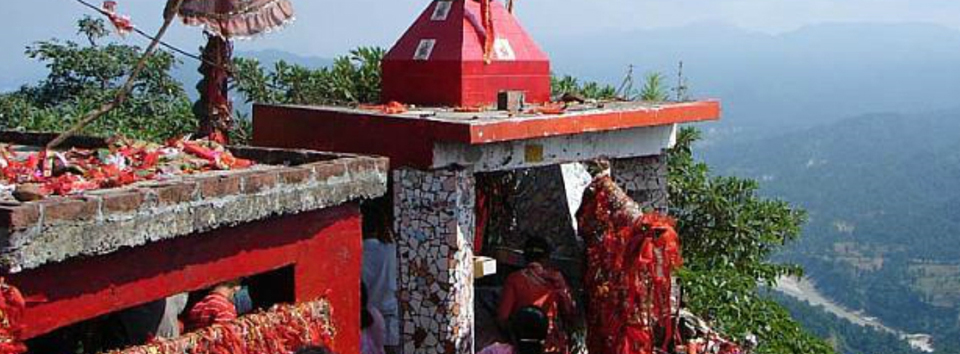
The Purnagiri Temple is situated on the Annapurna peak at an elevation of 5,500 feet, near the town of Tanakpur in the Champawat district of Uttarakhand, India. This revered shrine is considered one of the four major Shakti Peethas in India. It is believed to be the site where a part of the navel of Sati, the consort of Lord Shiva, fell after being cut by Vishnu’s discus. Every year, numerous devotees undertake a challenging journey to this temple, driven by their faith and devotion.
Historical Background and Religious Beliefs
The Legend from Shiva Purana:
According to the Shiva Purana’s Rudra Samhita, Daksha Prajapati organized a grand yajna (sacrifice) and invited all the gods and goddesses, except Lord Shiva, whom he despised. Unable to tolerate the dishonor towards her husband, Sati immolated herself in the yajna fire. To console Shiva, Lord Vishnu dismembered Sati’s body and scattered the parts across various locations. Where each part fell, a Shakti Peetha was established.
Establishment of Shakti Peethas:
The fallen body parts of Sati gave rise to various Shakti Peethas across the Indian subcontinent. For instance, the hair fell in Kolkata, giving rise to the Kali Temple; the breasts fell in Nagar Kot, Himachal Pradesh, leading to the establishment of the Brijeshwari Temple; the tongue fell in Jwalamukhi, Himachal Pradesh, where the Jwala Devi Temple stands; the brain’s frontal part fell in Panchkula, Haryana, leading to the creation of the Mansa Devi Temple; and so on. At Purnagiri, it is believed that Sati’s navel fell here, and the temple is dedicated to worshipping the navel of the goddess.
Purnagiri Mela
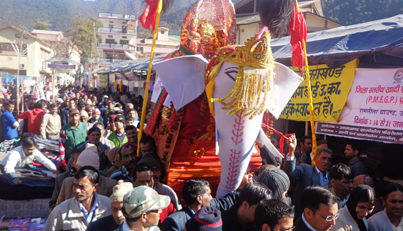
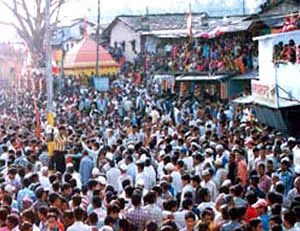
The Purnagiri Mela is a significant religious and cultural event held near the Purnagiri Temple in the Tanakpur region of Uttarakhand. This fair is organized annually during the Navratri festival and is characterized by elaborate preparations both in the temple complex and the surrounding areas. The mela typically lasts for about two weeks, attracting a large number of devotees who undertake the journey to Purnagiri.
During the mela, special pujas and religious ceremonies are conducted at the Purnagiri Temple. Devotees perform unique rituals and worship Goddess Purnagiri, with special havans and yagyas being held. The number of devotees notably increases during Navratri, especially on Maha Ashtami and Navami, leading to significant religious events and grand decorations in the temple.
Apart from religious activities, the mela is vibrant with cultural events. Local artists perform traditional dances, music, and plays. Various stalls offering a range of food, handcrafted goods, and local products are set up, providing visitors with a taste of local culture and customs.
The management of travel and accommodation is crucial during the mela. Due to the large number of visitors, local administration and mela organizers ensure adequate arrangements, including temporary accommodations, medical facilities, and traffic management. Several hotels and dharamshalas in and around Tanakpur provide lodging for the pilgrims.
The Purnagiri Mela not only highlights the religious significance of the Purnagiri Temple but also showcases local cultural traditions and practices. Although devotees visit the holy site throughout the year, there is a notable influx of pilgrims from Chaitra Navratri until June. During this period, a grand mela is organized, offering comprehensive facilities for the visitors.
Over the course of the year, more than 2.5 million pilgrims visit this sacred site. Special funding is allocated by the state government for the mela, managed through the District Magistrate of Champawat and the Champawat District Panchayat, who oversee the organization and management of the event. This ensures that pilgrims face no difficulties during their visit and can engage in their religious practices with full devotion.
Purnagiri Miracle
The Purnagiri Temple, perched on the Annapurna Peak at 5,500 feet in Uttarakhand, is renowned not only for its religious significance but also for the miracles associated with it. This revered Shakti Peeth is dedicated to Goddess Purnagiri, an embodiment of divine feminine power.
Legend of Sati’s Navel
One of the most profound miracles associated with Purnagiri Temple is linked to the ancient legend of Sati, the daughter of Daksha Prajapati. According to mythological accounts, Sati’s navel fell at this sacred site after being severed by Vishnu’s discus. This divine occurrence led to the establishment of the temple, making it a prominent Shakti Peeth.
Miracles and Devotee Experiences
Devotees and pilgrims visiting Purnagiri Temple often recount miraculous experiences that reinforce the temple’s spiritual aura:
Healing Powers: Many devotees claim to have experienced miraculous healings from various ailments after visiting the temple and offering their prayers to Goddess Purnagiri. Stories of sudden recoveries and improved health are common.
Fulfillment of Wishes: Numerous devotees believe that their heartfelt prayers and wishes are answered by the goddess. There are accounts of people receiving blessings and experiencing positive changes in their lives after participating in rituals and offerings at the temple.
Divine Protection: Pilgrims often recount incidents of divine intervention and protection during their journey to the temple. The challenging trek up the Annapurna Peak is said to be blessed by the goddess, with many attributing safe and successful pilgrimages to her divine grace.
Spiritual Enlightenment: Visitors frequently speak of a profound sense of peace and spiritual awakening upon visiting Purnagiri. The temple’s serene environment and the divine presence are said to elevate one’s spiritual consciousness and provide inner solace.
Cultural and Religious Impact
The miracles associated with Purnagiri Temple contribute significantly to its religious and cultural prominence. The temple attracts thousands of pilgrims annually, especially during the Navratri festival, where the fervor of devotion and the miracles experienced by devotees are most evident. The miraculous events and stories associated with the temple continue to inspire faith and reverence among the followers, reinforcing the temple’s status as a divine sanctuary.
The Purnagiri Temple stands as a testament to divine miracles and the enduring faith of its devotees. Its miraculous aura continues to attract pilgrims seeking spiritual blessings, healing, and fulfillment of their deepest desires.
Features and Pilgrimage
The Temple’s Grandeur:
Located at a high altitude, Purnagiri Temple offers not only religious significance but also breathtaking natural beauty. The shrine’s elevation and its ancient backdrop contribute to its unique charm. The temple is dedicated to Goddess Mahakali, and the site attracts pilgrims and tourists seeking divine blessings.
Challenges of the Pilgrimage:
Reaching Purnagiri Temple involves a strenuous climb, making the pilgrimage both a physical and spiritual endeavor. Devotees undertake this challenging journey as a mark of their faith and dedication. Along the route, there are small rest areas and tea shops that offer essential facilities for the pilgrims.
Religious and Cultural Significance
Festivals and Rituals: The Purnagiri Temple hosts various religious festivals and rituals throughout the year, particularly during Navratri and other significant occasions. These events are marked by special prayers and ceremonies, enhancing the temple’s sacred ambiance and attracting numerous visitors.
Spiritual Experience: The pilgrimage to Purnagiri Temple is not only a religious journey but also a profound spiritual experience. The temple’s ancient heritage, combined with its picturesque setting, makes it a unique site for devotees seeking spiritual solace and connection.
Conclusion
Purnagiri Temple stands as a prominent religious and historical site in Uttarakhand. Its significance as a Shakti Peetha, the challenging pilgrimage, and its natural beauty contribute to its unique status. The worship of the goddess’s navel and the temple’s rich cultural heritage make it an essential destination for both devotees and tourists, offering spiritual enrichment and a memorable experience.