Pathali Architecture of Uttarakhand
Indigenous Wisdom and Ecological Sustainability
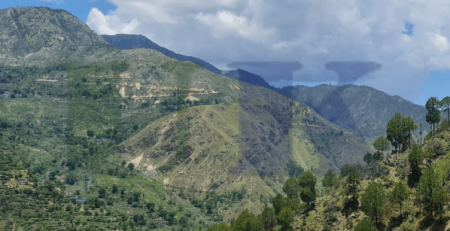
Uttarakhand, situated in the northwestern region of India at the foot of the Himalayas, which borders Nepal to the east, Himachal Pradesh to the northwest, and Tibet to the north. Its inhabitants are collectively addressed as Pahadi, a term that establishes their intrinsic association with the hills and Himalayas and reflects their deeply rooted sustainable and indigenous way of life.
Deeply rooted in the ecological wisdom, the Pahadi communities have long adopted the ways of living that exemplifies harmony with nature within the majestic yet fragile Himalayan landscape of Uttarakhand. What distinctly categorizes these communities is their acceptance of the grandeur of mother nature and their conscious effort to preserve its integrity. Their lifestyles complement the rhythm of the nature instead of disturbing it. One of the most remarkable manifestations of this symbiotic relationship with nature is the Pathali architecture of building houses with sloped roofs that is an example of ecological adaptive design. Pathali is an archive of ecological harmony, a sustainable way of life, and a symbol of cohesive social fabric that unites the indigenous Pahadi culture and tradition. The Kumauni, Garhwali, and Jaunsari regions of Uttarakhand readily embraced the Pathali style of building houses that embodies a ‘cosmocentric’ approach of harmonious co-existence with nature. This article explores the cultural rationales and the symbolic meaning of the Pathali architecture and also highlights the rapid decline of this architectural marvel in the contemporary era.
Understanding the Nomenclature
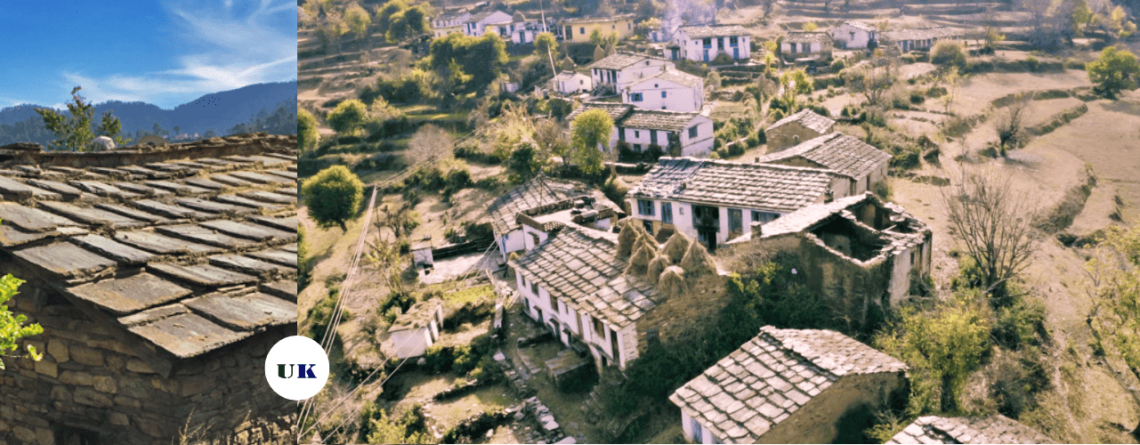
The term “Pathali” is derived from a Hindi word “Patthar,” which is phonetically articulated as “Pathal” or “Paathar,” in Kumauni, Garhwali, and Jaunsari dialects. “Patthar” (a Hindi term) or “Pathal” or “Paathar” (a Pahadi term) means “stone slabs” in English. The term “Pathali” thus indicates a distinct roofing style of the houses in Uttarakhand where stone slabs are the principal construction material.
Balance with Nature
The people of Uttarakhand, especially those who reside in the mountain, have historically had limited access to the resources for construction. While forests dwindled rapidly in the cities turning them into a concrete jungle, the mountain dwellers adopted vernacular construction material such as mud, stones, and wood that is deeply rooted in ecological sensitivity. Some historical records suggest that this architecture dates back to the medieval times and is said to gain popularity and prominence with the settlement of the agrarian communities in the Kumauni and Garhwali divisions. The climatic conditions, particularly heavy snowfall, were the major factor in the evolution of this architecture which features a steeply sloped roof, allowing snow to slide off easily during winters.
With the settlement of the agrarian communities in the Almora, Champawat, and Pithoragarh districts, the popularity of Pathali architecture rapidly grew across the Kumaon division. In the Garhwal region, where the terrain is at a higher altitude, has a sensitive landscape and is more vulnerable to natural disasters such as landslides and avalanches. The Pathali houses were built with steeper roofs to withstand the harsh nature, heavy rains, snowfall, precipitation, and seismic activities. Pathali architecture in Garhwal mark a microclimatic difference in comparison to that in the Kumaon region. The Jaunsari people who inhabit the Tons Valley of Uttarakhand adopted the Pathali houses too which evolved differently. Their houses reflect animistic tradition and woods replace stones and mud for flooring, reflecting microclimatic variation.
Architectural Wisdom and Ecological harmony
In the Pathali houses stone slabs are used as roofing material that reflect the people’s adaptive use of the local natural resources. In the traditional Pathali houses, massive stone slabs are used for roofing which are meticulously placed atop interlocked wooden logs by maintaining a calculative gap beneath the ceiling. The wooden logs provide structural stability and create shelter space for nesting to various species of Himalayan sparrows. The presence of these birds within domestic structure is an extraordinary example of organic harmony between nature and culture.
The walls of these houses are built of the locally available sustainable and ecofriendly materials such as stones, mud, and cow dung that works as a natural insulator by keeping the houses cool in the summers and trapping the heat inside during biting Himalayan winters. This unique and vernacular architectural style of is passed down from one generation to another and reflects a remarkable engineering excellence of the people living in the hills, a skill probably inspired and inherited from the nature itself. This design of the houses seems to be greatly influenced by the barn swallow bird, mostly found in Asia, Europe, South America, and Africa, which builds its nest with mud, pine needles, and grass.
Building a Pathali house is a community effort or a communal endeavour which is treated as a festive event where people of all ages and gender participate. The elderly women take the responsibility to serve traditional delicacies such as ‘aloo ke gutke,’ (boiled and spicy potato) served with chai (milk tea) that maintains the vigour and the spirit of the people.
Ritual observance and sacrifice to the patron deities is a crucial element that sets tone of every auspicious occasion in every part of Uttarakhand. The offering varies from place to place; for example, in the Kumaon region, grains such as “finger millet,” called “mandua” in Kumaoni, are offered in the temple of ‘kul devta’ (family/ancestral deity), ‘gram devta’ (village deity) and ‘bhoomi devta’ (the deity of the land). It is very crucial to take the permission of the God of land, called ‘Bhoomi-devta,’ and a spirit that is believed to protect the village and its border, addressed as ‘chhetrapaal,’ i.e., protector of the region. Prayers are offered at the ‘Bhoomiya-thaan,’ i.e., at the sanctum of the land guardian. Until these spirits and deities are pleased, no construction work is believed to start successfully.
In the Garhwali region, offering wheat is more popular. The Jaunsar region, situated at a higher altitude often merge seasonal cycles and architectural rituals. Ritualistically, sacrificing a goat or a sheep mark an auspicious beginning to the construction activities.
In areas like Almora, Munsyari, and Pithoragarh, elders often recall the days when the villagers, or the laborers, historically gathered stones from the riverbed after the harvesting season, locally known as “asauj” season that typically begins from 16th September and lasts till 16th October.
In the Tehri region of Garhwal, the elderly women often recall plastering and painting the floors and the walls with cow dung and red ochre mud, the days that brought together all the people of the village which marked the completion of the construction work and reinforced community solidarity.
Designing the Pathali houses
The cold climate of Uttarakhand exerts heavy influence on the people’s food habits, clothing style, and architectural forms, especially in the high-altitude regions that face extreme winters, heavy rains, and seismic activities. The houses must be built in such a way that is friendly for the hilly landscape, without disturbing the fragile and sacred Himalaya that demands adaptable, durable, and insulating architecture. On the other hand, its sister state, Himachal Pradesh, developed the Kathkuni style of building houses in which the outer layers of the wood are alternatively woven together, without any use of mud, cement, or mortar. Consequently, the queen of hills, Jammu and Kashmir, embraced woods and slanting roofs to withstand the seismic activities and for the snow to slide down easily during snowfall.
The defining features of Pathali architecture are :
- Pathal (Stone slabs) – Pathali houses use large stone slabs for roofing, typically around 40 to 85 cm in length, 30-50 cm in width, and 5-10 cm in thickness. The skilled local masons take care of the weight and durability of these stones before they are chosen for the roofing. These stones are sourced from the streambeds and given a rough rectangular shape, while the downward sides are softened and rounded off, creating an oval-like outline. The artisans use a chisel and hammer to give a perfect shape to these stone slabs. This technique helps the snow to slant down and maintains the aesthetic of the roof. The weight of the stones prevents them from being blown away by the wind, and they trap the heat inside the house during harsh winters and keep the indoors very cool during summers.
- Walls – The villagers carefully select the stones, which are sourced from the riverbanks and streams in the Himalayan terrain. To create thick and steady walls, these stones are stacked one upon another. The walls are then plastered with a mixture of cow dung, mud, and red ochre mud called “gerua” or “geru” in Hindi and Kumauni terms. These walls help provide insulation against the harsh winters and mild summers and create an earthly hue inside the house.
- Ceiling and Floor – Pine wood (chir) is considered the best timber to make the ceiling, which is available abundantly across Uttarakhand hills. Pine logs, which are full of resin, prevent the rotting of the wood. Pine seeds were first brought in by the Britishers to Uttarakhand when Ranikhet was the summer capital of British India. These pine logs are interlocked together to withstand the tremors of earthquakes. The sloping stone slabs are not kept directly on the wooden frames; instead, a deliberate gap is maintained for three reasons: to reduce the direct pressure of the roof on the wood, to keep a check of the termites on the wooden logs, and to ensure proper ventilation inside the house.
The floors are made from the base of mud, cow dung, and large stones. Over it, a smooth paste of the mixture of cow dung and red ochre mud is applied. The women keep on replastering it frequently with a very finely prepared paste of cow dung and red ochre mud, which is neither too thick nor too thin. A thin layer of red ochre mud is again applied on the threshold and adorned by the traditional aipan art. For the aipan art, a finely ground paste of white rice is prepared, which then becomes food for the house sparrows, ants, and other insects, which is a remarkable example of living in harmony with nature.
This flooring is also believed to be very beneficial for the elderly people who often complain of joint ailments caused by cold in the harsh winters of the Himalayas, termed as “baat-rog” in Hindi and Pahadi.
- Doors and Windows – The doors and windows carry as much importance as the roof, for the deep traditionalism and cultural history they carry. The doors and windows are carved out by certain expert artisans of the village who are expert at it.
On the top of the door, Hindu deity, Lord Ganesha’s idol is carved out. Ganesha is an elephant-headed god who is a patron of good beginnings, intellect and is believed to remove obstacles. The doors also have the carving of Golu devta on the door panels, who is considered a god of justice in Uttarakhand.
Additionally, fish, petals, pomegranate and lotus flowers, grape vines, animals, and birds are carved out in the door and the window panels, which represent a deep-rooted relationship with nature, a symbol of the harmonious existence of culture and nature.
The larger doors and windows reflect the higher social status and wealth of a family.
These ornamented woods are called ‘Kholi’ in the Kumauni and Garhwali dialects, a term that is very conspicuous in the folk songs across Garhwal, Kumaon, and Jaunsar, such as popularized through a folk song, “dena hoya kholi ka Ganesha,” which translates to, “Oh Ganesha, who resides in our home, shower your blessings on us.”
On the threshold, traditional aipan art is made; its material is prepared from white rice. The rice is roughly ground to paste, and traditionally the vines and petals are drawn with the rice paste against red ochre mud.
Reflection of Ecological Wisdom
- The Pathali houses have a very minimal ecological footprint because they are completely built from the natural material.
- These houses do not need additional heating equipment because the walls, floor, and roof are built cow dung, red ochre mud and stone which works as a natural insulation, suitable for harsh winters.
- The doors and windows are adorned with floral patterns, vines, and animals artefacts. The threshold is adorned with the beautiful ‘aipan art’ that sustain insects and local biodiversity.
- The stone roofs become a friendly habitat for the moss and small fauna.
- The maintenance of the wood inside the house is dependent upon a very simple yet effective method, which is the smoke from the hearth. The smoke protects the wood from termites’ attack by making a protective layer. The natural fumigation prevents and ensures the durability of the wood.
Contemporary challenges to the Heritage
Development and technology have seriously possessed challenges to all the indigenous traditions, and Pathali architecture is no exception. Since the 20th century, the popularization of concrete houses made of cement and corrugated tin have been gradually replacing the stone slabs with cemented roofs, which hold perception of modernity, is comparatively time and cost effective.
Uttarakhand is one of the states that has been seriously hit by migration for jobs, better opportunities in healthcare and education sector. According to a report published in the Times of India in 2025, around 138 people leave their homes every day in hilly regions of Uttarakhand. Exposure to plain culture has diminished people’s pride on their culture, pushed them further to abandon their cultural heritage.
The concrete houses are less durable and prone to disaster in the hilly states, yet people are rapidly and mindlessly replacing the traditional architecture. The younger generation is now unaware of the generational skills and craftsmanship of building a Pathali house, which once was an intricate part of the community in Uttarakhand and defined their uniqueness.
The designs in doors and windows hold traditional and cultural heritage, marking an indigenous way of life. There is a huge blow to the ancient practice of intricacy between the culture and nature. As rightly said, ‘a nation dies tragically with the death of its culture’. It is a huge blow to the existence of Uttarakhand and its rich and diverse culture and tradition.
These houses carry collective memories of a rich history, community, and phenomenal ancestral knowledge. Its decline represents a sink in the cultural continuum linking community, ecology, and spirituality. The architecture of the Pathali houses is an excellent example of sustainable construction that offers climate-adaptive lessons to the world.
To preserve this traditional heritage it is crucial to adopt some urgent measures. The government and cultural organizations must document, archive, and restore the existing Pathali architectures. Skill development workshops must be initiated to teach the traditional art of cutting stones with chisel and hammer, especially when the technology is rapidly replacing the traditional methods. Encouraging an integration of Pathali designs in the modern architecture could ensure both, preservation of cultural and traditional identity and promotion of sustainability, climate-resilient architecture, and pride in the indigenous heritage.
Frequently Asked Questions (FAQs)
What is Pathali architecture in Uttarakhand?
Pathali architecture is a traditional and indigenous style of house construction practiced across the hilly regions of Uttarakhand, including Kumaon, Garhwal, and Jaunsar. It is characterized by sloping roofs made from heavy stone slabs (pathal), thick mud-plastered stone walls, and wooden beams that provide strength and insulation. This architectural style evolved as an ecological response to the Himalayan climate protecting homes from snowfall, heavy rain, and seismic activity. Pathali houses reflect the harmony between human life and nature, representing centuries of sustainable living in the mountains of Uttarakhand.
Why is this style of construction called “Pathali”?
The word Pathali originates from patthar (stone in Hindi) and is pronounced as pathal or paathar in the Kumaoni, Garhwali, and Jaunsari dialects. The name directly refers to the distinctive stone-slab roofs that define this architecture. These locally quarried stones are hand-shaped by skilled artisans using chisels and hammers. The slope of the roof allows snow and rain to slide off easily while the weight of the stone provides insulation and stability, making the Pathali roof both functional and symbolic of Himalayan craftsmanship.
What are the key features of Pathali houses?
Pathali houses showcase an intricate blend of functionality, aesthetics, and ecology. Their steep stone-slab roofs, mud-plastered walls, pinewood ceilings, and red-ochre floors make them perfectly suited for the region’s cold and humid climate. The walls are built using stones and cow dung mixed with mud, which act as natural insulation. The interiors are adorned with aipan art on thresholds, and carved wooden doors often feature motifs of deities like Lord Ganesha and Golu Devta. These designs not only serve decorative purposes but also express cultural beliefs of protection and prosperity.
Why is Pathali architecture considered environmentally sustainable?
Pathali architecture is a model of sustainable design that uses only natural and locally available materials stone, mud, cow dung, and wood. These elements are biodegradable and require no industrial processing, resulting in an almost zero-carbon footprint. The construction method allows natural ventilation, maintains thermal comfort throughout the year, and supports biodiversity birds often nest in the gaps beneath stone roofs, and aipan art made with rice paste feeds insects and sparrows. The use of smoke from traditional hearths acts as a natural termite repellent, ensuring durability without harmful chemicals.
How does Pathali architecture reflect the cultural identity of Uttarakhand?
Every Pathali house is a reflection of the Himalayan way of life. Its construction is deeply rooted in community participation, rituals, and spirituality. Before construction begins, villagers perform sacred offerings to Bhoomi Devta (the deity of land) and Kul Devta (family deity) to seek blessings. These houses are also centers of family gatherings, festivals, and folklore. The intricate carvings, aipan patterns, and use of earthy materials mirror the Pahadi belief that nature and divinity are inseparable. Thus, Pathali architecture is not just about shelter – it’s a cultural symbol of belonging and balance.
How do Pathali houses differ from modern cement houses?
Modern concrete houses often disrupt the fragile Himalayan ecosystem. They rely on non-renewable materials and create temperature imbalances requiring artificial heating or cooling. In contrast, Pathali houses are naturally insulated, earthquake-resistant, and built to blend with the slope and soil of the terrain. While modern structures prioritize speed and cost, Pathali houses emphasize sustainability, community, and cultural continuity. The natural materials breathe with the environment, making these homes more adaptive, long-lasting, and environmentally responsible than concrete alternatives.
Why is Pathali architecture disappearing in Uttarakhand?
Rapid urbanization, migration, and the perception of modernity have led to a decline in traditional construction. Younger generations are moving to plains for jobs and education, leaving ancestral homes abandoned. As demand for cement and tin-roofed houses grows, local craftsmanship such as stone carving, wooden joinery, and mud plastering is fading away. Moreover, modern housing loans and construction models often exclude traditional techniques, accelerating cultural erosion. This loss is not just architectural but also ecological and spiritual, breaking the centuries-old bond between community and landscape.
Can Pathali design be revived or adapted for modern architecture?
Yes, Pathali architecture offers invaluable insights for sustainable modern housing. Architects and conservationists are now experimenting with hybrid designs that integrate stone-slab roofs, mud plaster, and wooden frameworks into contemporary structures. By combining traditional materials with modern technology, we can create earthquake-resistant, energy-efficient, and aesthetically rich homes. Promoting heritage workshops, offering incentives for eco-friendly construction, and including Pathali principles in tourism and cultural projects can help revive this dying tradition while promoting green architecture.
What lessons can modern architects learn from Pathali houses?
Pathali houses teach that architecture is not just about design but about relationship with land, climate, and community. Their self-cooling, low-energy, and locally sourced construction demonstrates that sustainability begins with simplicity. Modern architects can draw inspiration from their thermal efficiency, minimal waste, and organic connection to nature. Pathali architecture proves that innovation doesn’t always mean invention – it can also mean rediscovery of ancestral wisdom that aligns with contemporary environmental goals.
How can Pathali architecture be preserved for future generations?
Preservation begins with awareness and action. Government agencies, NGOs, and cultural organizations should document and digitally archive remaining Pathali houses. Introducing these techniques into architectural education and organizing local skill-development programs can keep traditional craftsmanship alive. Encouraging villagers to maintain ancestral homes through tourism incentives or heritage grants can also prevent abandonment. Most importantly, integrating Pathali design concepts into modern sustainable architecture will ensure that Uttarakhand’s indigenous wisdom continues to inspire future generations.
The Pathali architecture of Uttarakhand stands as a living testament to the timeless harmony between humanity and the Himalayas. It is more than a construction style – it is a philosophy, a cultural rhythm that celebrates the intimate bond between people and the land they inhabit. Each stone slab and wooden beam carries the stories of generations who built not for grandeur, but for balance, warmth, and belonging.
In an age where modernity often replaces meaning with material, the fading Pathali houses urge us to pause and remember. They remind us that sustainability is not a trend – it is a tradition. To preserve this architectural heritage is to preserve an identity, a consciousness that respects both the spirit of the Earth and the essence of community.
“The Pathali house is not just built on the land; it breathes with it. Its walls hold the warmth of tradition, its roof shelters the spirit of the hills.” — By Sarika Pant, Cultural Heritage Writer, Uttarakhandi.com
Reviving Pathali architecture is more than cultural conservation – it is a reconnection with the wisdom of our ancestors, a bridge between past and future, and a call to live once again in rhythm with nature’s song.