Patal Bhuvaneshwar
The Sacred Cave Temple in Uttarakhand
Patal Bhuvaneshwar is a revered Hindu cave temple nestled in the picturesque Pithoragarh district of Uttarakhand, India. Located approximately 14 kilometers from Gangolihat, this mystical limestone cave is dedicated primarily to Lord Shiva and is believed to house thirty-three koti (types) of demigods. The cave is an important spiritual site for Hindus, attracting devotees and pilgrims who seek blessings and experience the divine presence within its walls.
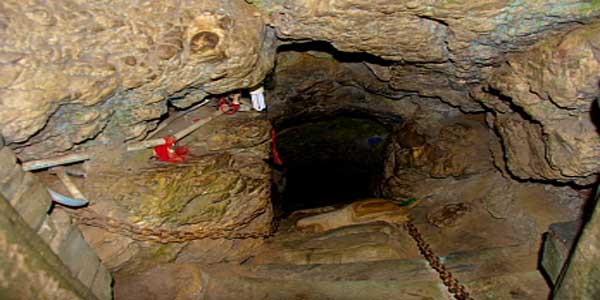
The cave is 160 meters long and 90 feet deep, adorned with spectacular stalactites and stalagmites that take on forms resembling various deities and divine figures. The temple, which has been a focal point of worship for centuries, is fully illuminated and features narrow tunnels and chambers that lead to a series of inner caves.
Legend and Mythology
The legend of Patal Bhuvaneshwar dates back to the Treta Yuga, with King Ritupurna of the Surya Dynasty (also known as the Sun Dynasty) as the first person to discover the cave. According to the myth, Ritupurna was guided through the cave by the serpent god Sheshnag. Inside the cave, he witnessed the divine presence of Lord Shiva and the thirty-three koti gods and goddesses.
It is said that after Ritupurna’s visit, the cave was sealed for ages, with a prophecy in the Skanda Purana predicting that it would only be reopened in the Kali Yuga. In the Kali Yuga, the cave was rediscovered by Adi Shankaracharya in 1191 AD. Since then, it has become a prominent pilgrimage site where devotees gather to worship and seek divine blessings.
The Four Doors of Patal Bhuvaneshwar
Inside the cave, there are four distinct doors, each with a special significance in Hindu mythology:
- Randwar (Door of War): This door, associated with the great battles of ancient times, was sealed after the Mahabharata war.
- Paapdwar (Door of Sin): It is said that this door was closed after the death of Ravana in the epic battle of Lanka.
- Dharmdwar (Door of Dharma): The Door of Dharma is open to those who seek righteousness and spiritual truth.
- Mokshadwar (Door of Liberation): This door symbolizes the path to salvation and liberation (Moksha).
Currently, only the Dharmdwar and Mokshadwar remain open, symbolizing the spiritual paths that guide devotees towards righteousness and liberation.
Spiritual Significance
Patal Bhuvaneshwar is considered one of the most sacred places of worship in Uttarakhand. It is primarily dedicated to Lord Shiva, but it also contains the idols and symbols of other important gods and goddesses. The cave is believed to be the meeting point of the three worlds — the earth, the heavens, and the underworld.
According to local beliefs, visiting Patal Bhuvaneshwar and worshiping there is equivalent to visiting the Char Dham of Uttarakhand. The temple is a center of divine energy, and rituals such as the ‘Havan’ (fire sacrifice) are performed in a sacred and solemn atmosphere, amplifying the spiritual experience for visitors.
The Pandavas and Patal Bhuvaneshwar
Another fascinating legend is that the Pandavas, the central figures of the Mahabharata, are said to have visited Patal Bhuvaneshwar during their exile. It is believed that they meditated in front of Lord Shiva within the cave, seeking divine guidance before embarking on their final journey to the Himalayas.
The cave is said to be connected to Mount Kailash, Lord Shiva’s abode, adding to its mystique and spiritual importance. Many visitors come to this cave to seek blessings, meditate, and experience the divine energy believed to be emanating from the holy site.
The Bhandari Priests and Tradition
For more than 20 generations, the Bhandari family has served as the priests at Patal Bhuvaneshwar. The Bhandaris are keepers of the cave’s rich history and its sacred rituals. Their connection to the temple traces back to Adi Shankaracharya, who consecrated the temple in 1191 AD. The family is a living repository of stories, legends, and spiritual knowledge about the cave, making them essential to the preservation of the site’s ancient traditions.
Visiting Patal Bhuvaneshwar
Patal Bhuvaneshwar is located at an altitude of 1,350 meters above sea level, and the journey to the cave requires navigating narrow, winding roads and climbing steps. The cave’s interior is lit with feeble lights, and visitors must hold protective chains for safety as they explore the tunnels. The dimly lit atmosphere, along with the sacred chanting and rituals performed inside, creates an otherworldly ambiance.
Visitors to Patal Bhuvaneshwar often find themselves awestruck by the natural beauty of the cave and its divine significance. The stalactite and stalagmite formations, resembling deities like Lord Shiva, Lord Vishnu, and Goddess Kali, make the cave an awe-inspiring spiritual destination.
FAQs about Patal Bhuvaneshwar Temple
Where is Patal Bhuvaneshwar located?
Patal Bhuvaneshwar is located in the Pithoragarh district of Uttarakhand, India, approximately 14 km from Gangolihat. The cave temple is situated in the village of Bhubneshwar at an altitude of 1,350 meters above sea level.
What is the significance of Patal Bhuvaneshwar?
Patal Bhuvaneshwar is a sacred Hindu cave temple primarily dedicated to Lord Shiva. It is believed to house thirty-three koti (types) of demigods and is considered a spiritual gateway to the earth, heavens, and underworld. Worship at this cave is thought to be equivalent to visiting the Char Dham of Uttarakhand.
What is the legend behind Patal Bhuvaneshwar?
According to legend, King Ritupurna of the Surya Dynasty discovered the cave in the Treta Yuga. He was guided by the serpent god Sheshnag and saw the divine presence of Lord Shiva and the 33 koti gods. The cave was later sealed and rediscovered in the Kali Yuga by Adi Shankaracharya, who consecrated it in 1191 AD.
How many doors are there in Patal Bhuvaneshwar?
The cave has four doors:
- Randwar (Door of War)
- Paapdwar (Door of Sin)
- Dharmdwar (Door of Dharma)
- Mokshadwar (Door of Liberation)
Currently, only the Dharmdwar and Mokshadwar remain open.
Is Patal Bhuvaneshwar connected to Mount Kailash?
Yes, it is believed that Patal Bhuvaneshwar is connected to Mount Kailash, the abode of Lord Shiva. This adds to the spiritual significance of the cave, as it is considered a place of great divine energy.
How long is the Patal Bhuvaneshwar cave?
The cave is 160 meters long and 90 feet deep from the entrance. Inside, visitors can explore several chambers and tunnels, which are adorned with spectacular stalactites and stalagmites.
Who has been performing rituals at Patal Bhuvaneshwar?
The Bhandari family has been performing religious rituals at Patal Bhuvaneshwar for over 20 generations. Their lineage dates back to Adi Shankaracharya, who consecrated the cave temple in 1191 AD.
What is the best time to visit Patal Bhuvaneshwar?
The best time to visit Patal Bhuvaneshwar is between April and October, as the weather is pleasant, and the roads to the temple are more accessible. The temple is open throughout the year, but winters can be challenging due to snowfall and colder conditions.
Is there any special worship or ritual at Patal Bhuvaneshwar?
Yes, the temple hosts regular worship ceremonies, including the “Havan” (fire sacrifice), which is performed in a sacred and serene atmosphere. The cave is believed to be a place of spiritual enlightenment and purification.
Can I visit the cave on my own?
While visitors are allowed to explore the cave, it is recommended to go with a guide, especially for safety purposes. The interior of the cave is dimly lit, and some parts require holding protective chains. The guides provide information on the temple’s history, legends, and significance.
How can I reach Patal Bhuvaneshwar?
Patal Bhuvaneshwar can be reached by road from Gangolihat, which is the nearest town. From Gangolihat, you can hire a taxi or use local transport to reach the temple. The road journey is scenic, and there are steps to climb leading up to the cave.
What should I carry when visiting Patal Bhuvaneshwar?
It is advisable to carry comfortable footwear, warm clothing (if visiting in winter), and a flashlight or camera (though photography may be restricted in certain areas). Be sure to carry a bottle of water and some light snacks, as the area is remote.
What makes Patal Bhuvaneshwar unique?
Patal Bhuvaneshwar is unique due to its rich spiritual history, connection to Hindu mythology, and its natural limestone formations that resemble deities and divine figures. The cave’s ambiance and its association with Lord Shiva, the Pandavas, and Adi Shankaracharya make it a deeply spiritual and historical site.
Are there any nearby attractions to visit?
Yes, several scenic spots near Patal Bhuvaneshwar include the temples of Gangolihat, the scenic Ramganga river, and the nearby hill stations of Uttarakhand, like Almora and Nainital. Visitors can also explore the beautiful Himalayan landscapes in the region.
Patal Bhuvaneshwar is a unique and mystical pilgrimage site that combines spirituality, history, and natural beauty. With its deep roots in Hindu mythology and its connection to ancient legends, the cave continues to attract pilgrims and visitors from all over the world. Whether seeking divine blessings, exploring the cave’s natural wonders, or experiencing its spiritual energy, Patal Bhuvaneshwar offers a profound and enriching experience for all who visit.