Govind Ballabh Pant

Govind Ballabh Pant
10 September 1887, Almora
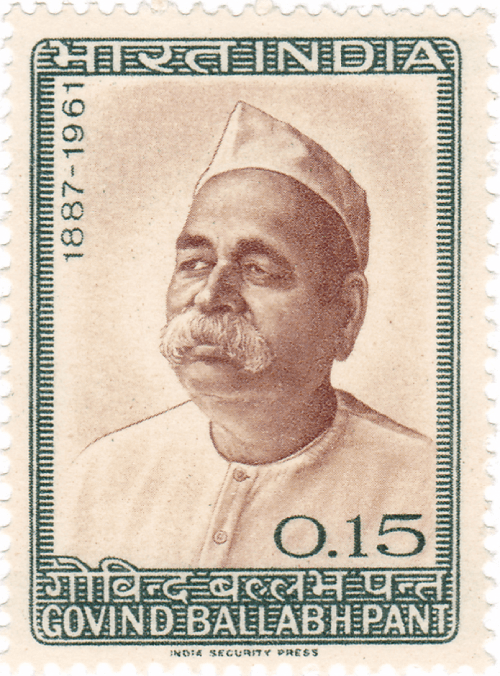
Pandit Govind Ballabh Pant was born on 10 September 1887, in a village called Khoont near Almora. Born in a Maharashtrian Brahmin family , his mother’s name was Govindi Bai and his father was Manorath Pant.
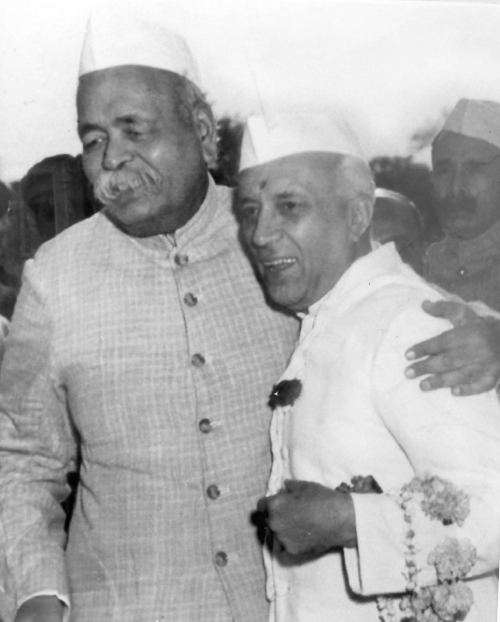
Pant served as Union Home Minister from 1955 to 1961.Pant was appointed Minister of Home Affairs in the Union Cabinet on 10 January 1955 in New Delhi by Jawaharlal Nehru. As Home Minister, his chief achievement was the re-organisation of States along linguistic lines. He was also responsible for the establishment of Hindi as an official language of the central government and a few states.
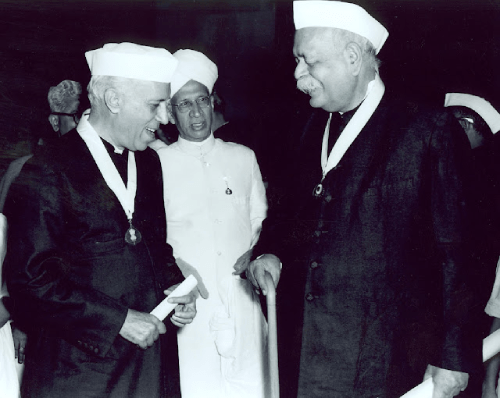
During his tenure as the Home Minister, Pant was awarded the Bharat Ratna on 26 January 1957.
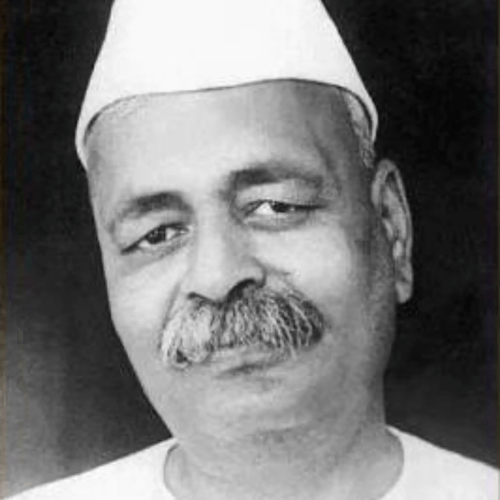
More About Govind Ballabh Pant
Pandit Govind Ballabh Pant; Indian freedom fighter and one of the makers of modern India. He served as the union home minister in Jawaharlal Nehru’s cabinet and tackled the critical issues plaguing the newly independent nation with great elan. He began his career as a lawyer. His patriotic feelings were ignited after listening to a speech by Gopal Krishna Gokhale. Apart from Mahatma Gandhi, Jawaharlal Nehru, and Sardar Vallabh Bhai Patel, he also played an important role in the struggle for independence.
He actively took part in the Non-cooperation movement, the Civil Disobedience movement, and the Satyagraha movement and as a result was imprisoned several times. He became the first Chief Minister of Uttar Pradesh after India’s independence.
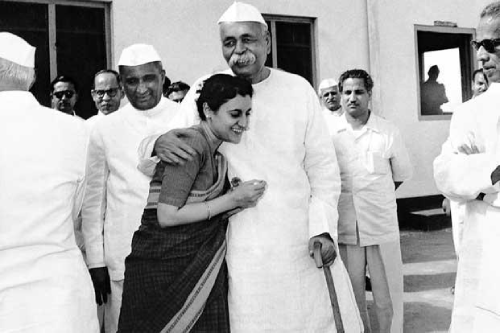
He made his mark by abolishing the zamindari system and stabilising the economic condition of the state. After his nearly five year long stint as the chief minister, Prime Minister Jawaharlal Nehru inducted him in his cabinet as Union Home Minister. As Home Minister, he played a key role in the re-organisation of States along linguistic lines and in establishing Hindi as the official language of India. An effectual public speaker, he could influence his audience by his impressive diction and force of argument. For his services towards the nation, he was honoured with the India’s highest civilian award, the Bharat Ratna.
CHILDHOOD & EARLY LIFE
- Pandit Govind Ballabh Pant was born on 10 September 1887, in a village called Khoont near Almora. Born in a Maharashtrian Brahmin family , his mother’s name was Govindi Bai and his father was Manorath Pant.
- His father was a government officer and had to shift from one place to another quite frequently.
- Right from childhood, he was an excellent student. He passed Middle School and Matriculation examination from the Samay College, Almora. He joined the Muir College, Allahabad on scholarship and graduated with Mathematics, English and Politics.
- In 1907, a speech by Gokhale deeply influenced his patriotic feelings. He also read the writings of Bankim Chandra, Dadabhai Naoroji, Dickens, Thackeray, Voltaire et all. He decided to study Law and in two years, he topped his batch and won the Lumsden gold medal.
CAREER
- In his initial years as a lawyer, he actively campaigned against the British Raj. Also, it was on 1914 that he helped a village council to challenge a law that required the locals to carry the luggage of travelling British officers for free.
• Having gained popularity as a lawyer, in 1921, he entered politics and was elected to the Legislative Assembly of the United Provinces of Agra and Oudh. - He also started a weekly paper called ‘Shakti’ with Pandit Badri Durr Pande, that highlighted the problems and campaigning for the cause of the Kumaon region.
- In 1930, he was imprisoned for several weeks for arranging a Salt March inspired by Mahatma Gandhi. In 1933, he was arrested again for attending a session of the then outlawed provincial Congress.
- In 1935, the ban was withdrawn and he was elected to the Central Legislative Assembly. He won the respect of the leaders of the Congress with his political skills. Soon, he became deputy leader of the Congress party in the Assembly.
- In the 1937 election, he was elected unchallenged as the leader of the Congress Party in the United Provinces (present day Uttar Pradesh) and became the first Chief Minister of the United Provinces under the Government of India Act, 1935. As Chief Minister, he brought about several necessary reforms in the State.
- He also got elected as the leader of the Congress party in the United Provinces (present day Uttar Pradesh)
- In 1939, India was pulled into the Second World War. The Congress ministers, including Pandit Pant, resigned as a mark of protest. He acted as a tiebreaker between Gandhi’s and Bose’s conflicting approaches to the war. In 1940, he took part in Gandhi’s Satyagraha Movement as a result of which he was imprisoned.
- In 1942, he was arrested for signing the Quit India resolution. In March 1945, he was let free after Jawaharlal Nehru pleaded his release on grounds of deteriorating health.
- After the war was over in 1945, the British Labour government held elections to the Provisional legislatures, and he emerged as the leader of the Party in United Provinces once again. He became the Chief Minister of the state for the second time continuing even after India’s independence in 1947.
- He became the first Chief Minister of Uttar Pradesh and was in the office from 26 January 1950 to 27 December 1954.
- In 1955, he was inducted into Jawaharlal Nehru’s cabinet and was made the union Home minister. He served in this position till his death in 1961.
MAJOR WORKS
- As a young lawyer, Pandit Pant successfully campaigned against the British Raj in 1914, by challenging a law that required locals, known as ‘coolie beggars’ to carry the luggage of British officers for free.
- He played a significant role in the Indian freedom movement He was an active participant in both the Non-Cooperation Movement and the Civil Disobedience Movement.
- After India’s independence, as Chief Minister of Uttar Pradesh, he was successful in stabilizing the economic condition of the state. He abolished the zamindari system, made monogamy compulsory for Hindu men and conferred Hindu women the rights to divorce and inherit ancestral property.
- As Home Minister, he was successful in re-organizing the States along linguistic lines. He also established Hindi as an official language of the central government and a few states.
MAJOR AWARDS AND ACHIEVEMENTS
AWARDS & ACHIEVEMENTS
- In 1957, he was awarded India’s highest civilian honor, the Bharat Ratna, for his selfless service to the nation.
PERSONAL LIFE & LEGACY
- In 1960, Pandit Govind Ballabh Pant suffered a heart attack. As the then Home Minister of India, he received the best treatment available but his health deteriorated further. After suffering a cerebral stroke, he passed away on 7 March 1961, at the age of 74.
- His son, Krishna Chandra Pant was also a noted politician. His other children were Lakshmi Pant and Pushpa Pant.