Mark Zuckerberg Journey to Uttarakhand
Discover how Mark Zuckerberg’s visit to Kainchi Dham Ashram in Uttarakhand, inspired by Steve Jobs, became a turning point in his life. A powerful tale of tech, spirituality, and self-discovery.
Full Name: Mark Elliot Zuckerberg
Born: May 14, 1984
Birthplace: White Plains, New York, USA
Known For: Co-founder and CEO of Facebook (now Meta Platforms, Inc.)
Early Life and Education
Mark Zuckerberg was born into a well-educated family. His father, Edward Zuckerberg, was a dentist, and his mother, Karen, was a psychiatrist. From an early age, Mark showed a deep interest in computers and programming. At the age of 12, he created a messaging program called “ZuckNet” for his family.
He attended Phillips Exeter Academy, where he excelled in literature, fencing, and computer science. Later, he enrolled at Harvard University in 2002, where the idea for Facebook took shape.
The Birth of Facebook
In 2004, while studying at Harvard, Mark Zuckerberg launched TheFacebook from his dorm room, initially intended for Harvard students only. With help from co-founders Dustin Moskovitz, Chris Hughes, and Eduardo Saverin, the platform rapidly expanded to other universities and then globally.
He dropped out of Harvard to fully commit to developing Facebook, moving operations to Palo Alto, California.
Growth and Impact
Facebook grew into one of the world’s most powerful social networks. Under Zuckerberg’s leadership:
-
Facebook acquired Instagram, WhatsApp, and Oculus VR.
-
It reached over 2 billion monthly active users.
-
In 2021, the parent company was rebranded as Meta Platforms, Inc., with a focus on building the metaverse a digital future centered on virtual and augmented reality.
Net Worth and Recognition
As of 2024, Mark Zuckerberg’s net worth is estimated to be over $100 billion, placing him among the world’s richest individuals. He has been featured on Time’s list of the 100 most influential people multiple times and has received several honors for innovation and entrepreneurship.
Philanthropy
Along with his wife Priscilla Chan, Zuckerberg launched the Chan Zuckerberg Initiative in 2015, pledging to donate 99% of their Facebook shares over their lifetimes to causes related to education, health, and equality.
Personal Life
Zuckerberg married Priscilla Chan in 2012. They have three daughters. Despite his wealth and fame, he is known for his modest lifestyle and consistent wardrobe (gray t-shirt and jeans). He’s fluent in several programming languages and also takes interest in reading and learning new languages he once learned Mandarin to deliver a speech in China.
Spiritual Journey to India
In 2015, during a challenging time at Facebook, Zuckerberg visited Kainchi Dham Ashram in Uttarakhand, India, following advice from Steve Jobs. The spiritual experience helped him reflect and return with renewed focus.
When Mark Zuckerberg Found Solace in the Hills of Uttarakhand
In the journey of building a tech empire, even the most powerful minds seek a moment of pause. In 2015, the world was surprised to learn that Mark Zuckerberg, the creator of one of the biggest social media platforms on Earth, found inspiration and clarity not in a Silicon Valley boardroom but in the quiet spiritual haven of Kainchi Dham Ashram, nestled in the heart of Uttarakhand, India.
A Journey Sparked by Steve Jobs
Long before Zuckerberg walked the trails of the Himalayan foothills, Steve Jobs had already been there. In the 1970s, Jobs, then a young man in search of spiritual truth, traveled across India and found guidance at Neem Karoli Baba’s ashram. That visit deeply influenced Jobs’ philosophies on design, focus, and leadership.
Years later, when Mark Zuckerberg faced a difficult phase in Facebook’s early growth, he turned to Jobs for advice. Jobs didn’t offer a business book or a spreadsheet—he offered something far more profound: “Go to India. Visit Neem Karoli Baba’s Ashram. It will give you clarity.”
Inspired by this advice, Zuckerberg took the trip. What began as a brief spiritual detour soon became a life-altering experience.
Kainchi Dham: A Spiritual Haven
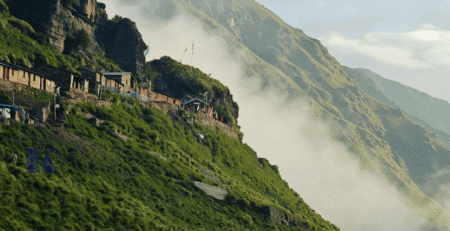
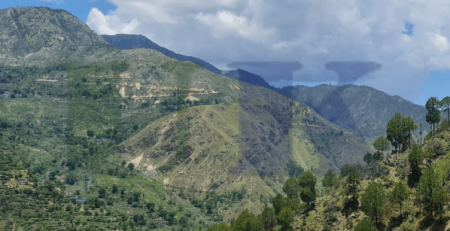
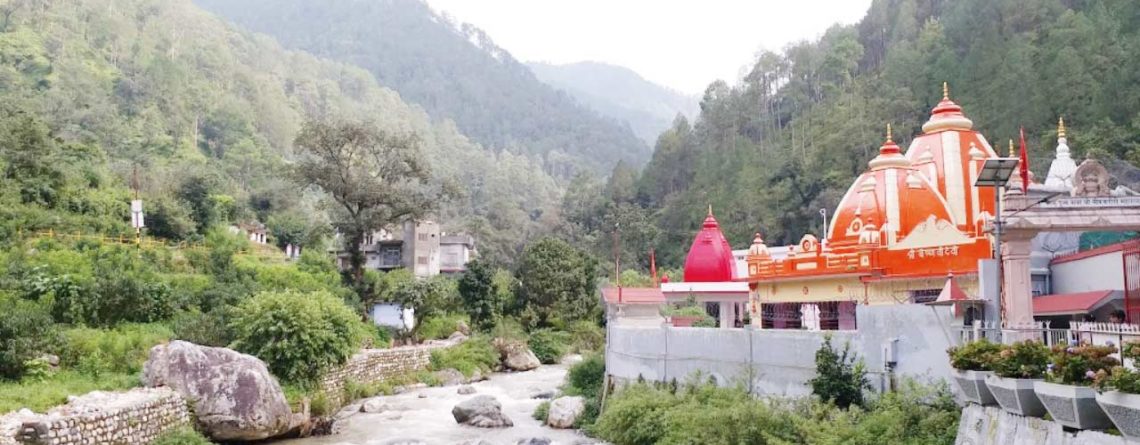
Kainchi Dham, located near Bhowali in Nainital district of Uttarakhand, is not your typical tourist destination. Set among lush green mountains and flowing rivers, the ashram is a place of quietude and reflection. It was established in 1964 by Neem Karoli Baba, a revered Hindu guru known for his teachings on love, humility, and inner peace.
Zuckerberg arrived intending to stay just a day, but the stillness of the place and the simplicity of the ashram life deeply moved him. He ended up staying several days, spending time in introspection. Though Neem Karoli Baba had passed away in 1973, his presence was still felt strongly through the people, the environment, and the energy of the place.
During his stay, Zuckerberg disconnected from the digital world he had helped create. Surrounded by nature and tradition, he reconnected with the fundamental purpose behind Facebook: building human connection. He later said the visit helped him re-focus and push forward with his company’s mission with a fresh perspective.
The Legacy of Neem Karoli Baba
Though he never sought fame, Neem Karoli Baba (also known as Maharaj-ji) became a spiritual icon around the world. His followers included not just Indian devotees, but also global thinkers, authors, and tech leaders. His core teachings centered around “Seva” (selfless service), bhakti (devotion), and the belief that love is the ultimate answer to every question.
His humility, silence, and powerful presence left a lasting impression on those who met him. Even after his passing, his ashrams continue to be sanctuaries for people seeking spiritual awakening. American spiritual teacher Ram Dass (formerly Richard Alpert, Harvard professor turned mystic) was among his most well-known followers and helped popularize Neem Karoli Baba’s teachings in the West.
In the modern era, Neem Karoli Baba’s influence has quietly shaped the thought process of some of the world’s leading tech entrepreneurs, including Mark Zuckerberg, Steve Jobs, and Jack Dorsey.
Uttarakhand: The Land of Spiritual Awakening
Often referred to as “Devbhoomi” (Land of the Gods), Uttarakhand is home to countless sacred temples, ancient yoga centers, and tranquil mountain villages that offer space for soul-searching and personal transformation.
From the bustling pilgrimage towns of Haridwar and Rishikesh to the hidden spiritual retreats like Kainchi Dham, the state offers more than just natural beauty. it offers inner peace. For a generation driven by deadlines, algorithms, and data, Uttarakhand reminds us of something timeless: the value of silence, reflection, and spiritual grounding.
Zuckerberg’s visit highlighted how the mountains of Uttarakhand are not just geographical landmarks but living testimonies to the healing power of faith, simplicity, and nature.
Mark Zuckerberg’s journey to Uttarakhand may not have been a corporate strategy but it turned out to be one of the most important decisions in his personal and professional life. It reinforced the idea that success is not just about scaling up it’s about slowing down, looking within, and finding your “why.”
In the silence of Kainchi Dham, a young tech founder rediscovered his mission to connect people. That pause in Uttarakhand became a turning point in the story of one of the world’s most influential digital platforms.
FAQs
What motivated Mark Zuckerberg to travel to Uttarakhand, India, specifically to Kainchi Dham Ashram?
Mark Zuckerberg was going through a crucial phase in Facebook’s development and sought a sense of direction and clarity. He mentioned in an interview that Steve Jobs, the late co-founder of Apple, once told him to visit Kainchi Dham Ashram a place Jobs had visited decades ago for spiritual guidance. Taking that advice to heart, Zuckerberg made the journey in 2015, looking to reconnect with his purpose and find mental clarity amidst his growing responsibilities.
Where is Kainchi Dham Ashram, and why is it considered so special?
Kainchi Dham is a peaceful ashram nestled in the hills near Bhowali, close to Nainital in Uttarakhand, India. It was founded by the spiritual saint Neem Karoli Baba, who became widely respected for his message of love, simplicity, and devotion. The ashram is considered a powerful spiritual hub, drawing people from around the world, including celebrities and tech leaders. Devotees believe that the atmosphere here carries deep spiritual vibrations, and many come seeking peace, healing, or answers to life’s bigger questions.
How long did Zuckerberg stay at the ashram, and what did he do during his visit?
Mark Zuckerberg reportedly planned to stay just a day but ended up spending multiple days at the ashram, completely immersed in its tranquil surroundings. During his stay, he kept a low profile, meditated, interacted with the caretakers, and reflected deeply on his journey and vision for Facebook. The calmness of the place, away from the noise of Silicon Valley, allowed him to mentally reset and find peace.
What kind of impact did this visit have on Zuckerberg personally and professionally?
The visit proved to be transformative. Zuckerberg later shared that the experience helped him refocus Facebook’s mission to connect people and build communities. He returned to his work with a renewed sense of clarity, balance, and purpose. His visit emphasized how spirituality and mindfulness can complement leadership in the tech world, especially when facing high-stress situations.
Did Zuckerberg’s trip to India include only the spiritual retreat, or were there other engagements?
While the visit to Kainchi Dham was a personal and spiritual one, Mark Zuckerberg has also visited India on other occasions for business and technology-related engagements. However, this particular journey was intimate and reflective, not driven by corporate agendas. It stands out as a rare moment when a global CEO publicly acknowledged the value of spiritual exploration in personal growth.
Why is Neem Karoli Baba’s ashram attracting global tech leaders?
Neem Karoli Baba’s teachings have quietly influenced some of the world’s brightest minds. Steve Jobs, Mark Zuckerberg, and even Julia Roberts have acknowledged the spiritual pull of his message. The ashram’s simplicity, coupled with its rich spiritual legacy, draws leaders who are often surrounded by complexity and noise. For many, it’s not just a religious experience it’s a way to reconnect with inner peace and silence.
What does this tell us about Uttarakhand’s global significance today?
Mark Zuckerberg’s journey shines a spotlight on Uttarakhand’s identity as “Devbhoomi” (Land of the Gods). Beyond its scenic beauty, the state offers spiritual depth that resonates with people across the world. From the Himalayas to the holy rivers and ashrams, Uttarakhand has become a destination for those seeking spiritual growth, healing, and self-discovery including influential global figures.
Mark Zuckerberg visit to Uttarakhand’s Kainchi Dham Ashram is more than just a footnote in his biography it’s a powerful reminder that even the most influential minds in the world need moments of silence, reflection, and spiritual grounding. In a world driven by innovation, speed, and constant connection, his quiet journey into the heart of the Himalayas stands out as a symbol of humility and introspection. Uttarakhand, often called “Devbhoomi,” continues to serve as a beacon for those in search of inner peace. From saints to scientists, actors to entrepreneurs, its serene landscape and sacred spaces offer something timeless a chance to reconnect not just with nature, but with the self. Zuckerberg’s experience reflects a universal truth: sometimes, the answers we seek aren’t found in boardrooms or algorithms, but in the quiet whisper of the mountains and the stillness of a spiritual retreat.