Kumbh Mela
The Grand Festival of Faith and Purity in Uttarakhand
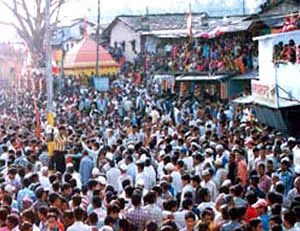
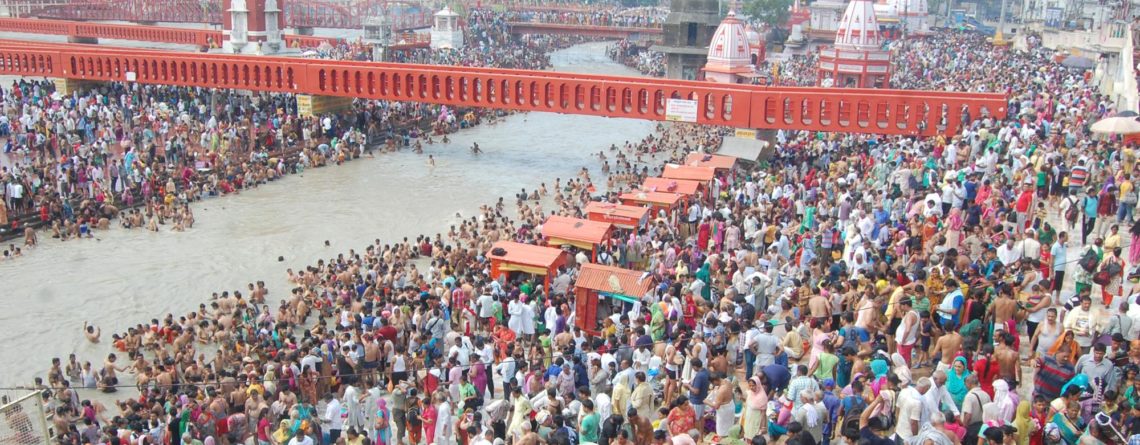
Kumbh Mela is one of the largest and most revered festivals in Uttarakhand. Although technically a fair, it holds immense significance for the people of this northern state. It represents the largest congregation of pilgrims, who come to take sacred dips in the Ganga River to cleanse themselves of sins. Devotees, saints, and onlookers from various backgrounds, irrespective of caste, creed, or gender, travel from across India and the world, hoping to break free from the cycle of birth and death. It is believed that bathing during Kumbh washes away all sins and brings salvation. Furthermore, the water of the Ganga is thought to be infused with healing properties during this time, enhanced by the electromagnetic radiations from the Sun, Moon, and Jupiter.
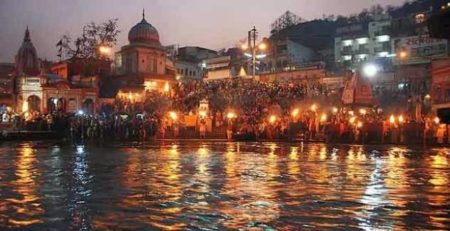
Haridwar, blessed by the presence of the Ganga, is the primary location for the Kumbh Mela, along with the Ardh Kumbh Mela and Maha Kumbh Mela, which occur every three, six, and twelve years, respectively. Millions flock to the ghats of Haridwar to partake in this sacred bathing ritual. In addition to Haridwar, Kumbh Mela is also celebrated in Nasik (on the Godavari River), Allahabad (at the confluence of the Ganga, Yamuna, and Saraswati), and Ujjain (on the Shipra River). According to Hindu mythology, Haridwar is one of the four sites where drops of the elixir of immortality fell during a celestial battle, making it a revered land.
The festival spans three months and rotates between Allahabad, Haridwar, Ujjain, and Nasik, occurring once every twelve years at each location. The exact date is determined using the Vikrant calendar after intricate rituals.
The origins of Kumbh Mela are deeply rooted in Hindu mythology. It is said that Lord Vishnu, while transporting Amrit (the nectar of immortality) in a sacred pitcher, spilled drops at four locations now deemed holy. The struggle between gods and demons for this Amrit is also referenced in religious texts, emphasizing the need for its protection. The earliest historical mention of Kumbh Mela comes from the writings of Chinese traveler Hiuen Tsang, who visited India in 600 AD during the reign of Harshvardhan. He described gatherings on the ghats of Allahabad where people took turns bathing in the river.
Among these, the Kumbh Mela in Haridwar attracts the largest crowds and is recognized for hosting one of the biggest human gatherings in the world.