Kumaoni Culture
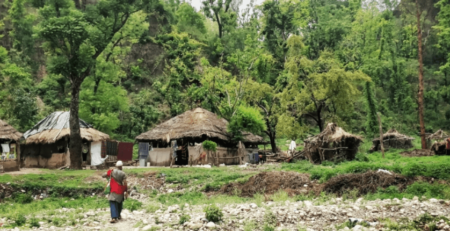
Kumaon is one of the most culturally rich regions, not only in Uttarakhand but in India too, whether it’s traditional attire or decorative art form, they are rich in heritage, traditions, and rituals. Kumaoni culture is one of the most deep-rooted cultures Kumaoni people follow their rich culture on a daily basis even today.
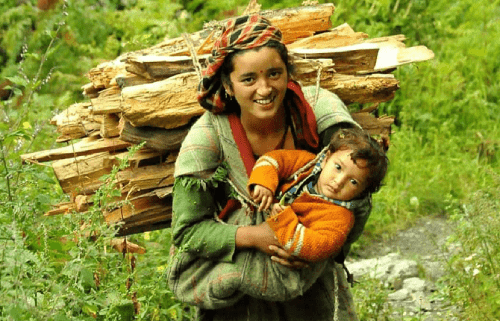
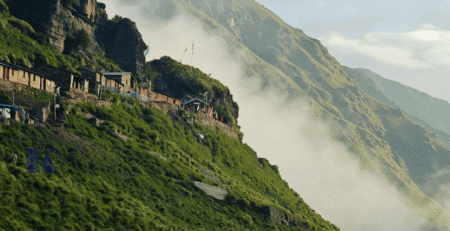
Kumaon, A Region In The State Of Uttarakhand Is Blessed With Wide Nature Scenario And Misty Mountains. It Is Surrounded By Tibet On North, Nepal On East, Uttar Pradesh On South And Garhwal Region On West.
The Region Of Kumaon Is Bounded Of Himalayan Mountain Ranges, With Two Sub Mountains Namely Terai And Bhabhar. A Good Amount Of Kumaon Region Is Deep Forest Which Is Fully Under The Control Of Local Forestry Department. Majority Of The Peoples Believe Hinduism In Kumaon Region. It Is Surprisingly To See That The Ancient Rocks, Valleys, Mountains In The Kumaon Region Are Named Some Hindu Mythological Gods Or Goddess Such As Shiva, Vaishnava Bholanath, Gangnath And Airy.
Kumaonis, also known as Kumaiye or Kumain they are an Indo-Aryan group who speak the Kumaoni language as their first language and live mostly in the Kumaon region in the Indian Himalayas and part of western Nepal.
Kumaon is believed to be the birthplace of Kurma Avtar of the Hindu God Vishnu, they worshipped Vishnu and Shiva in this region. The culture of the present Kumaon region is a blend of influences from the population as well as from the immigrants of this region, language, folk music, festivals, fairs, and forms of artistic expression are an example of the creative influences of the different cultural groups that constitute Kumaon. The people living in Kumaon or those who hail from the Kumaon are known as Kumaoni.
There were many oppositions in various parts of Kumaon against the British Raj, during the Indian rebellion of 1857, especially from the Champawat District, Many Kumaonis joined the Indian National Army led by Subhash Chandra Bose during the second world war. In Nepal, there are castes of brahmins who migrated from Kumaon to Nepal during the medieval period now they are known as Kuman Bahun or Kumai Bahuns.

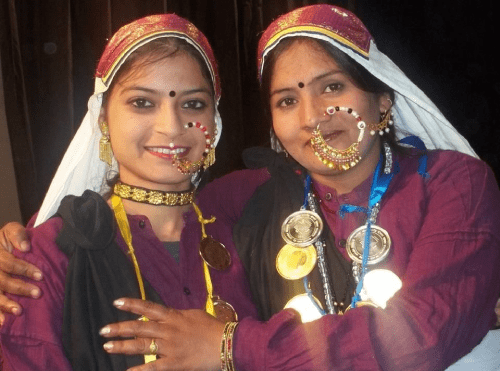
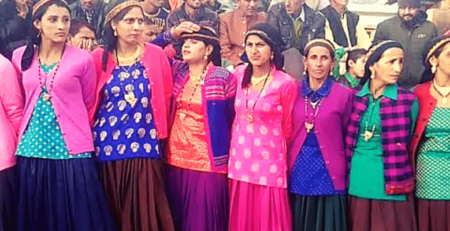
Kumaoni People wear various attires, for Kumaoni women Pichhaura is notable attire generally worn for religious occasions, rituals and marriage, and other rituals. Traditionally they use vegetable dyes and they are available in red and saffron Haldwani and other parts of Kumaon use silk fabric, it also made using machines.
And Kumaoni men wear a Kumaoni cap, which is a black color headgear this cap is used during festivals and Kumaoni Holi. Choliya is a popular dance in the Kuman Region it is the oldest folk dance of Uttarakhand, Jhoda and Chanchari are the other folk dances form of Kumaon.
Kumoani Speak languages belonging to the Aryan family also some of them speak the tibeto Burmese family, and almost all Kumaonis can speak Hindi.
Kumaon has been an interesting region since the last two decades due to the rock paintings which have been discovered in the area. Lakhu Udiyar and Lwethaap are the most famous ones amongst them. Kumaon is said to be the point of origin of Pahari Kalam which is yet another style of painting well-known across the world. The most popular art form of Kumaon, however, is known as Aipan or Alpana. In this art form, pieces of cloth, walls and papers are all decorated with geometric figures which belong to God, Goddesses and the other natural objects of nature.
Alpana is a very important art form of Kumaon which can easily be spotted in the homes of this region.
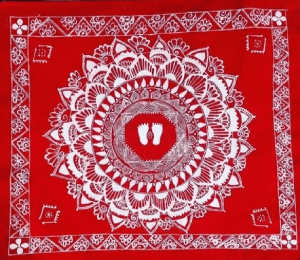
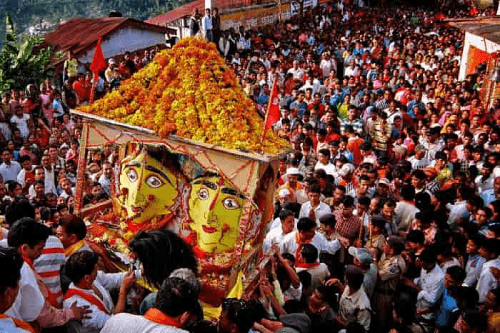
Alpana has a number of art forms including Saraswati Chowki, Nav Durga Chowki, Chamunda Hasti Chowki, Janeyu Chowki, Hasan Chowki, Acharya Chowki, Dhuli Arghya Chowki, Durga Thapa etc. Apart from worshipping Lord Shiva and Shakti, the residents of this region worship other Gods and Goddesses too including Kul Devta, Bhumi Devta, Gram Devta and Naga Devta.
Some other important folk Gods worshipped include Naina Devi, Nanda Devi, Gwalla, Bholenath, Airy, Gangnath, Chaumu, Haru and Kail Bisht.
Kumaon Is Also The Administrative Region Of Uttarakhand, Commonly Speaking Language Is Hindi And The Native Language Of Kumaon Is Kumaoni Language. The people of Kumaon speak 13 dialects including Kumaiya, Gangola, Soryali, Sirali, Askoti, Danpuriya, Johari, Chaugarkhyali, Majh Kumaiya, Khasparjia, Pachhai and Rauchaubhaisi.
This group of languages is known as the group of Central Pahari languages. Kumaon is also rich in its folk literature which comprises of myths, heroes, heroines, bravery, Gods, Goddesses and the characters drawn from Ramayana and Mahabharatha.
The most popular dance form of Kumaon is known as Chhalaria and it is related to the martial traditions of the region. All the festivals are celebrated with a lot of enthusiasm and witness such traditional dance forms even today.
Kumaoni People mostly relax, dance, and sing after the harvesting season and organize festivals. Each Sankranti has a fair or festival connected to it in Kumaon Fooldeyi, Bikhauti, Harela, Khatarua, and Ghughutiya are the most observed Sanskranties in the region. Other festivals have a bearing on the moon that’s why dates change frequently in the Gregorian Calendar. Dussehra festival starts in Kumaon with the performance of Ramlila, which is unique itself as it is based on the musical rendering of the Katha or story of Rama based on the theatrical traditions.
The uniqueness of the Kumaoni Holi lies in its being a musical affair be it Baithki Holi the Khari Holi or the Mahila Holi. The Baithki and Khari Holi are unique in that the songs on which they are based have a touch of melody, fun, and spiritualism.
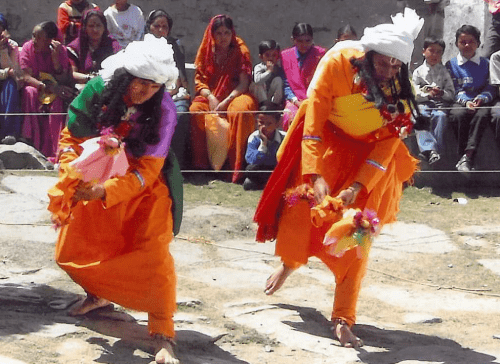
In spite of being worshippers of Lord Shiva and Shakti, the people of Kumaon have a rich tradition of folk deity worship, each folk god has a separate story attached to his name and each one is remembered through some peak, temple or jagar. It is believed that Kumaon once had a tradition of Yaksha worship.
On the birth of the child, the woman is segerated for all purposes for a few days until a puja is performed for the purification of women on another day they also do the NamKaran ceremony.
They perform funeral rites strictly according to their Shastras, in case of the death of unmarried women or men the body is normally buried and not cremanted for the people affected by the death of the person they performed Mourning for a week.
Kumaoni food is very simple and nutritious it suits the environment of the Himalayas, it includes vegetables, meat, pulses curd, and madua with rice and wheat.
According To The Researcher Atkinson, There Are More Than 250 Shiva Temples And 35 Vaishnava Temples Are Present In The Kumaon Region In British Times. The Temples Which Are Situated Around Bageshwar, Binsar, Thalkedar, Rameshwar, Kot Ki Mai, Almora And Ganganath Are Worshipping Lord Shiva. Similarly The Temples That Located In The Almora, Nainital, Pumagiri, Devidhura And Gangolihat Are Worshipping The Shakti.
The Regions In The Lohaghat – Champawat Are Associated With Kunna Avatar And Sun Gods. However The Region Kumaon Is Well Famous For Worshipping The Lord Shiva, Majorly Because Of The Regions Like Panchkedars And Kailash – Mansarovar. According To The Hindu Mythological Sages Opinion, Kailash Is The Finest And Purest Place To Worship The God Siva.
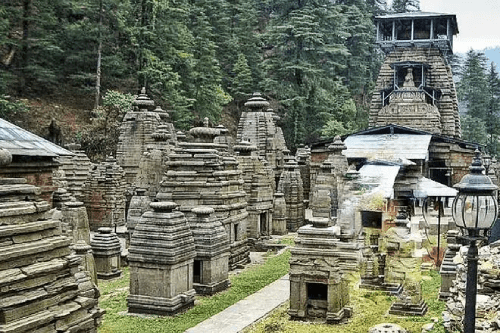
Kumaon Is A Region Which Is Mainly Dependable On The Income From Tourism. For Exploring The Scopes Of Tourism, The Welfare Organizations Start A Venture Namely “Kumaon Mandal Vikas Nigam” Which Delivers The Complete Details About The Kumaon Tourism, Places To Visit, Kumaon Best Hotels List, Kumaon Tour Packages, Kumaon Pilgrim Destinations Etc. It Is Always Feel To Say That Kumaon Is Tourist Spot That Will Gives You The Magnificent Mother Nature Experience.
In 2011, the census reported a total of 2,081,057 Kumaoni Speakers in India.