Gumani Pant
The First Poet of Kumaoni and Nepali
Gumani Pant (born: February 27, 1770) was the royal poet of the Kashipur state and a renowned poet in Sanskrit, Hindi, Kumaoni, and Nepali. He is regarded as the first poet of Kumaoni and Nepali languages, and some even consider him the first poet of the Khadi Boli. In his book Linguistic Survey of India, Grierson recognized Gumani Pant as one of the ancient poets of the Kumaon region. His literary contributions are invaluable not only to Kumaoni and Nepali literature but also to Indian literature as a whole.
Biography
Gumani Pant was born on February 27, 1770, in the Kashipur state. His birth name was Lokratna Pant, but his father affectionately called him ‘Gumani,’ and this name became popular. His father, Devanidhi Pant, hailed from the Uprauda village in Pithoragarh, while his mother’s name was Devmanjari. Gumani’s early years were spent in the company of his grandfather, Pandit Purushottam Pant, a renowned scholar.
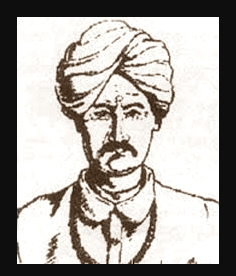
Gumani Pant received his education under the guidance of Pandit Radhakrishna Vaidyaraj in Moradabad and Pandit Haridatt Jyotirvid in Malauz. After completing his studies by the age of 24, he got married. However, after entering married life, he decided to observe a Brahmacharya vow for 12 years and embarked on a pilgrimage. He spent four years in Prayag, where he recited the Gayatri mantra a million times. Once, while cooking, his yajnopavita (sacred thread) was lost, and as penance, he vowed not to consume cooked food until the completion of his vow. Afterward, he meditated near Kapilmuni’s cave in Soron, Shukar Kshetra, and reportedly had a divine encounter with Lord Hanuman. After completing his vow, he returned to household life at the request of his mother.
Royal Poet
Due to his poetic brilliance, Gumani Pant was appointed as the royal poet in the court of Maharaja Gumansingh Dev of Kashipur. Other poets in the royal court became envious of his talent. Once, a poet named Pandit Sukhanand Pant from Kashipur ridiculed him, leading to a scholarly debate. Since Maharaja Gumansingh could not reach a conclusion, a mediator was appointed. The mediator, Pandit Tikaram Sharma from Moradabad, also harbored jealousy for Gumani Pant and sided with Sukhanand Pant. Gumani Pant, unable to tolerate this, wrote the following verse and left the court:
“Chandan kardan kalhe bheko madhyasthapannaḥ,
Brūte pank nimagnaḥ kardan samyaṁ cha chandan labhate.”
In this verse, Gumani Pant stated that when sandalwood and mud are in conflict, a frog, which resides in the mud, can never side with sandalwood. Gumani Pant’s writing and his boldness became evident as he left the court.
Works
Gumani Pant’s literary contributions are highly revered in Indian literature. His works include religious, philosophical, and moral themes, and he wrote in Sanskrit, Kumaoni, Nepali, and Hindi. Some of his major works include:
- Ramnamapanchpanchashika
- Ram Mahima
- Ganga Shatak
- Jagannath Shtak
- Krishna Ashtak
- Ramvinay
- Shatopdesh
- Gyanbheshajyamanjari
- Rajangarejasya Rajya Varnanam
These works reflect a deep understanding of Indian culture, religion, and life. Gumani Pant’s writings present profound insights into the human experience and the divine, making his literary contributions timeless.
Significance
Gumani Pant’s contribution to Indian literature is immense. He laid the foundation of Kumaoni, Nepali, and Hindi literature and expressed the cultural, religious, and moral values of Indian society. His works continue to serve as an important source of knowledge and inspiration in understanding life’s deeper meanings. Gumani Pant’s legacy lives on as his writings are still widely respected among literature enthusiasts.
In addition to their literary value, Gumani Pant’s works serve as a remarkable way to understand different aspects of society and life. His contribution has enriched the tradition of Kumaoni and Nepali literature, ensuring that his place in the history of Indian literature remains undiminished for generations to come.
Here are some frequently asked questions (FAQs) about Gumani Pant:
Who was Gumani Pant?
Gumani Pant was a renowned poet from the Kumaon region of Uttarakhand, India. He is regarded as the first poet of Kumaoni and Nepali languages and contributed significantly to Sanskrit, Hindi, and regional literature.
What is Gumani Pant known for?
Gumani Pant is known for his works in multiple languages, including Kumaoni, Nepali, Sanskrit, and Hindi. He is often referred to as the first poet of Kumaoni and Nepali literature.
What languages did Gumani Pant write in?
Gumani Pant wrote in Kumaoni, Nepali, Sanskrit, and Hindi. His poetry bridged regional and classical Indian literary traditions.
Where was Gumani Pant born?
Gumani Pant was born in Kashipur, located in the Nainital district of Uttarakhand, India, on February 27, 1770.
What were some of Gumani Pant’s notable works?
Some of his famous works include Ramnamapanchpanchashika, Ram Mahima, Ganga Shatak, Jagannath Shtak, and Krishna Ashtak.
What was Gumani Pant’s birth name?
Gumani Pant’s birth name was Lokratna Pant. He was affectionately called “Gumani” by his father, and this name became widely known.
Did Gumani Pant hold any royal position?
Yes, Gumani Pant served as the royal poet (Rajkavi) in the court of Maharaja Gumansingh Dev of Kashipur.
How did Gumani Pant’s career as a royal poet begin?
Gumani Pant was appointed as the royal poet in the court of Maharaja Gumansingh Dev due to his poetic brilliance.
What was the incident that led to Gumani Pant leaving the royal court?
Gumani Pant left the royal court after a scholar, Pandit Sukhanand Pant, ridiculed him. Despite a scholarly debate, Gumani Pant was not supported, and he wrote a verse expressing his discontent and left the court.
What were some of the themes of Gumani Pant’s poetry?
His poetry often touched upon religious, philosophical, and moral themes, reflecting a deep understanding of Indian culture and spirituality.
Did Gumani Pant go on any pilgrimages?
Yes, Gumani Pant embarked on a pilgrimage after taking a vow of Brahmacharya (celibacy) for 12 years. He spent significant time in Prayag, performing rituals and meditating.
What was the significance of Gumani Pant’s vow of Brahmacharya?
Gumani Pant’s vow of Brahmacharya represented his dedication to spiritual growth. During this period, he meditated and recited mantras, symbolizing his commitment to self-purification.
Where did Gumani Pant meditate?
After completing his vow, Gumani Pant meditated for several years near Kapilmuni’s cave in Soron, Shukar Kshetra, and had a spiritual encounter with Lord Hanuman.
What is Gumani Pant’s legacy in Kumaoni literature?
Gumani Pant is considered the pioneer of Kumaoni literature. His works laid the foundation for the literary traditions in the region and continue to be celebrated as an integral part of the cultural heritage.
How did Gumani Pant influence Nepali literature?
His contributions to Nepali literature were groundbreaking. As one of the first poets to write in Nepali, he shaped the early literary traditions of the language.
Did Gumani Pant write about social issues?
While his work was primarily religious and spiritual, Gumani Pant also addressed societal norms, moral values, and human virtues through his poetry.
Was Gumani Pant a follower of any particular spiritual tradition?
Gumani Pant followed the Vedantic and Hindu spiritual traditions. His writings often reflected his deep spiritual insights and devotion to Hindu deities.
How did Gumani Pant’s works get recognized?
Gumani Pant’s poetic brilliance was recognized within royal courts and scholarly circles. His works were celebrated for their depth of knowledge and their contribution to regional literature.
What is the significance of Gumani Pant in Indian literature?
Gumani Pant is considered a key figure in Indian literature, particularly for his contributions to regional literature in Kumaoni, Nepali, and Hindi. His works represent an early blend of classical and regional literary traditions.
Can Gumani Pant’s works still be found today?
Yes, Gumani Pant’s works continue to be read and respected, with many of his poems being preserved in literary archives and publications. They are an important part of the literary heritage of Uttarakhand and beyond.
Gumani Pant was a pioneering figure in Indian literature, especially in the Kumaoni, Nepali, and Hindi literary traditions. His contributions as a poet, scholar, and royal poet in the court of Maharaja Gumansingh Dev have left an indelible mark on regional literature. His spiritual journey, dedication to Brahmacharya, and deep understanding of Indian culture and philosophy reflect in his timeless works. Gumani Pant’s poetry continues to inspire generations, offering valuable insights into spirituality, social values, and the cultural richness of Uttarakhand and the broader Indian subcontinent. His legacy remains a vital part of Indian literary heritage.