Shri Hemkund Sahib
Hemkund Sahib, also known as “Saptashringa,” is a revered Sikh pilgrimage site located in the Chamoli district of Uttarakhand. It holds deep religious significance for Sikhs as it is associated with Guru Gobind Singh Ji, the tenth Guru of Sikhism. Hemkund Sahib is situated at an altitude of about 4,632 meters (15,200 feet) above sea level and is renowned worldwide for its natural beauty and spiritual importance.
Religious Significance
Hemkund is a Sanskrit name derived from two words: “Hem” meaning snow and “Kund” meaning bowl. The name reflects the natural setting of the place, which is surrounded by snow-covered peaks and a glacial lake. This sacred site is mentioned in the Dasam Granth, written by Guru Gobind Singh, the tenth Sikh Guru. According to the text, the Pandu king practiced deep meditation here, and it is believed that God commanded him to be reborn as Guru Gobind Singh. Hemkund holds immense religious and historical significance, especially in Sikhism.
The Discovery of Hemkund
The story behind the discovery of Hemkund is fascinating. For over two centuries, the site remained largely unknown. It was Guru Gobind Singh’s autobiography, Bichitra Natak, that brought attention to this holy place. Pandit Tara Singh Narottam, a Sikh scholar, was the first to uncover Hemkund’s geographical location. He described it as one of the 508 sacred Sikh sites in his work Sri Gur Tirath Sangrah. Later, the renowned Sikh scholar Bhai Vir Singh played a crucial role in gathering information about Hemkund and contributing to its development as a pilgrimage destination.
Hemkund’s Connection to Lord Lakshman
Hemkund is not only a revered site in Sikhism but also holds importance in Hindu mythology, particularly related to Lord Lakshman from the Ramayana. The area is considered sacred, with a large lake called Lokpal situated here. “Lokpal” translates to “protector of the people.” According to ancient texts, this is where Lord Lakshman meditated, and due to this historical significance, a temple dedicated to him stands here.
Another belief associates Lord Lakshman with his previous incarnation as Sheshnag, the serpent on whose back Lord Vishnu rests. It is said that Sheshnag performed penance at Lokpal Lake. Additionally, there is a local legend that when Lakshman was gravely injured in the battle with Meghnath, he was brought to the shores of Lokpal Lake. Hanuman found the Sanjeevani herb here, which healed Lakshman. Afterward, gods showered flowers from the heavens, giving rise to the famous Valley of Flowers located nearby.
Natural Beauty
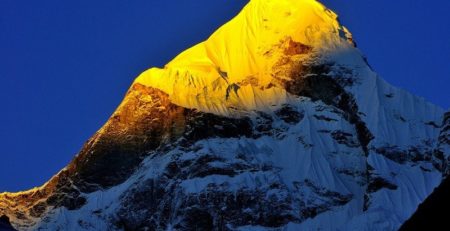
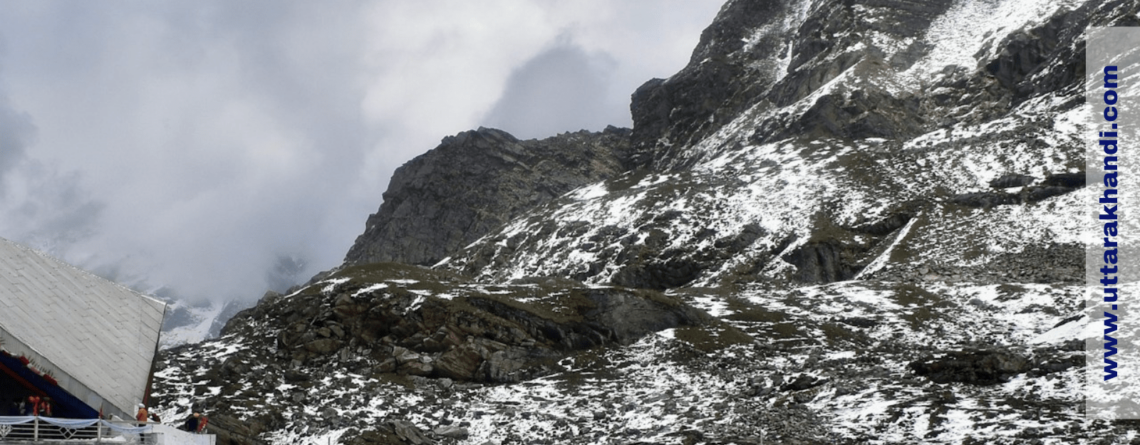
Apart from its religious significance, Hemkund Sahib mesmerizes visitors with its stunning natural beauty. Surrounded by snow-clad mountains and lush green valleys, the site offers a sense of profound peace. The weather remains cold throughout the year, and due to heavy snowfall, the gurudwara is open only between May and October. During this time, thousands of pilgrims and tourists visit for darshan.
Journey and Route
The pilgrimage to Hemkund Sahib begins from Govindghat in Chamoli district, which serves as the base camp for Sikh pilgrims. From Govindghat, pilgrims trek around 19 kilometers to reach Ghangaria, the starting point for the final leg of the journey. The trek from Ghangaria to Hemkund Sahib is about 6 kilometers, and it is quite challenging due to the high altitude and tough terrain.
Significance of the Hemkund Sahib Pilgrimage
The pilgrimage is not only a religious journey but also a test of spiritual and physical endurance for the devotees. Despite the difficult trek and adverse weather conditions, pilgrims remain steadfast in their devotion to their Guru. The journey to this holy site symbolizes balance in life and spiritual elevation.
Hemkund Sahib stands as a symbol of the great traditions of Sikhism, devotion, and peace. Every corner of this sacred place is filled with faith and reverence, leaving a deep spiritual impression on all who visit.