Narayan Datt Tiwari

Narayan Datt Tiwari
18 October 1925, Nainital – 18 October 2018, New Delhi
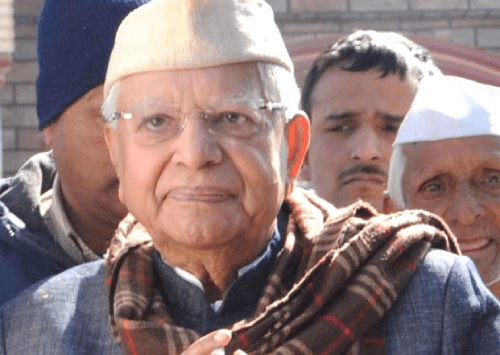
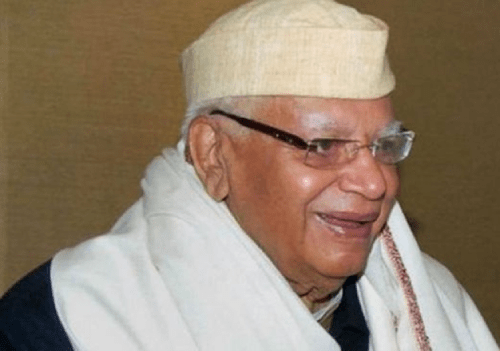
Narayan Datt Tiwari was one of the most eminent politicians India will ever see. From being a freedom fighter, to holding multiple office positions in the Parliament and to being a Chief Minister to not one but two states of India, he left an incomparable legacy behind. N.D. Tiwari hailed from Uttarakhand and played the torch-bearer of the newly formed state and lead it towards the path of development leaving the people feeling proud and forever indebted.
More About Narayan Datt Tiwari
Early Life
N.D. Tiwari was born on 18th October, 1925 in Baluti village, located in the Nainital district of Uttarakhand. He was born in a pre-independent India and inherited his father’s revolutionary blood. His father, Puranand Tiwari, worked in the Forest Department as an officer. But, as Mahatma Gandhi’s Non-Cooperation Movement against the British strengthened across the country and gained prominence, Puranand Tiwari resigned and pledged his life to achieving India’s freedom. The young Narayan Datt who was only seventeen years old, followed his father’s footsteps, when he began producing and circulating leaflets that opposed the British administration’s policies and got arrested on 14th December 1942 and imprisoned in the Nainital jail where he reunited with his father who was also taken as a prisoner there.
After spending a long fifteen months in confinement, N.D. Tiwari was released in 1944. He then began his ardent academic journey from Allahabad University where he first pursued his Masters in Political Science and topped the university and then further studied Law. His inclination towards politics grew as he popularly won the election of the President of the Students’ Union of his university in 1947, while maintaining his position as the Secretary of the AISC (All India Student Congress) from 1947 to 1949.
Political Career
Unlike most Indian politicians of the 1950s who were starting their political careers under the ruling Congress party’s umbrella, N.D. Tiwari was an opposition member of the Praja Samajwadi Party. He secured a ticket and was elected as an MLA from the Nainital Constituency in the 1st Uttar Pradesh Legislative Assembly election in 1952. His stars aligned and he won his second election in 1957 also making him the Leader of the Opposition in the Legislative Assembly.
It was in 1963 when N.D. Tiwari joined hands with the Indian National Congress after which his political career further prospered. He was again elected as an MLA in 1965 but this time from the constituency in Kashipur. As his popularity grew, N.D. Tiwari was elected as the Chief Minister of Uttar Pradesh where served from 21 January 1976 to 30 April 1977 and two more times in the future from 3 August 1984 to 24 September 1985 and 25 June 1988 to 5 December 1989. Though his tenures were short-termed but he aided Congress by maintaining a powerhold in a politically significant state such as Uttar Pradesh.
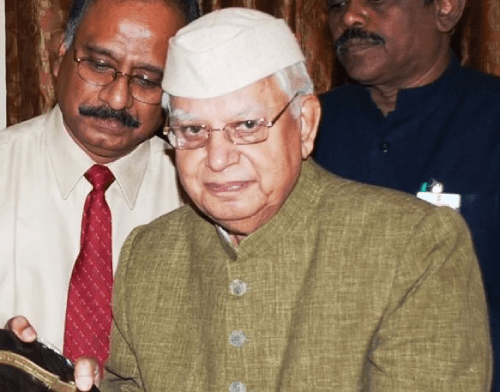
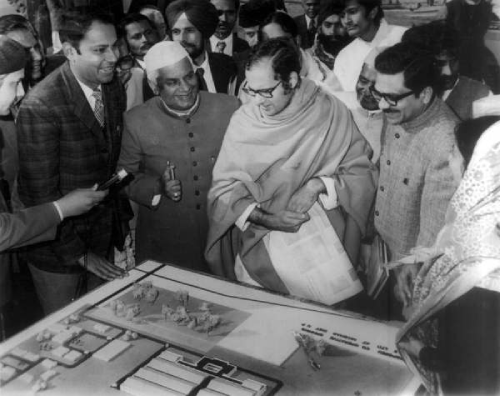
N.D. Tiwari was the President at Jawaharlal Nehru National Youth Centre (JNNYC), a voluntary organization set up by Former Prime Minister Indira Gandhi in 1968 to promote skill development and training programs among youth. From 1969 to 1971, he was also the President of the Indian Youth Congress. During the Chaudhary Charan Singh government, Tiwari also served as the Union Minister for Parliamentary Affairs and Finance from 1979 to 1980. The 1980s were a golden decade in N.D. Tiwari’s political career.
He began to be called ‘Panditji’ in the political circles. Tiwari prudently held several posts and offices in the Central Government, starting with his election in the 7th Lok Sabha constituency, where he served as a MP (Member of Parliament) for Nainital from 1980 to 1984 along with the position of the Deputy Chairman of Planning Commission from 9 June 1980 to 8 August 1981.
He was then elected in the Rajya Sabha from 1985 to 1988 as a MP for Uttar Pradesh. Meanwhile, he simultaneously held the offices of Union Minister of Industry from September 1985 to October 1986, Union Minister of External Affairs from October 1986 to July 1987 and Union Minister of Finance and Commerce from July 1988 to June 1988.
After having earned an admirable reputation in the world of politics, N.D. Tiwari’s ambitions were still sky-high. He aspired to become the Prime Minister of India but that dream never seemed to see the light of day as he lost his Lok Sabha seat in Nainital to BJP’s Balraj Pasi in 1991 and was bested by P.V. Narasimha Rao as the PMO of India. In 1994, he soon parted ways with Congress and by 1995, formed a new political party of his own, called All India Indira Congress (Tiwari), with a few senior leaders from Congress, Natwar Singh, Arjun Singh and Rangarajan Kumaramangalam. All India Indira Congress dissolved in 1998 and N.D. Tiwari
rejoined Congress when Sonia Gandhi took control of the party affairs. He won the 11th Lok Sabha constituency elections and served as an MP from Nainital from 1996 to 1998. After one year, he again won the 13th Lok Sabha elections and served from 1999 to 2002.
Formation of Uttarakhand
Initially, N.D. Tiwari was against the idea of the partition of Uttar Pradesh and was very vocal about his resentment of having a separate, new hill state. However, after succeeding the BJP leader Bhagat Singh Koshiyari, N.D. Tiwari was appointed as the 3rd Chief Minister of a newly formed Uttarakhand and served his state for a full term of 5 years from 2nd March 2002 to 7th
March 2007, which makes him the only CM to do so till date. He played a remarkable role in the early development of Uttarakhand focused on strengthening the state’s industrial sector and making it economically self-reliant. N.D. Tiwari was affectionately called ‘Vikas Purush’ for making noteworthy contributions to the state’s economic progress. He persuaded his opposition government at the Centre, which was the Atal Bihari Vajpayee government, and managed to secure an industrial package for the state and invited several industrialists to invest and setup businesses. Rahul Bajaj, the chairman of Bajaj Auto, also credited him for setting up plants in Pantnagar over N.D. Tiwari’s persuasion.
MAJOR AWARDS AND ACHIEVEMENTS
In 2007, N.D. Tiwari was appointed as the Governor of Andhra Pradesh and started his term on 22nd August but soon resigned after two years in 2009 due to a scandal. His later years in life were full of personal and professional controversies. Despite experiencing such turbulences, N.D. Tiwari is still fondly remembered as one of the greatest leaders who not only helped India
achieve freedom but also played a huge and irreplaceable part in policy-making and governance of a young, independent India. He breathed his last breath on his birthday, 18th October 2018, completing a 93 years long and glorious journey.