Nanda Devi Temple
The Heart of Himalayan Devotion
Nanda Devi is a highly revered goddess across the Garhwal and Kumaon regions of Uttarakhand, as well as other parts of the Himalayas. Worship of Nanda dates back to ancient times and is documented in religious texts, Upanishads, and Puranas. She is considered one of the six forms of Gauri and is also included among the Navadurga, or nine forms of the goddess Durga. The Bhavishya Purana mentions Nanda Devi alongside other goddesses such as Mahalaxmi, Kshemarkari, Shivduti, Mahatunda, Bhramari, Chandramandala, Revati, and Harsiddhi.
The original abode of Nanda Devi is in Kurud village in Chamoli. Over time, temples dedicated to Nanda have been established in various locations. In the Garhwal region, her worship is prominent in places like Talli Dasoli, Simli, Talli Dhuri, Chandraur, and Gaidlohwa. In Kumaon, notable temples are found in Almora, Ranchula, Dangoli, Badiyakot, Sorag, Karmi, Pothing, and Chiltha.
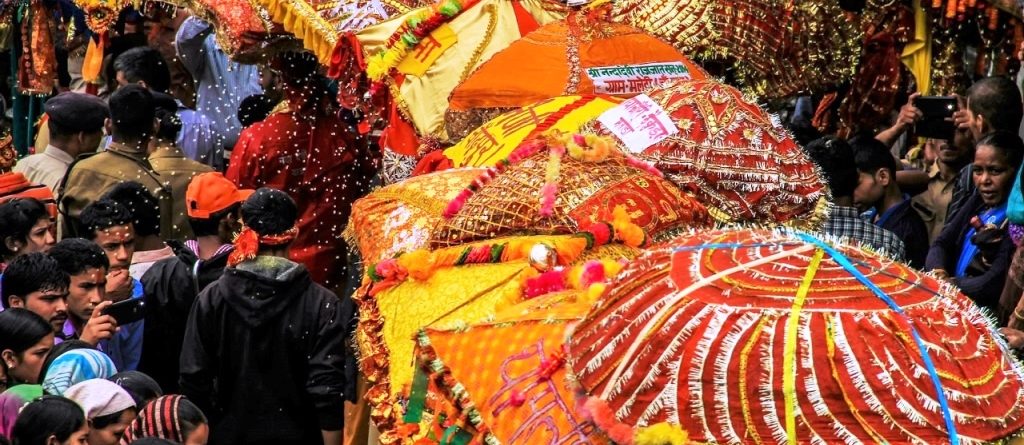
Nandastami is a significant festival dedicated to Nanda Devi, celebrated with grand fairs in Kurud, Kot, and Nainital. These festivals attract thousands of devotees and highlight the rich cultural heritage and traditions of the region. Particularly in Almora, the historic Nanda Devi temple’s fair held on the eighth day of the bright fortnight of Bhadra month is renowned for its vibrant celebrations and unique charm.
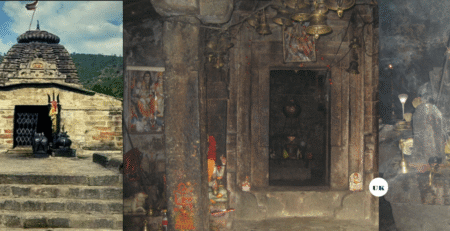
Nanda Devi Sidhpeeth, Kurud, Chamoli
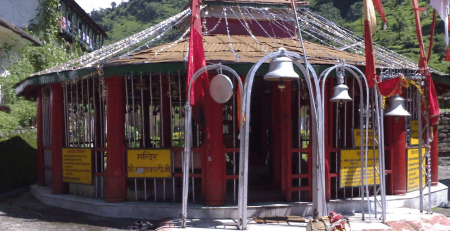
Nanda Devi Sidh Peeth, Kurud is a revered temple located in the Chamoli district of Uttarakhand, dedicated to Goddess Nanda Devi. According to traditional beliefs and myths, the origins of this temple are steeped in fascinating legends.
Traditional Legend and Mythology
According to traditional accounts, the original idol of Lord Jagannath, made of Indraneel or Neelamani (blue sapphire), was discovered beneath a fragrant Agarwood tree. The brilliance of this idol was so overwhelming that it was concealed underground to protect it. King Indradyumna of Malwa saw this idol in a dream and, after intense penance, was guided by Lord Vishnu to the seashore of Puri. There, he was instructed to find a piece of wood and carve the idol from it.
The king found the wooden log and brought it to the sculptors Vishnu and Vishwakarma. They agreed to carve the idols within a month but stipulated that they would work in seclusion, without anyone entering the room. On the final day, when the king, driven by curiosity, peeked into the room, he found the elderly sculptors emerging, stating that the idols were incomplete as they lacked hands. Despite the king’s dismay, the sculptors explained that this was all part of divine will, and the incomplete idols would be worshipped as they were. Thus, the idols of Jagannath, Balabhadra, and Subhadra were established in the temple.
Charan Tradition
According to the Charan tradition, it is believed that the half-burnt bodies of Lord Dwarkadhish, Krishna, Balabhadra, and Subhadra were brought here after their cremation at the seashore. The bodies were carried by the ocean waves to Puri. The king of Puri placed the bodies in separate chariots, unlike living beings who would be placed together. The citizens of Puri pulled the chariots through the city, and the wooden log that floated with the bodies was used to make the chariot. This chariot was then dedicated to Earth Mother, and the tradition continues to this day, though few people are aware of this historical fact. Most people believe that the gods arrived alive and in person. This belief is also mentioned in the records of Charan Jagdamba Sonal Aai’s revered teacher, Pujya Dolatdan Bapu.
This rich tapestry of legends highlights the deep-rooted cultural and spiritual significance of the Nanda Devi Sidh Peeth and its connection to the broader mythological landscape.
The Legend of Nanda Devi in Kumaon
Nanda Devi is one of the most revered deities in the Kumaon region, and her worship has been an integral part of the local culture and religion for centuries. The legend of Nanda Devi and her association with the region, particularly Almora, is rich and deeply rooted in local traditions.
Origins of the Legend
The worship of Nanda Devi in Kumaon dates back to ancient times. According to legend, the original idol of Nanda Devi was discovered in Kurud (in the Chamoli district) beneath a sacred Agarwood tree. The brilliance of this idol was so overwhelming that it had to be concealed underground for safekeeping.
Relocation to Almora
During a period of invasion and looting in Almora, the idol of Nanda Devi was relocated from Badhangarhi to Almora. This significant event in local folklore is deeply rooted in the history of Almora. The idol, which was initially enshrined in Badhangarhi, was moved to Almora to protect it from the invasion and subsequent looting. The historical Nanda Devi temple in Almora, where the idol was relocated, stands as a testament to the deity’s enduring significance in the region.
Festivals and Fairs
The worship of Nanda Devi is marked by numerous festivals and fairs across the region. The Nanda Ashtami festival is particularly notable. During this time, significant fairs are held, including the Nanda Devi fair in Kurud, the Kot ki Mai fair, and the Nanda Devi fair in Nainital. The fair in Almora, located at the historical Nanda Devi temple, is especially renowned. The celebration, held annually on the 8th day of the Shukla Paksha of Bhadrapada month, draws large crowds of devotees and showcases the rich cultural heritage associated with Nanda Devi.
Local Beliefs
In Kumaon, especially in Almora, Nanda Devi is venerated as a powerful and protective deity. She is believed to embody divine strength and protection, and her worship is closely tied to the local people’s wishes for prosperity and security. The festivals and fairs dedicated to her are not only religious observances but also a vital part of the region’s cultural identity.
Thus, the legend of Nanda Devi is a cornerstone of Kumaon’s religious and cultural heritage, with Almora playing a crucial role in preserving and celebrating this rich tradition.
Conclusion
The legend of Nanda Devi is a profound and cherished part of both Kumaon and Garhwal’s cultural and spiritual landscape. From her divine origins in Kurud to her sacred enshrinement in Almora, and her reverence in various parts of Garhwal, Nanda Devi embodies a legacy of devotion and protection that has transcended centuries.
In Kumaon, the Nanda Devi temple in Almora, relocated from Badhangarhi during a tumultuous period, stands as a symbol of resilience and reverence. The vibrant festivals and fairs dedicated to Nanda Devi, such as the Nanda Ashtami celebrations, are a testament to the deep connection between the deity and the local communities.
In Garhwal, Nanda Devi’s influence is equally significant, with temples dedicated to her scattered across the region. Her presence in Garhwal, combined with the rich traditions and rituals associated with her worship, underscores her importance in the spiritual and cultural fabric of the area.
Nanda Devi’s significance in both Kumaon and Garhwal goes beyond mere worship; she represents the essence of the spiritual traditions and the people’s enduring faith. Her presence continues to inspire and unite the local population across these regions, making her a central figure in the religious and cultural life of the Himalayas. Through her legend, the story of Nanda Devi remains a testament to the deep-rooted devotion and cultural pride that defines both Kumaon and Garhwal.