Muzaffarnagar Kand - Muzaffarnagar Rampur Tiraha Firing
A painful chapter that awakened the soul of Uttarakhand.
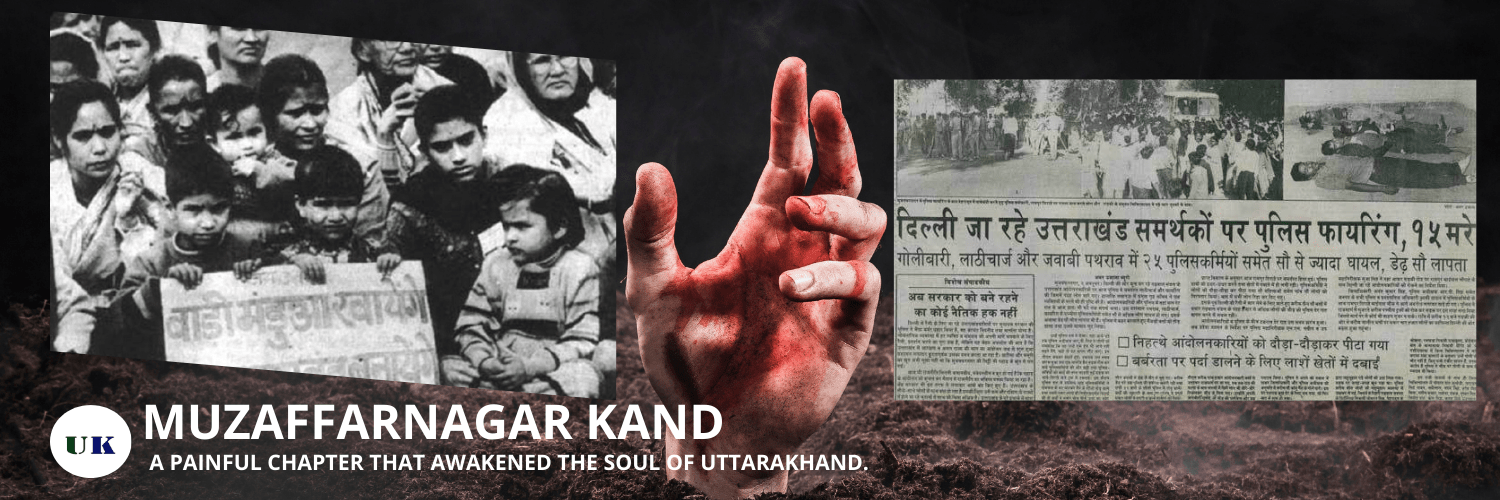
The history of the formation of Uttarakhand is a tale of sacrifice, determination, and struggle. One of the most tragic and oppressive events during this movement was the Muzaffarnagar Kand or Muzaffarnagar Rampur Tiraha Firing Incident. This tragic event occurred in 2nd October, 1994 when a peaceful movement for the creation of Uttarakhand was brutally suppressed. The incident not only changed the course of the movement but also highlighted the resolve and unity of the people of Uttarakhand. This story explores the Muzaffarnagar Incident and its impact on the Uttarakhand movement in detail.
Background of the Uttarakhand Movement
Uttarakhand, previously a part of Uttar Pradesh, had been neglected in terms of development for decades. The people of this hilly region faced hardships due to the tough geography and agriculture-based economy. The focus of the Uttar Pradesh government was primarily on the plains, leaving Uttarakhand’s hilly areas deprived of basic facilities.
The movement for a separate state arose in response to these political and social inequalities. In 1979, the Uttarakhand Kranti Dal (UKD) was formed, which organized the demand for the creation of Uttarakhand. However, the movement gained momentum in the 1990s when various political groups and organizations united for the cause.
Rise of the Movement and Role of Women
The Uttarakhand movement saw significant participation from both men and women. Women played a crucial role in turning this movement into a mass movement. They raised awareness among the people, marched through villages, and took the path of struggle. The women of Uttarakhand not only managed their household responsibilities but also took to the streets to protest.
Issues like jobs, education, and development were central to the dissatisfaction among the people in the hilly areas. Many believed that only the creation of a separate state could resolve these issues.
Peaceful Protests and Oppression
In September 1994, the movement leaders decided to hold peaceful demonstrations to press for the demand for a separate Uttarakhand state. The goal was to convey to the government that the people of Uttarakhand deserved their rights. Thousands of students, teachers, farmers, and ordinary people participated in these protests.
However, the Uttar Pradesh government did not take the movement seriously. Instead of listening to the demands, they used force to suppress the movement. The tension between the protesters and the government escalated.
The Protesters’ Journey to Rampur Tiraha
On September 1, 1994, many organizations and people supporting the demand for a separate Uttarakhand state decided to march from Haridwar to Delhi. The purpose of the march was to hold a peaceful protest in Delhi and make the government aware of their demands.
As the group of protesters reached Rampur Tiraha in Muzaffarnagar, they were stopped by the Uttar Pradesh police. The police ordered the protesters to turn back and not proceed further.
Police Brutality at Rampur Tiraha
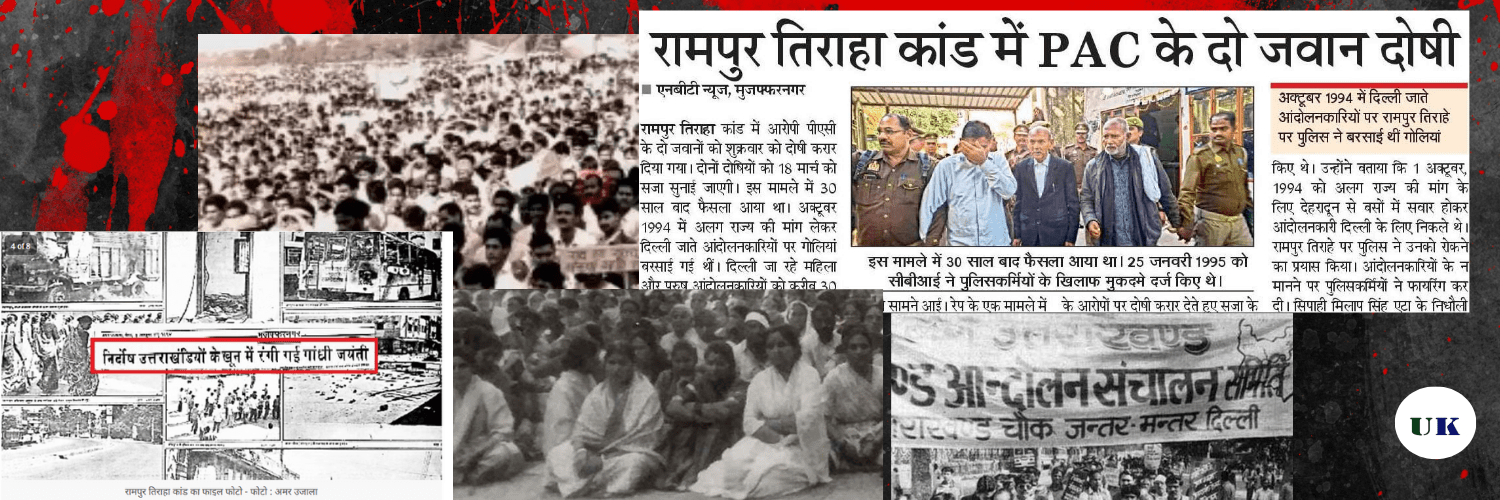
When the protesters continued their peaceful demonstration and refused to comply with the police orders, the police responded with violence. In the night of September 2, 1994, the police opened fire on the peaceful protesters. Several innocent protesters were killed in the firing, and many others were seriously injured.
But what shocked the entire region was the inhuman treatment of women. After the firing, several women were allegedly abused and mistreated by the police, marking one of the darkest moments in the movement.
The Shocking Reality of the Muzaffarnagar Kand or Muzaffarnagar Rampur Tiraha Firing
The Muzaffarnagar Kand or Muzaffarnagar Rampur Tiraha Firing Incident shook the foundations of the Uttarakhand movement. The incident sparked widespread outrage across Uttarakhand. Protests and strikes erupted in many parts of the state. The incident also gained nationwide attention, amplifying the demand for a separate state.
This event became a symbol of human rights violations, but it also fueled the determination of the Uttarakhand people. After the Muzaffarnagar Incident, the call for a separate state became even stronger.
Escalation of the Movement and Political Response
After the Muzaffarnagar Kand or Muzaffarnagar Rampur Tiraha Firing Incident, the Uttarakhand movement intensified. Protests, strikes, and demonstrations were held in different districts of the region. The movement gathered state-wide support, and its echoes were heard throughout the country.
Political parties, including the Congress and the BJP, condemned the incident and started showing support for the demand for a separate state. The Muzaffarnagar Incident made the demand for Uttarakhand a key issue on the national political stage.
Demand for Justice
The demand for justice for the Muzaffarnagar Kand or Muzaffarnagar Rampur Tiraha Firing Incident grew louder. The people of Uttarakhand wanted the police officers responsible for the incident to be held accountable and punished. However, the government at the time attempted to downplay the incident, but the public’s demand for justice and media pressure kept the issue alive.
Even years after the incident, the people of Uttarakhand continued to wait for justice for the victims of the Muzaffarnagar Incident.
Formation of Uttarakhand State
The Muzaffarnagar Kand or Muzaffarnagar Rampur Tiraha Firing Incident and the subsequent events strengthened the demand for the formation of Uttarakhand. In 1998, when the BJP came to power at the center, the issue of Uttarakhand gained traction.
Finally, on November 9, 2000, Uttarakhand was officially formed as India’s 27th state. For the people of Uttarakhand, this was a historic day. The sacrifices made during the movement, including those during the Muzaffarnagar Incident, were remembered and honored.
Legacy of the Muzaffarnagar Incident
The Muzaffarnagar Kand or Muzaffarnagar Rampur Tiraha Firing Incident is a dark chapter in Uttarakhand’s history, but it is also a testament to the resilience and determination of the people who fought for their rights and identity. Today, Uttarakhand is a thriving state, but the memories of the Muzaffarnagar Incident remain deeply ingrained in the hearts of its people.
This incident serves as a reminder that when people come together for a just cause, they can achieve the seemingly impossible. The Muzaffarnagar Incident will always be remembered as a turning point in the struggle for the creation of Uttarakhand.
Muzaffarnagar Rampur Tiraha Firing Case Progress
On October 2, 1994, during a peaceful protest advocating for the formation of a separate Uttarakhand state, police opened fire on a group of activists at Rampur Tiraha in Muzaffarnagar. This incident resulted in the deaths of seven Uttarakhand statehood activists and reports of sexual assaults on women activists during the chaos that ensued. The activists were marching from Rishikesh to Delhi to raise awareness about their demand for statehood. At that time, the Chief Minister of Uttar Pradesh was Mulayam Singh Yadav, and the Prime Minister of India was P. V. Narasimha Rao.
Timeline of Events and Legal Developments
Here’s a detailed timeline of the Muzaffarnagar Incident (Rampur Tiraha firing) along with the case developments and results so far:
1994: Incident and Initial Investigations
- October 2, 1994: Police opened fire on Uttarakhand statehood activists at Rampur Tiraha, resulting in the deaths of seven activists and reports of sexual assaults on women.
- First Information Reports (FIRs) were filed, indicating that activists damaged public property, prompting police action.
- A.K. Singh, the police officer present at the scene, ordered the firing, leading to fatalities among the protesters.
1995: Judicial Intervention
- January 12, 1995: The Allahabad High Court orders a Central Bureau of Investigation (CBI) probe into the incident, following a petition from the Uttarakhand Sangharsh Samiti.
- The CBI examined 72 witnesses and filed charges against 28 police personnel under various sections of the Indian Penal Code (IPC), including charges related to rape, robbery, and criminal conspiracy.
- A judicial inquiry ordered by the then Chief Minister Mulayam Singh Yadav concluded that police force was justified.
2000: Denial of Prosecution
- In November 2000, Chief Minister Rajnath Singh denied the CBI permission to prosecute Anant Kumar Singh, the then district magistrate of Muzaffarnagar.
2003: Court Rulings
- July 2003: The Uttarakhand High Court quashed the CBI charge sheet, absolving Anant Kumar Singh of criminal proceedings.
- Following public outcry, the state government filed a review petition, leading the court to recall its earlier order.
- November 2003: A CBI special court convicted two police officials for the deaths caused during the firing:
- Sub-Inspector Ramesh Chand Chowdhary: Sentenced to 2 years of rigorous imprisonment and fined Rs 2,000.
- Anil Singh Manral and Bhopal Singh: Sentenced to 7 years of rigorous imprisonment and fined Rs 5,000 each.
2005: Acquittals
- A special CBI judicial magistrate in Moradabad acquitted four police personnel accused of tampering with records related to the incident.
2007: Further Acquittals
- July 2007: A special CBI court acquitted Rajendra Pal Singh, then city Superintendent of Police, refusing permission to prosecute him without consent from the Uttar Pradesh governor.
- October 2007: Uttarakhand Chief Minister Bhuwan Chandra Khanduri visited the Shahid Smarak at Rampur Tiraha and announced that the state government would pursue all five pending court cases with greater dedication.
Summary of Responsible Individuals
- A.K. Singh: Police officer who ordered the firing.
- Anant Kumar Singh: District magistrate at the time; initially cleared of charges.
- Ramesh Chand Chowdhary: Convicted and sentenced for involvement in the police firing.
- Anil Singh Manral and Bhopal Singh: Also convicted and sentenced for their roles.
Current Status
- The ongoing quest for justice continues to resonate with activists and the local community, as the incident remains a significant part of the narrative surrounding the Uttarakhand Movement. Advocacy for accountability and social justice remains a focal point for many in Uttarakhand.
The Muzaffarnagar Rampur Tiraha firing incident stands as a pivotal moment in the narrative of the Uttarakhand Movement. It not only highlighted the grave issues surrounding social justice and the struggle for equitable representation but also showcased the unwavering resilience of the local community in the face of adversity. The tragic loss of lives during this incident galvanized the movement, fostering a renewed sense of unity among the people of Uttarakhand. As they rallied together, the incident underscored the urgent need for a separate state, fueling their aspirations for recognition, dignity, and self-governance. Ultimately, the Muzaffarnagar Kand serves as a poignant reminder of the sacrifices made in the pursuit of statehood and the ongoing fight for the rights and welfare of the hill communities in Uttarakhand.