Maangal: The Auspicious Folk Song of Uttarakhand
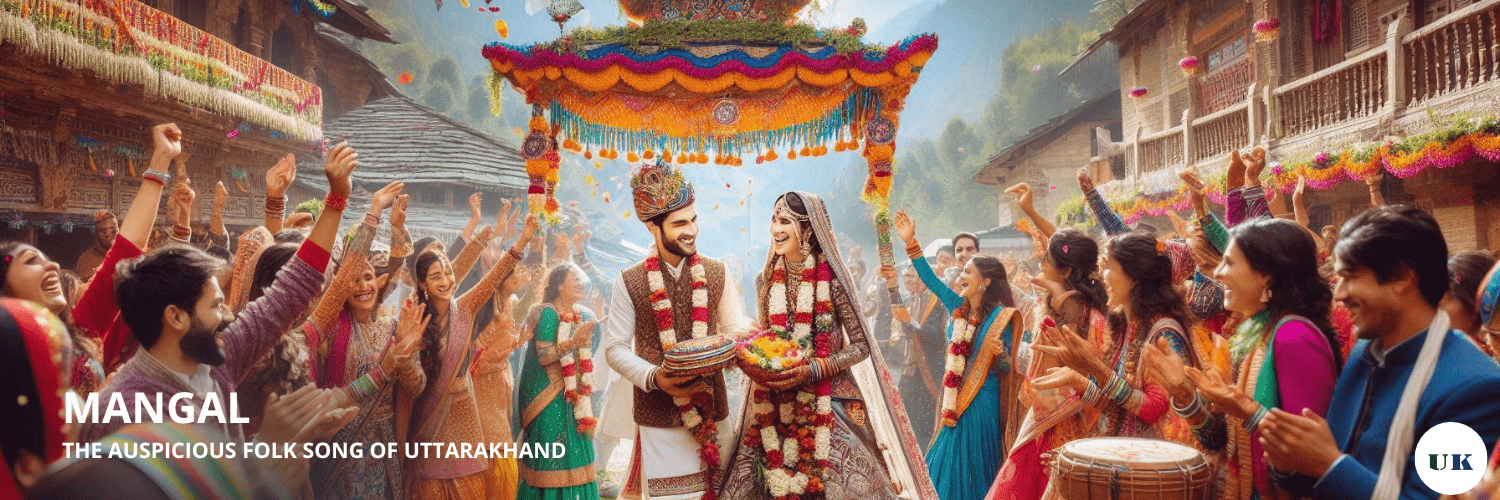
Maangal or Mangal is a vital and auspicious folk tradition that embodies the cultural and spiritual values of Uttarakhand. Through its songs, Maangal enriches the wedding rituals, bringing blessings and good fortune to the couple and their families. As a living tradition, Maangal continues to thrive, connecting the people of Uttarakhand with their cultural roots and ensuring that the sacred and joyful spirit of their traditions endures for generations to come.
Maangal is a quintessential folk song that embodies the ceremonial spirit and cultural richness of both Garhwal and Kumaon. This traditional song is performed during important life events such as weddings and festivals, where its lively and vibrant melodies enhance the celebratory atmosphere. The word “Maangal,” meaning auspicious, reflects the song’s role in marking significant moments with joy and ritual. Its rhythmic tunes and engaging lyrics are designed to invoke blessings and bring a sense of festive cheer to the occasion.
Discover Maangal, the auspicious folk song from Uttarakhand’s Garhwal and Kumaon regions, celebrated for its vibrant melodies and significant role in ceremonial events and festivals.
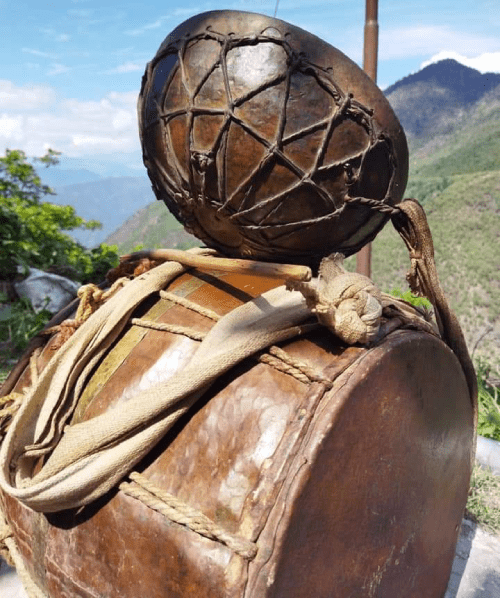
Performed with traditional instruments like the dhol and damau, Maangal adds a dynamic and energetic element to the ceremonies, reinforcing its role in creating a memorable and spiritually uplifting experience. The song’s versatility and its ability to evoke happiness and reverence make it a central feature in communal celebrations, where it helps in reinforcing cultural bonds and shared traditions. Through its enduring presence in the cultural practices of Garhwal and Kumaon, Maangal continues to celebrate and preserve the vibrant heritage of Uttarakhand.
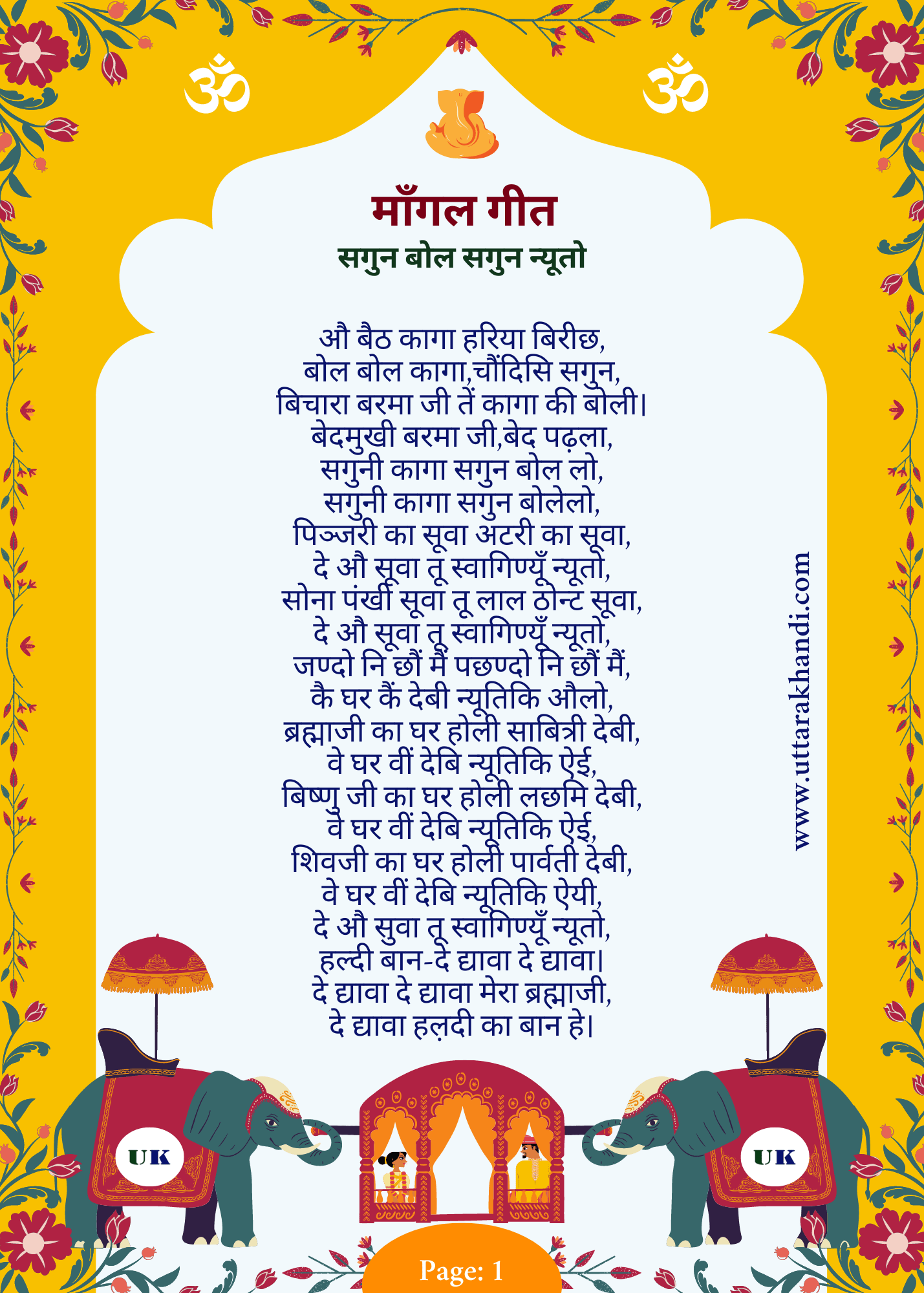
Come and sit, O crow… on the green tree…
Come and sit, O crow… on the green tree…
Speak, speak, O crow… share the auspicious news of all four directions…
O Brahmin! Understand and reflect on the words of the crow…
The Brahmin, who is the embodiment of Brahma, will read the Vedas…
The omen-telling crow will speak omens… The omen-telling crow will speak omens…
O parrot in the cage, O parrot on the terrace…
Go and invite the married women for the auspicious wedding ceremony…
O parrot with golden feathers and red beak…
Go and invite the married women for the auspicious wedding ceremony…
Go and invite the married women for the auspicious wedding ceremony…
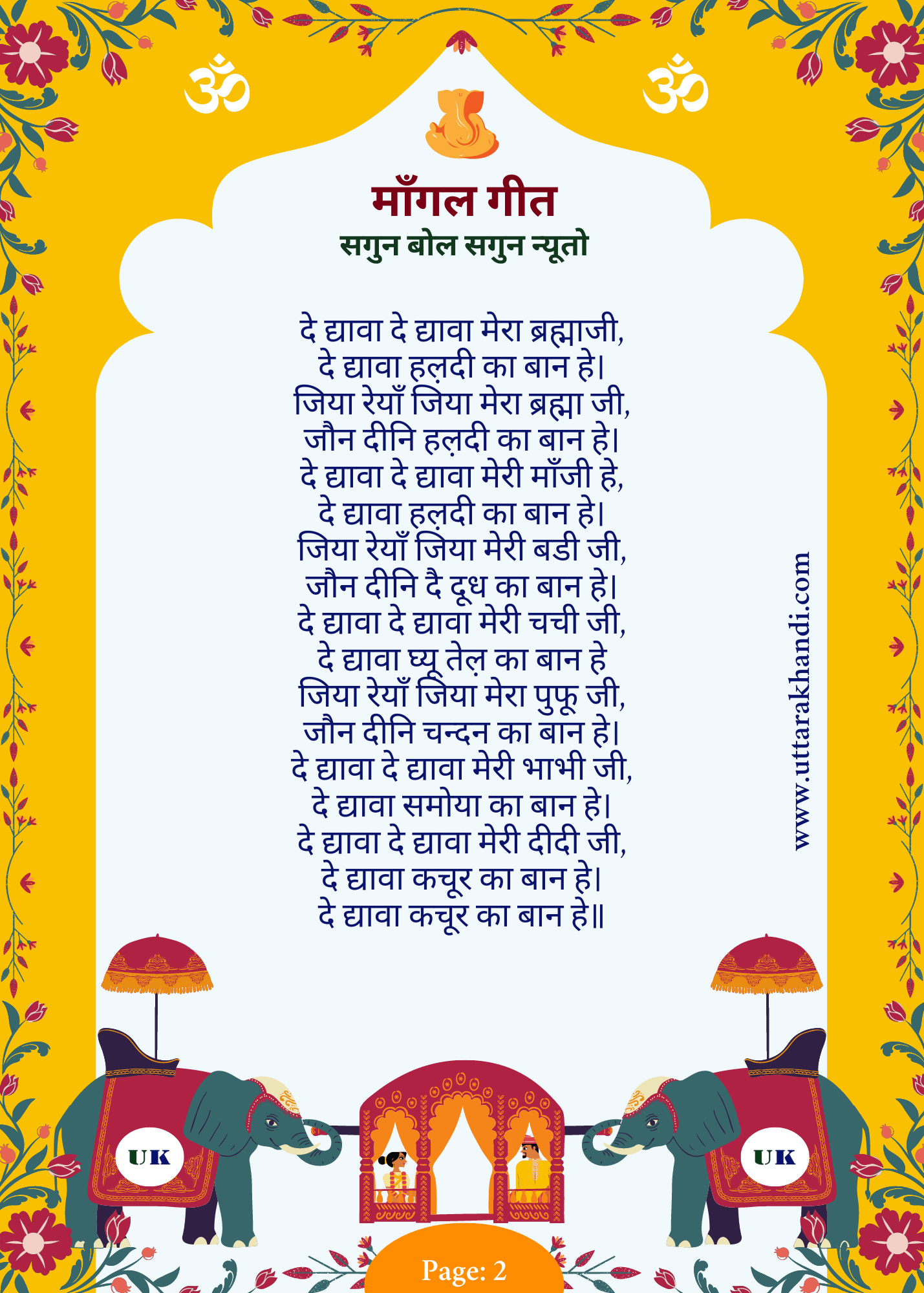
I do not know… I do not recognize…
Which house, which goddess, should I invite?
Which house, which goddess, should I invite?
At the house of Brahma, Savitri Devi will be…
From that house, invite that goddess and come…
At the house of Vishnu, Lakshmi Devi will be…
From that house, invite that goddess and come…
At the house of Shiva, Parvati Devi will be…
From that house, invite that goddess and come…
From that house, invite that goddess and come…
Go and invite the married women for the auspicious wedding ceremony…
Go and invite the married women for the auspicious wedding ceremony…
This verse is a traditional folk song or hymn, often sung during wedding ceremonies. The song invokes various auspicious symbols and figures, like a crow and a parrot, to spread the good news of a wedding and invite married women (symbolizing prosperity and blessings) to participate in the ceremony. The singer asks the parrot to invite goddesses like Savitri, Lakshmi, and Parvati, who reside in the homes of Brahma, Vishnu, and Shiva, to bless the event. The song emphasizes the importance of divine blessings and the presence of married women for a successful and prosperous wedding.
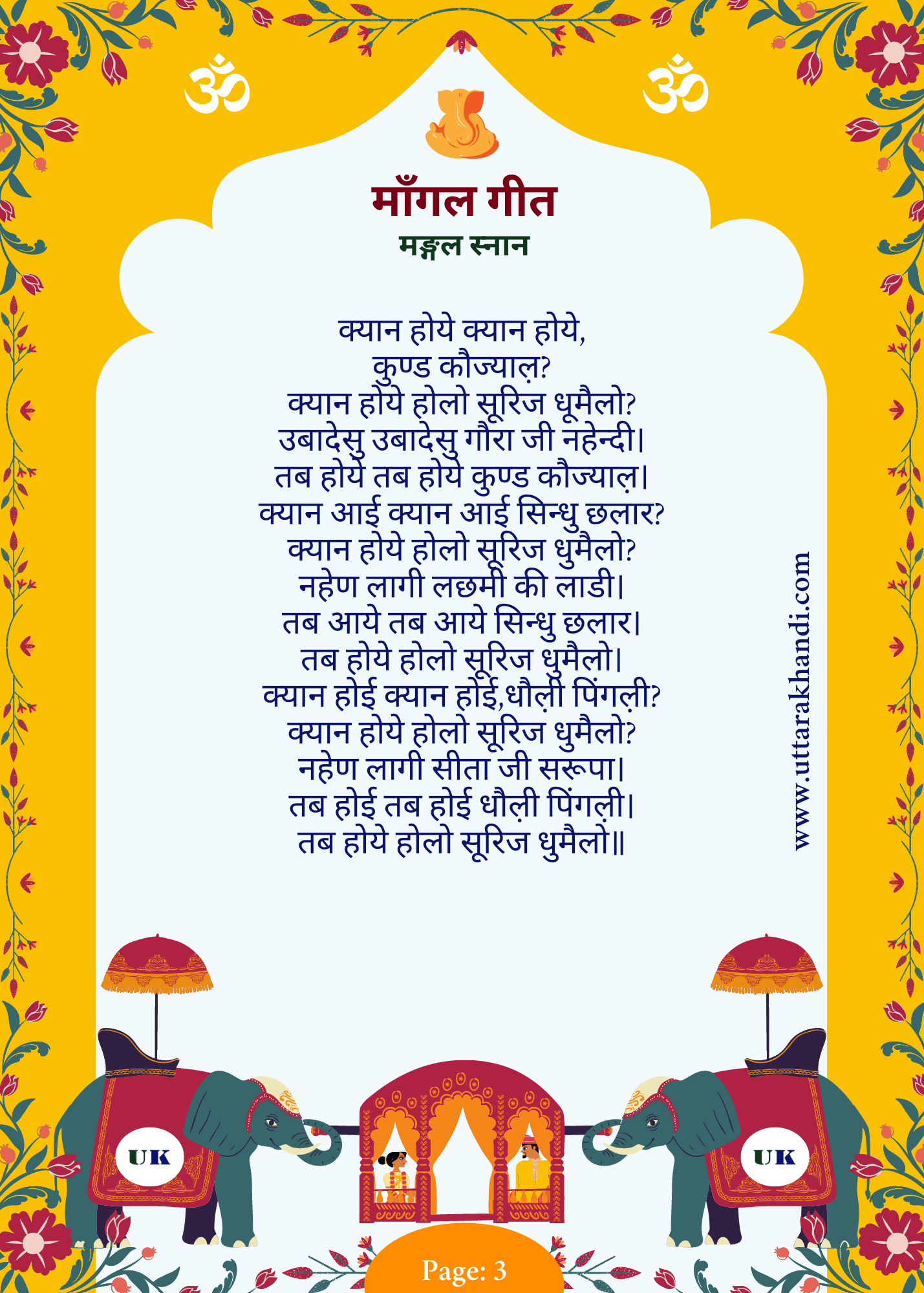
This verse is a beautiful Uttarakhand lokgeet (folk song) that vividly depicts the spiritual and cultural richness of the region. The song poetically describes divine events where even the sun, symbolizing the powerful force of nature, dims its light in reverence.
The recurring phrase, “क्यान होये होलो सूरिज धूमैलो?” (“What happened that the sun became dim?”), reflects the awe and wonder of the natural world responding to significant spiritual occurrences.
The song’s verses reference various sacred rituals and divine figures:
- “कुण्ड कौज्याल़?” alludes to an important religious ceremony, possibly a wedding or another holy ritual.
- “गौरा जी नहेन्दी,” refers to Goddess Gauri (Parvati) preparing herself, likely through a purification ritual, emphasizing the sanctity of the event.
- “सिन्धु छलार,” which speaks of an event near the river or ocean, symbolizes grandeur, perhaps hinting at the arrival of a deity like Goddess Lakshmi.
- “धौल़ी पिंगल़ी?” possibly symbolizes contrasting elements of purity and divinity, likely indicating the presence of Goddess Sita.
The song beautifully intertwines natural phenomena and divine presence, capturing the essence of Uttarakhand’s spiritual and cultural heritage. It portrays the reverence and respect that the people of Uttarakhand hold for their deities, traditions, and the natural world, making it a poignant reflection of the region’s deep-rooted traditions.
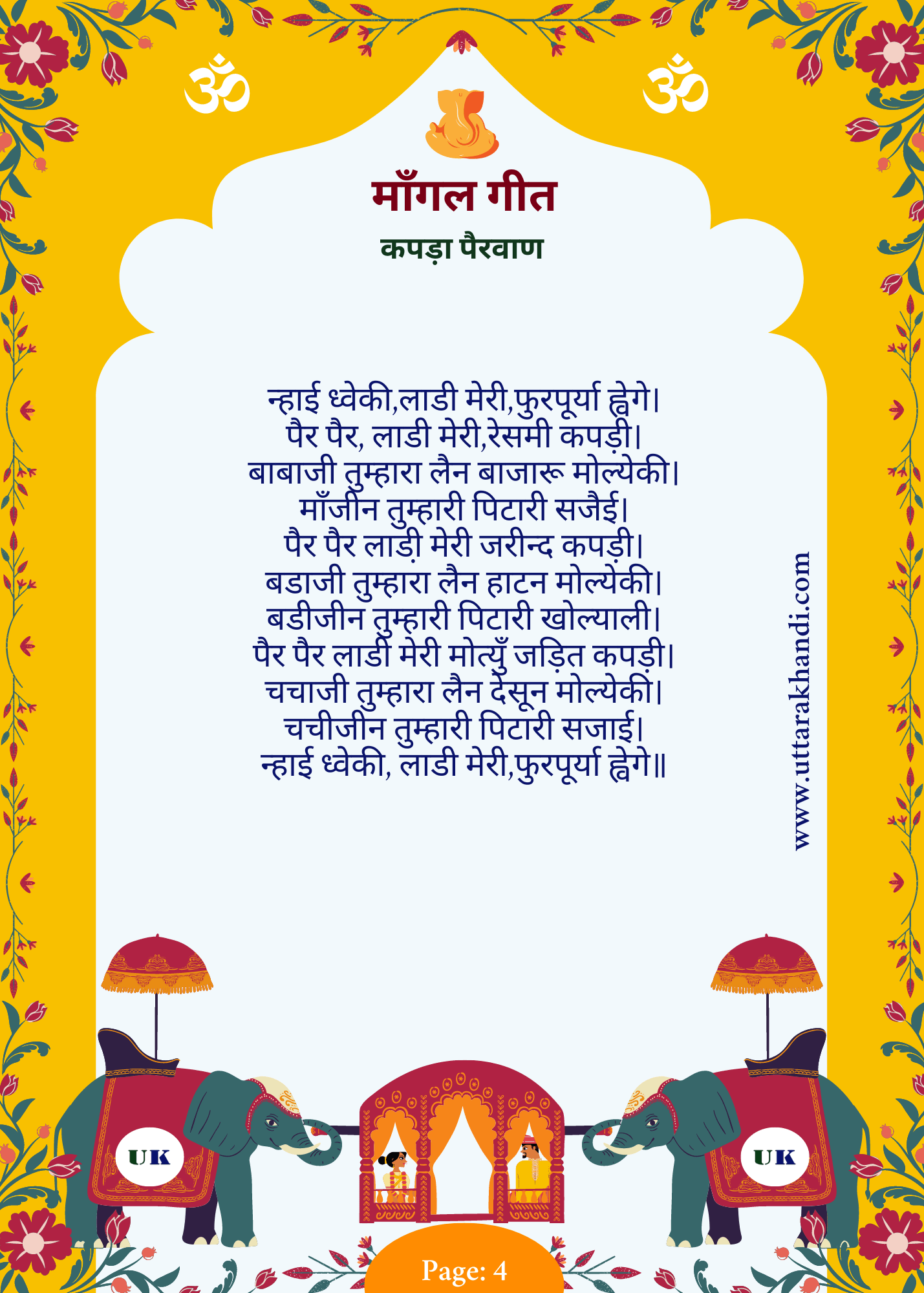
The recurring phrase “न्हाई ध्वेकी, लाडी मेरी, फुरपूर्या ह्वेगे” (“After bathing, my bride has become radiant and blossomed like a flower”) emphasizes the bride’s transformation and beauty after the traditional pre-wedding bath.
The song highlights the special gifts and efforts from each family member:
- “बाबाजी तुम्हारा लैन बाजारू मोल्येकी,” (“Father, you bought something special from the market”) reflects the father’s care in selecting the best for his daughter.
- “माँजीन तुम्हारी पिटारी सजैई,” (“Mother, you decorated the bridal box”) shows the mother’s loving preparation, adding to the bride’s adornment.
- “बडाजी तुम्हारा लैन हाटन मोल्येकी,” (“Uncle, you bought something valuable from the shop”) indicates the uncle’s involvement in ensuring the bride has the finest things.
- “चचाजी तुम्हारा लैन देसून मोल्येकी,” (“Uncle, you brought something precious from abroad”) suggests a special, possibly exotic, gift, emphasizing the family’s desire to provide the best for the bride.
Each verse underlines the preciousness of the gifts and the love behind them, making the bride feel cherished and adorned in the finest attire. The song beautifully encapsulates the emotional and familial bond that surrounds a wedding in Uttarakhand, making it a heartfelt and culturally rich expression of love and tradition.
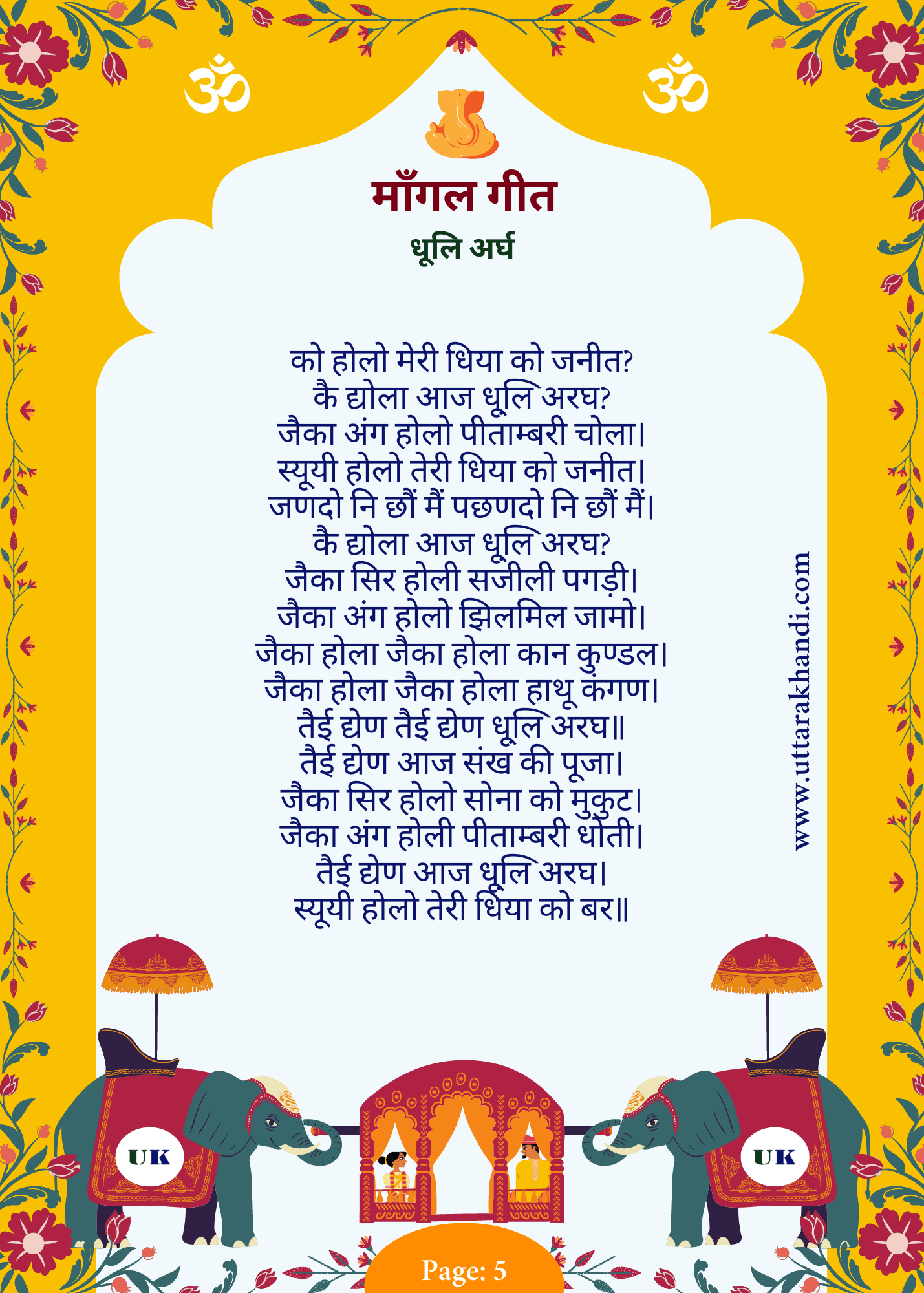
The recurring question “को होलो मेरी धिया को जनीत?” (“Who is the groom of my daughter?”) reflects the curiosity and reverence towards the bridegroom, who is described with great admiration.
- “जैका अंग होलो पीताम्बरी चोला,” (“Whose body is adorned with a yellow robe?”) describes the bridegroom wearing a traditional yellow garment, often signifying purity and auspiciousness.
- “जैका सिर होली सजीली पगड़ी,” (“Whose head is adorned with a beautiful turban?”) highlights the significance of the turban, a symbol of honor and dignity for the groom.
- “जैका अंग होलो झिलमिल जामो,” (“Whose body is shining with a glittering robe?”) further emphasizes the groom’s grand appearance, reflecting his importance in the ceremony.
- “जैका होला जैका होला कान कुण्डल,” (“Who is wearing earrings?”) and “जैका होला जैका होला हाथू कंगण,” (“Who is wearing bracelets?”) describe the groom’s ornate jewelry, symbolizing wealth and status.
The song culminates with the recognition of the groom:
- “स्यूयी होलो तेरी धिया को बर,” (“He is the groom of your daughter”) signifies the acknowledgment of the groom, marking the union and the beginning of the marriage rituals.
This lokgeet beautifully encapsulates the reverence and honor given to the bridegroom in Uttarakhand’s wedding traditions, using poetic imagery to convey the cultural significance of the rituals. The song emphasizes the importance of these ceremonies in celebrating and sanctifying the union of the bride and groom.
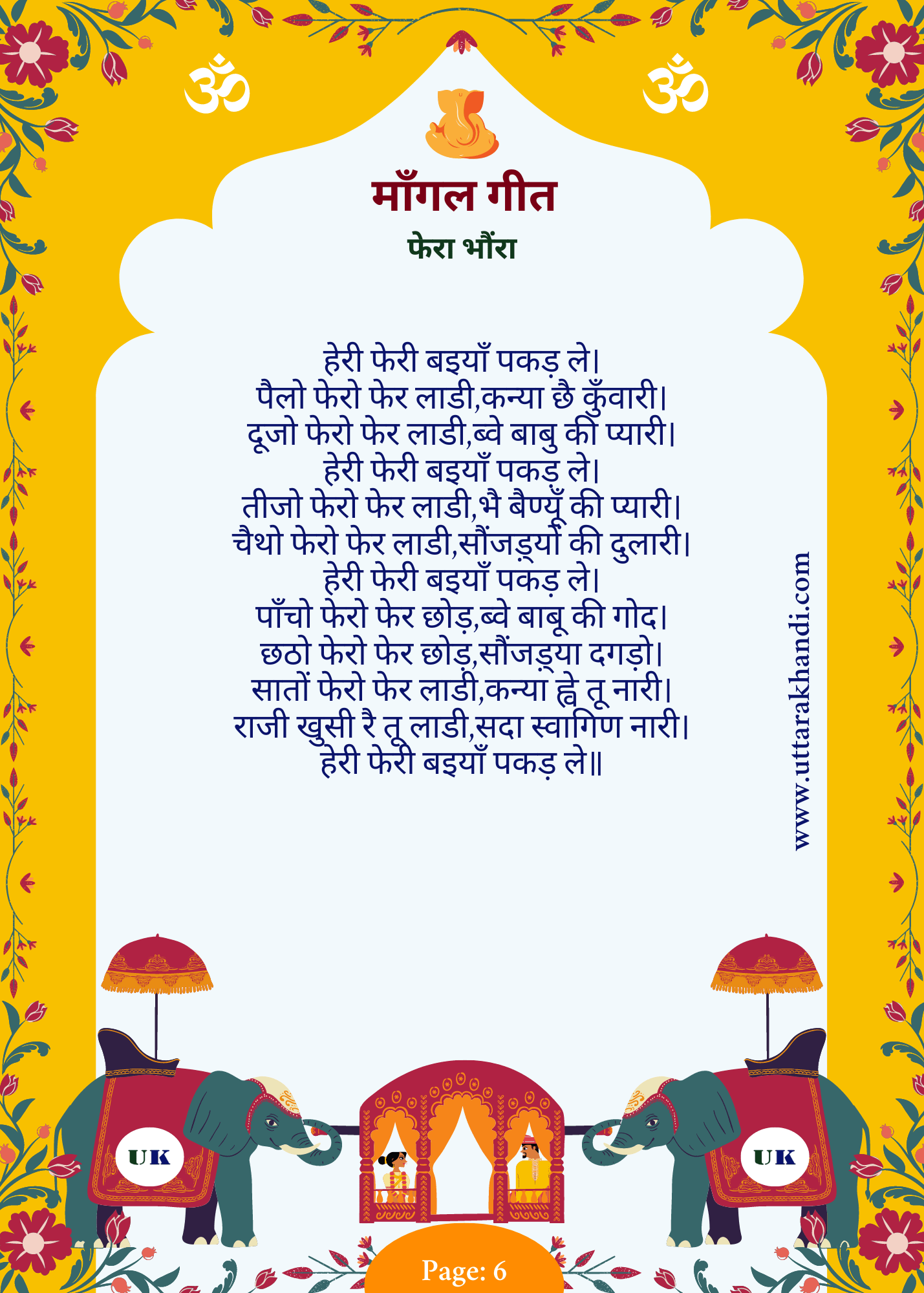
Each verse represents a different stage of the marriage ritual:
- “पैलो फेरो फेर लाडी, कन्या छै कुँवारी” (“In the first vow, O bride, you are still a maiden”) acknowledges the bride’s maidenhood.
- “दूजो फेरो फेर लाडी, ब्वे बाबु की प्यारी” (“In the second vow, O bride, you are still your father’s beloved”) reflects the bride’s strong bond with her father.
- “तीजो फेरो फेर लाडी, भै बैण्यूँ की प्यारी” (“In the third vow, O bride, you are beloved to your brothers and sisters”) emphasizes the bride’s place in her siblings’ hearts.
- “चैथो फेरो फेर लाडी, सौंजड़्यों की दुलारी” (“In the fourth vow, O bride, you become the beloved of your in-laws”) marks the bride’s acceptance into her new family.
- “पाँचो फेरो फेर छोड़, ब्वे बाबू की गोद” (“In the fifth vow, O bride, you leave your father’s lap”) signifies the bride leaving her childhood behind.
- “छठो फेरो फेर छोड़, सौंजड़्या दगड़ो” (“In the sixth vow, O bride, you leave your new home to join your husband”) represents the bride’s departure from her new family to unite with her husband.
- “सातों फेरो फेर लाडी, कन्या ह्वे तू नारी” (“In the seventh vow, O bride, you are no longer a maiden, but a woman”) symbolizes the bride’s transformation into a married woman.
The song concludes with the wish “राजी खुसी रै तू लाडी, सदा स्वागिण नारी” (“May you always remain happy, O bride, and forever be a beloved wife”), blessing the bride with happiness and a prosperous married life.
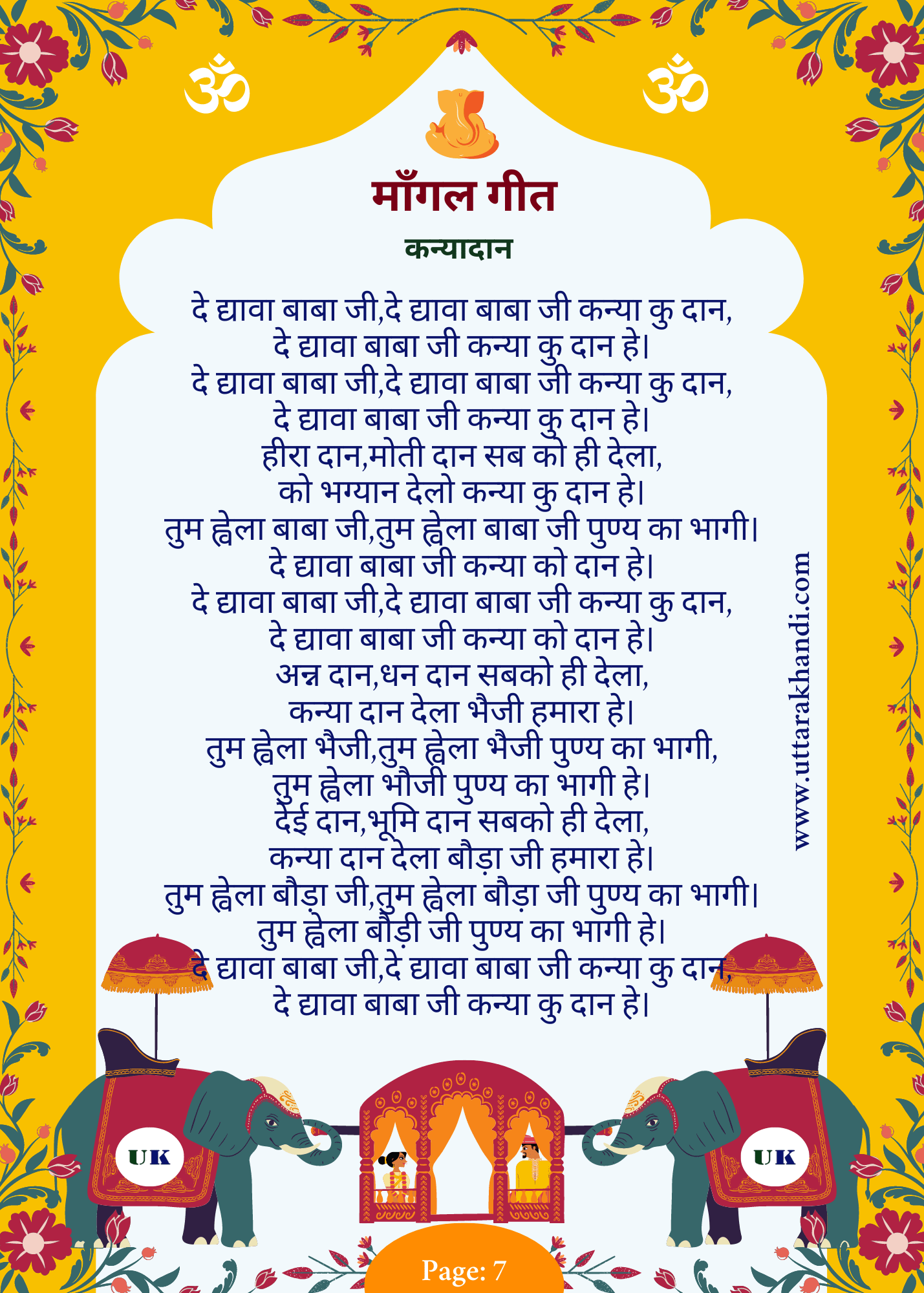
This Uttarakhand lokgeet (folk song) is a devotional and ceremonial song that emphasizes the importance of the “Kanya Daan” (the giving away of the bride) in a wedding ceremony. The song is a plea for divine blessings and is a reflection of the cultural and spiritual significance of the act of giving away the bride.
The song beautifully captures the reverence associated with the act of giving away the bride, reflecting its deep spiritual and cultural importance. It emphasizes the merit gained through such acts of charity and the blessings bestowed upon those involved in the ceremony.
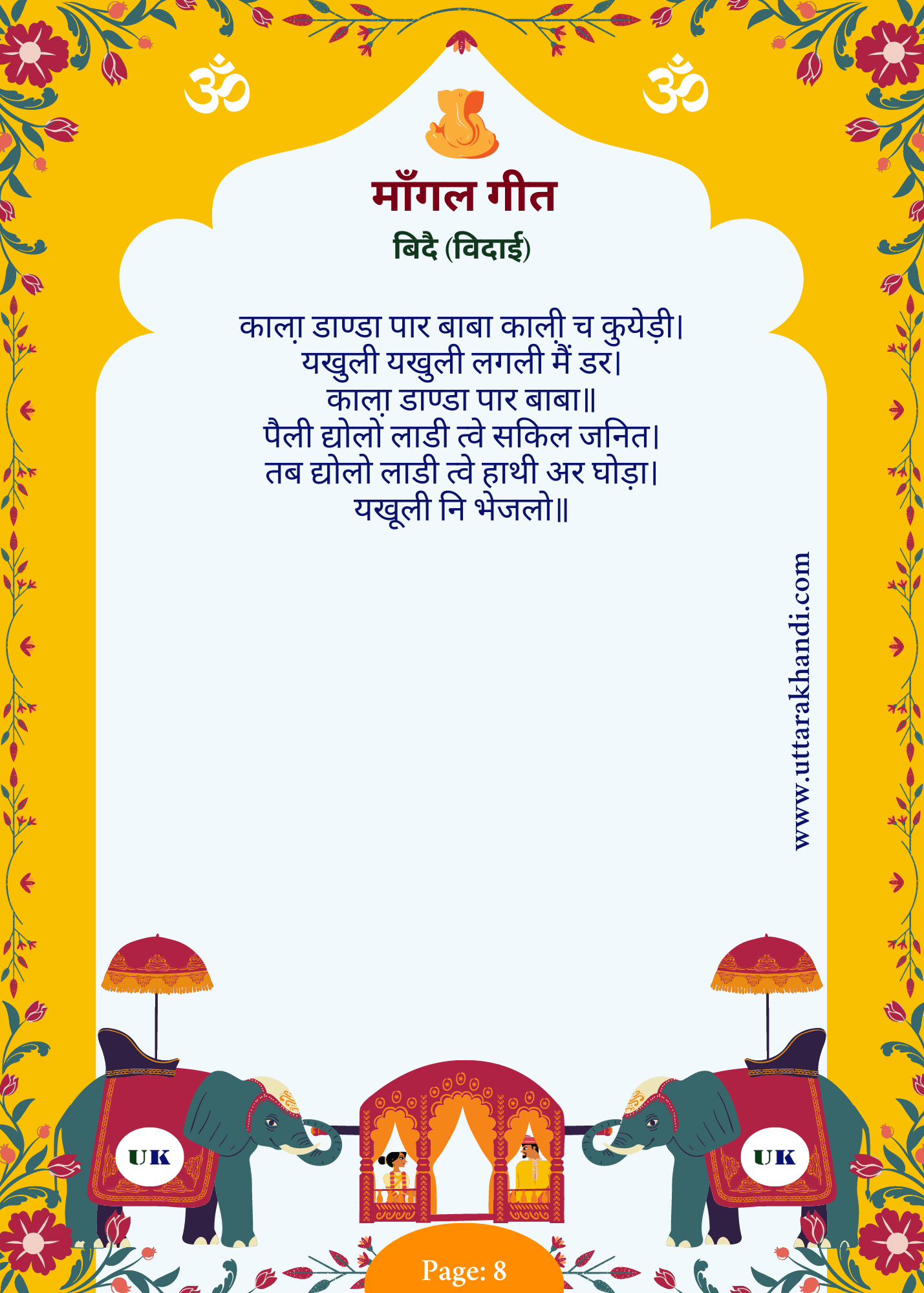
A dark mist is spreading, creating a gloomy and unsettling atmosphere. The daughter expresses her fear to her father, feeling anxious and vulnerable when alone. She worries about how she will manage the transition to her new home (the in-laws’ house) by herself, highlighting her sense of insecurity and the challenges of this significant change. This is a very emotional moment, and everyone weeps when they hear this Uttarakhand lokgeet, as it poignantly captures the depth of her fears and the emotional weight of the transition.
The Themes and Purpose of Maangal
The word “Maangal” translates to “auspicious” or “favorable,” which reflects the purpose of these songs. Maangal songs are traditionally performed during various rituals of a wedding, from the pre-wedding ceremonies to the main event and even post-wedding rituals. The lyrics are designed to invoke the blessings of gods and goddesses, seeking their favor to ensure a happy and prosperous married life for the couple.
These songs are also rich in symbolism, often narrating stories from Hindu mythology, extolling the virtues of married life, and celebrating the union of two souls. They are performed to create a sacred and joyful atmosphere, with the belief that the positive energy generated by the songs will bring good fortune to the couple.

The Role of Maangal in Wedding Ceremonies
Maangal songs are performed by women, who play a central role in the rituals of the wedding. These songs accompany various ceremonies, such as the Haldi (turmeric) ceremony, the Mehendi (henna) ceremony, the procession of the bride or groom, and the welcoming of the bride into her new home. Each song is specific to a particular ritual and is sung to ensure that the ceremony is conducted in a manner that pleases the deities and brings blessings to the couple.
The performance of Maangal songs is not just about the music; it is also about community participation. The women of the family and the community gather to sing these songs together, creating a sense of unity and shared joy. The collective singing strengthens social bonds and ensures that the cultural traditions are passed down to younger generations.
The Cultural Significance of Maangal
Maangal songs hold a special place in the cultural heritage of Uttarakhand. They are a testament to the region’s deep-rooted spiritual beliefs and the importance of rituals in maintaining social harmony and continuity. The songs are an expression of the community’s values, emphasizing the sanctity of marriage, the importance of family, and the belief in divine blessings.
In many ways, Maangal songs serve as a bridge between the past and the present, connecting the people of Uttarakhand with their cultural history. The rituals and traditions associated with these songs have been preserved for generations, ensuring that the cultural identity of the region remains strong.
Maangal in Contemporary Times
As with many traditional art forms, Maangal songs have evolved over time. While the core themes and purposes of the songs remain unchanged, contemporary versions of Maangal songs often incorporate modern musical elements, making them more accessible to younger generations. However, the traditional versions of these songs continue to be performed at weddings, preserving the authenticity and cultural significance of the tradition.
Efforts to document and promote Maangal songs have also helped to keep this important cultural heritage alive. Folk festivals, cultural programs, and recordings have played a crucial role in ensuring that Maangal remains a vibrant and cherished part of Uttarakhand’s cultural landscape.