Jaunsari Culture
Jaunsari culture, rooted in the beautiful Jaunsar-Bawar region of Uttarakhand, is a vibrant blend of tradition, music, dance, and deep reverence for Mahasu Devta. The community’s distinctive clothing, folk dances, and colorful festivals reflect a strong connection to the Himalayan landscape and their agrarian way of life. Rich in heritage and resilience, Jaunsari culture continues to thrive through its timeless customs and celebrations.
Uttarakhand state is also known as dev-Bhoomi and is famous for its amazing culture and tradition. In making the culture and tradition of Jaunsar famous, the tribal community living there also had a distinctive contribution which resides in many places in the state of Uttarakhand. This tribe community has its own culture and tradition.
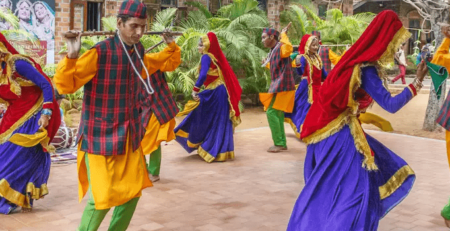
Jaunsari culture, nestled in the heart of the majestic Himalayan landscape, is a living testament to the rich heritage of the Jaunsar-Bawar region in Uttarakhand. This vibrant community, deeply connected to its natural surroundings, has preserved its unique traditions, customs, and way of life through centuries. At the core of Jaunsari culture lies the worship of Mahasu Devta, their principal deity, whose blessings are sought for protection and prosperity. The community’s love for music and dance is woven into the fabric of its festivals, where both men and women celebrate through folk dances like Harul, Jhenta Raso, and Ghundiya Raso, each telling stories of their lives and history.
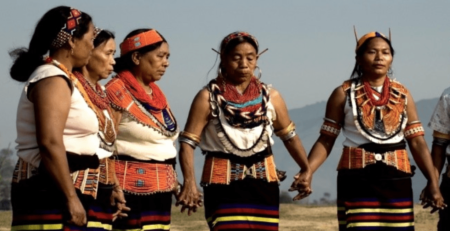
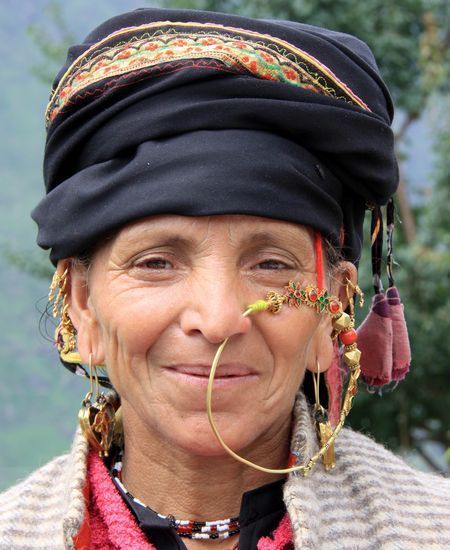
The Jaunsari people’s attire is a striking reflection of the harsh yet beautiful mountainous climate. Their woolen clothing, including the Jhangel and Chora for men and the Ghagra and Cholori for women, is crafted to withstand the cold while showcasing intricate craftsmanship. Jewelry such as Tungal, Nath, and Bulak are worn to complete their traditional outfits, adding to the charm of their culture.
Festivals like Moroj and Bissu mark the changing seasons and harvest cycles, bringing the community together to celebrate their agrarian roots and the abundance of nature. Through these customs, the Jaunsari people continue to honor their ancestors, live in harmony with the land, and keep their traditions alive for future generations.
Role of Jaunsari women protecting culture and traditions has become their identity for the society so that it will always serve as an inspiration for the coming generations, which has been shown in this research paper. Today, Jaunsari women are the accessors of the culture and tradition of their region, so they should develop how they can develop their society correctly and preserve their cultural heritage. The forest plays a vital role in the life and economy of the tribe. Due to the close and long association with the forests, they utilize many plants in their life and health care.
People of Jaunsari tribe consider themselves as descendants of Pandavas of Mahabharata. In every village of Jaunsar, temples of Pandavas are found; from time to time there is the dance of Pandavas which is known as Mandavana in Jaunsari language. In Jaunsar, temples are worshiped by Brahmins along with Rajput gods and goddesses. These people also specialize in witchcraft and treat them with chandeliers. The Jaunsari tribe has been categorized as a society, cultural heritage, tradition, folk dance, fair, and goddesses, food, food and dress.
The Jaunsari tribe holds special significance for its mythological, cultural, and social traditions. Women are also considered a special place in this tribal community. The social, cultural traditions of the Jaunsari community are unique. Due to being predominantly male-dominated, the status of women is considered less than that of men. At the social level, there are some such restrictions, which in today’s scenario it is challenging to understand. For example, her decision to participate in the family is deficient. She is not allowed to attend the meetings of the society.
In Jaunsar, women always have a proper attitude towards cultural heritage. Women have an essential role in cultural heritage. In the Jaunsari tribe, the main occupation is agriculture, and the other animal husbandry, but they give more importance to agriculture, which helps in sustaining their livelihood.
Nowadays, I have seen enough difference in the propagation of education in this tribe. The people of the community are also offering their services in government and non-government jobs.
People of Jaunsari tribe are also doing animal husbandry as their main occupation. That increases their income. Education in this community has spread very fast.
With the opening of many schools and colleges in the Jaunsar region, children’s education is doing well. This effect of education has led to the development of social and political understanding. This class has also enjoyed a substantial amount of reservations. Welfare schemes run by the government from time to time proved to be a boon for this class. This community had tried to unite its community since independence. Today this tribe is considered the strongest. In every area of the state, I am ahead to get my iron.
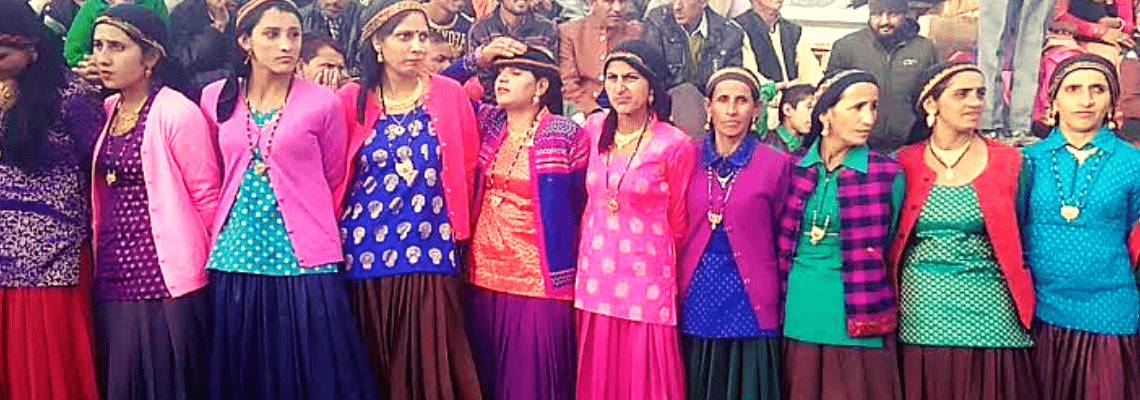
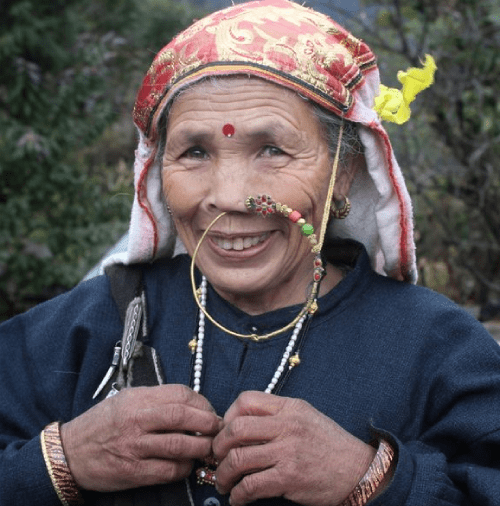
The dress of the women of Jaunsar is their identity. It is reflective of the culture of Jaunsar. The main dress of the women of Jansar is Ghagra, Jhaga, and Dantu. Apart from this, Jaunsari women are very fond of jewelery in which gold is silver ornaments. I wear bangles and kadas also called kangad. The most popular necklace and Mangal Sutra, which is worn around the neck is the identity of Suhagin women. Also, the jewel called Pejav is worn in the paro. It is silver. Even today, the women of Jaunsari society wear these traditional costumes and attire. It is known that even today the old tradition is maintained in the Jaunsar Babar region and is appropriately preserving their culture. This tradition will always inspire generations to come.
The role of women in these festivals is essential. Fairs are organized in which the role of women is essential. The fair recognizes the cultural heritage of Jaunsar. At these fairs, everyone offers an opportunity to meet each other. This tradition preserves the Jaunsari cultural heritage. At such events, there is proper management of how women wear their traditional dress. The participation of women in these festivals highlights their proper role in preserving their culture and traditions. These festivals play an important role in the society of women.
Religious Rituals and Faith towards Gods and Goddesses
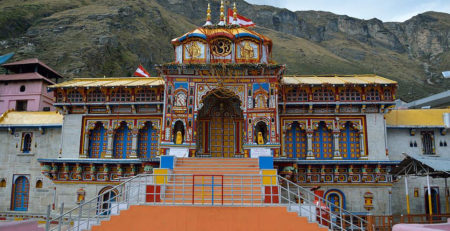
Jaunsar-Bawar is always famous for religious places and Goddesses. Sentencing Mahabharata, this region has been the Karma Bhumi of Pandavas. People here consider themselves descendants of Pandavas. Mahasu Devta is considered to be the most significant deity in the region. Many local deities in this area hold their essential place. The awakening of the deities in Jaunsar takes place from time to time which governs the Jaunsari culture and tradition. Women have a proper role in celebrations of deities.
Below are some frequently asked questions about the Jaunsari culture.
Where is the Jaunsari community located?
- The Jaunsari community is located in the Jaunsar-Bawar region, which is in the western part of Uttarakhand, India, specifically within the Garhwal Division.
What language do the Jaunsaris speak?
- The Jaunsari community speaks the Jaunsari language, an Indo-Aryan language with its own distinct characteristics, separate from the dominant languages of Uttarakhand.
Who is the principal deity of the Jaunsari community?
- The principal deity of the Jaunsari community is Mahasu Devta, who is widely revered by the people for protection and blessings.
What is the role of music and dance in Jaunsari culture?
- Music and dance are integral to Jaunsari culture, particularly during festivals. Men and women dance to traditional folk music in a state of joy and celebration. Folk dances such as Harul, Ghundiya Raso, Jhenta Raso, Jangbazi, and Thoude are performed, each with its own significance.
What are some important festivals in Jaunsari culture?
- Festivals like Moroj and Bissu mark the harvesting period and are celebrated with dance, music, and community gatherings.
What is the traditional clothing worn by Jaunsari men?
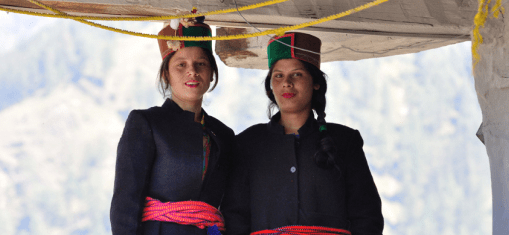
- Men’s Clothing: Jaunsari men wear woolen attire, including Jhangel (woolen pyjamas) and Chora (a woolen robe). The Chora can be styled in various ways and is often bound at the waist with a woolen belt known as Manjan. They traditionally wear a Diguwa or Gandhi cap and Khurshe (woolen shoes) during the winter months.
- Judo is a local variation of the coat, worn during festivals and special occasions, embroidered with designs on the sleeves, shoulders, and back.
What is the traditional clothing worn by Jaunsari women?
- Women’s Clothing: Jaunsari women wear the Ghagra, a long skirt made of 6-7 meters of cloth with distinctive sharp pleats known as Luria. The Ghagra is paired with a Jhagga (a type of kameez) and is often worn with a waistcoat or Kurti. The women’s version of the Chora is called Cholori. Women cover their heads with a scarf known as Dhantu, which can be styled in different ways. They also wear jewelry like Tungal, Bulak, Nath, and Utraiyan.
What kind of jewelry do Jaunsari women wear?
- Jaunsari women wear traditional jewelry, including Tungal (earrings), Bulak (nose ring), Nath (nose ring), and Utraiyan (necklace), among others. These adornments are an essential part of their cultural identity.
What are some unique features of Jaunsari women’s Ghagra?
- The Ghagra worn by Jaunsari women is distinct due to its sharp pleats called Luria. The embroidery on the Ghagra is done in floral patterns, and the division between the Ghagra and its fall is decorated with a strip called Phita.
What is the significance of Jaunsari dances?
- Jaunsari dances are an expression of joy, especially during festivals like Moroj and Bissu. The dances are performed to the rhythms of traditional folk music, with each dance form having its own cultural significance and community importance.