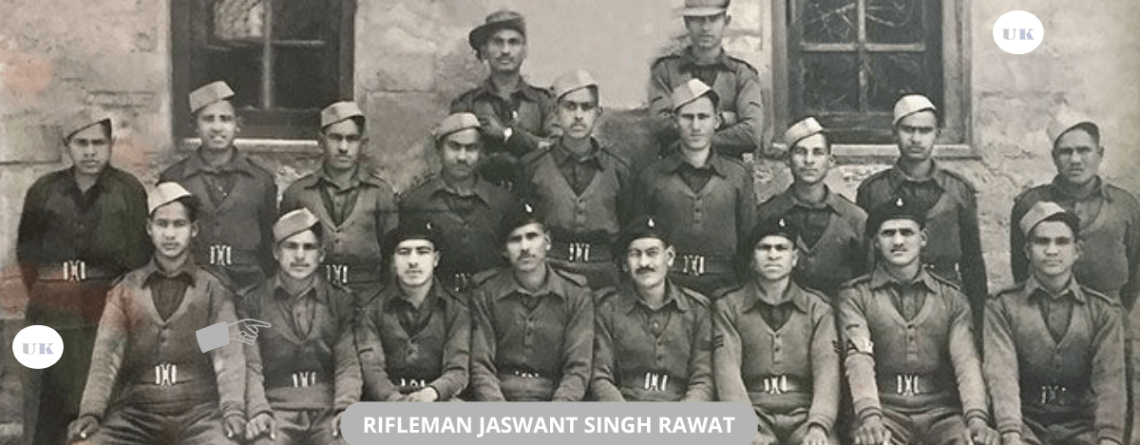
Rifleman Jaswant Singh Rawat
The Immortal Warrior of the 1962 War
Among the brave soldiers who laid down their lives in the service of Mother India, Rifleman Jaswant Singh Rawat stands immortal. He was a soldier of the 4th Garhwal Rifles regiment of the Indian Army, who displayed unparalleled courage during the India-China war of 1962 by single-handedly holding off an entire battalion of Chinese soldiers for several days. When the rest of the troops were ordered to retreat, Jaswant Singh refused to abandon his post. Despite impossible circumstances, he not only stalled the enemy but also strategically misled them. At a time when the Chinese forces were attacking from all sides and resources were scarce, his decision became a supreme example of loyalty, bravery, and sacrifice.
The sacrifice of Jaswant Singh Rawat is not just a part of a battle but a moment when a simple soldier upheld the dignity of an entire military outpost with his courage. He proved that a true patriot is one who never retreats from his duty, no matter the circumstance. Even today, the Indian Army remembers him with reverence. His bravery story transcended India; after the war, even the Chinese commanders paid tribute to him. This is the highest honor for a warrior to be respected even by the enemy.
To this day, Jaswant Singh Rawat is lovingly called “Baba Jaswant” and honored as if he is still alive. Memorials, films, and stories have been made in his memory, inspiring generations. This article explores his life and contributions in depth so that future generations may learn and draw inspiration from this great warrior.
👶 Early Life
Rifleman Jaswant Singh Rawat was born on August 19, 1941, in the village of Barkot in the Pauri Garhwal district of Uttarakhand, India. This region is mountainous and rural, where life is simple and hard work is the norm. Born into an ordinary family, Jaswant Singh showed extraordinary resolve and courage even from childhood. His family had a military background his father, Shri Lakshman Singh Rawat, had also served in the Indian Army, providing young Jaswant with a role model.
Growing up in the challenging mountainous terrain, where resources and comfort were scarce, he naturally developed self-reliance, discipline, and resilience qualities vital for a soldier’s life. His village valued education and military traditions alike. Though an average student, Jaswant had a deep interest in social and patriotic activities. Despite the family’s modest means, his goal was clear to serve the motherland.
In the 1940s and 50s, post-independence India was a nation in the throes of building itself anew. Patriotism was at a peak among youth, and Jaswant grew up hearing tales of military valor from his father and grandfather. This fueled his desire to join the army. At the young age of 16, in 1957, he enlisted in the Indian Army’s 4th Garhwal Rifles regiment, beginning his journey from a simple hill boy to a legendary warrior.
In the army, he underwent rigorous training, mastering mountain warfare, weaponry, discipline, and strategy. Senior officers described him as a skilled and honest soldier who performed every task with dedication and integrity. His humility, service spirit, and leadership abilities made him stand out among peers. These qualities would later lead him to perform feats of extraordinary valor.
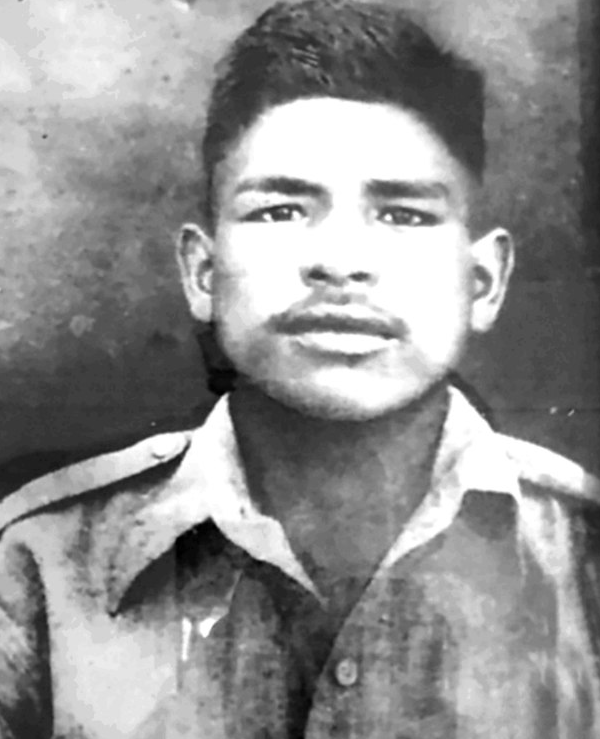
Rifleman Jaswant Singh Rawat
Maha Vir Chakra (Sino-Indian War)
19 August 1941 – 17 November 1962 (aged 21)
Rifleman(4th Garhwal Rifles)
⚔️ The 1962 Battle and Bravery
The 1962 war between India and China was not only a result of geopolitical tensions but also a saga of unmatched courage and sacrifice by Indian soldiers. This war was fought in the high altitudes of the Himalayas, where climate, terrain, and lack of resources made the fight even more difficult. It was against this backdrop that Rifleman Jaswant Singh Rawat’s name emerged as one of the most inspiring stories in Indian military history.
On November 17, 1962, a small platoon of the 4th Garhwal Rifles was stationed at the Nurang post in Arunachal Pradesh’s Tawang district. The Chinese army launched a fierce attack with superior numbers and modern weaponry. The Indian command ordered a tactical retreat to regroup, and most soldiers complied. However, Jaswant Singh refused to fall back, determined to hold the position at all costs.
He was aided by two brave local Monpa girls Sela and Nura who supplied him with ammunition and food and kept watch on enemy movements. Jaswant Singh ingeniously set up machine guns in three separate bunkers, firing in rotation to create the illusion of a large defending force. For nearly 72 hours, he single-handedly stalled the Chinese advance, inflicting heavy casualties reportedly neutralizing over 300 enemy soldiers.
When the Chinese realized they were battling just one man, they launched a massive final assault. Some accounts say Jaswant Singh committed suicide to avoid capture; others state he was killed after being captured. Regardless, his role as a strategist, leader, and inspiration remains undisputed.
His extraordinary courage is still revered by Indian soldiers. The battle of Nurang, where one soldier preserved an entire post’s honor, is engraved in golden letters in military history.
🎖️ Honors and Tribute
The unmatched valor and sacrifice of Rifleman Jaswant Singh Rawat brought him national and military glory. His heroic defense not only saved a military post but became a symbol of unmatched bravery and dedication.
Posthumously, the Government of India awarded him the Mahavir Chakra, the second highest wartime gallantry award, reserved for soldiers who display conspicuous courage in the face of the enemy. This honor brought pride not only to him but to the entire Garhwal Rifles regiment and the nation. At the site of his final battle, in Arunachal Pradesh’s Jaswantgarh area, a unique memorial known as “Baba Jaswant” stands as more than a monument it’s a living shrine. Locals and soldiers believe his spirit continues to guard the post. His room is preserved with his bed, uniform, shoes, brush, and regimental diary, cared for daily as if he were still alive.
Every day, soldiers polish his shoes, clean his uniform, and mark attendance in the duty roster as a mark of respect. This tradition is a profound example of Indian cultural reverence for martyrs, symbolizing the army’s deep bond with its heroes.
Remarkably, the Chinese army, impressed by his valor, returned his severed head, rifle, and a bronze statue as tokens of respect an extremely rare instance where the enemy honors a fallen warrior. His story is taught in schools, military institutions, and museums, inspiring young Indians to emulate his patriotism. Competitions and events are held in his memory to keep his legacy alive.
Thus, the honors given to Jaswant Singh are not mere formalities but heartfelt symbols of a nation’s gratitude toward its true heroes.
🏔️ Folklore and Inspiration
Jaswant Singh Rawat’s sacrifice has transcended mere history to become a part of folklore and living faith. His story has transformed from a tale of a brave soldier to a legend embraced with devotion. The rituals, memorials, and public reverence that evolved around him show that he is not just a figure of the past but a vibrant symbol of courage and sanctity. The Jaswantgarh post in Tawang, Arunachal Pradesh his final battlefield is no ordinary military post. It’s treated like a living shrine. His room contains his bed, uniform, shoes, a cup of tea, and the regimental duty log. Soldiers diligently maintain these relics as though he were still on duty.
The belief among soldiers is that the spirit of “Baba Jaswant” still protects the region. Tales abound of strange occurrences when soldiers disrespect his memory, reinforcing the spiritual and motivational significance he holds. This faith is more than religious it’s a source of morale and strength for the troops.
The folklore also includes the brave Monpa girls, Sela and Nura, who aided him by bringing supplies and intelligence during the battle. Some versions say Nura was killed, and Sela took her own life. To honor their contribution, nearby landmarks are named after them:
-
Sela Pass, a high mountain pass at about 13,700 feet, now one of India’s most iconic sites.
-
Sela Lake, a beautiful frozen lake symbolizing valor and sacrifice.
-
Nuranang Waterfall, also known as Jaswantgarh Falls, a popular tourist and pilgrimage spot.
These places have become not only natural wonders but also national symbols of pride and remembrance.
Jaswant Singh’s story and related folklore are a living inspiration. They teach us that a soldier’s sacrifice is never forgotten and that his spirit continues to guide and protect. Thousands of young Indians draw courage from his legacy when they join the armed forces.
🎬 In Films and Books
Jaswant Singh Rawat’s saga is not confined to military annals but has become an integral part of India’s cultural consciousness through literature and cinema. His extraordinary life has been immortalized in stories, poems, documentaries, and notably, the Hindi film “72 Hours: Martyr Who Never Died” (2019). This film brought his story to a broad audience, portraying his courage with emotional depth and realism. Actor Avinash Dhayani delivered a powerful performance, vividly capturing the soldier’s spirit and resolve. The film is more than a war story; it delves into the psychological and emotional struggles of a lone warrior standing firm against overwhelming odds. It respects historical facts while presenting a sensitive tribute.
Before the film’s release, there was legal controversy when the Rawat family filed a petition in Delhi High Court over unauthorized use of the soldier’s story. Despite this, the film was released and well-received, increasing public awareness of Jaswant Singh’s heroism. Beyond films, many authors and historians have written articles, memoirs, and essays celebrating his valor. Military journals and magazines have featured special editions, analyzing his strategy and humanity. His story is part of school and college curricula, inspiring countless students.
Documentaries aired on Doordarshan and army channels offer authentic visuals, maps, and eyewitness accounts, allowing viewers to experience history vividly.
Thus, Jaswant Singh Rawat’s bravery has been preserved and propagated through various media, ensuring that his legacy remains a source of national pride and motivation.
❓ FAQs
❓ What is the full story of Rifleman Jaswant Singh Rawat, and why is he remembered as a national hero of India?
Rifleman Jaswant Singh Rawat was a brave Indian Army soldier from the 4th Battalion of the Garhwal Rifles regiment who fought heroically during the 1962 India-China war. He became a legend for his extraordinary act of valor when he single-handedly held off an entire Chinese battalion for 72 hours in the icy terrain of Arunachal Pradesh’s Nuranang region. Despite being heavily outnumbered, he used tactical deception, guerrilla strategies, and incredible courage to delay the enemy’s advance. His sacrifice has made him a symbol of patriotism and heroism in Indian military history.
❓ When and where was Rifleman Jaswant Singh Rawat born, and what was his early background?
Jaswant Singh Rawat was born on August 19, 1941, in the small and serene village of Baryun (also called Barkot) located in Pauri Garhwal district of present-day Uttarakhand, India. He came from a humble Rajput family and was known in his village for his discipline, integrity, and devotion to the motherland. Inspired by a strong tradition of military service in his region, he joined the Indian Army at a young age, driven by a deep sense of duty toward the nation.
❓ What made his actions during the 1962 Indo-China war so remarkable and legendary?
During the Indo-China war in November 1962, Jaswant Singh Rawat was stationed at the Nurang post in Arunachal Pradesh. As Chinese forces launched an aggressive offensive, the Indian troops were ordered to retreat due to overwhelming odds. However, Rifleman Rawat chose to stay behind and continued fighting alone with support from two local Monpa girls, Sela and Nura. He used multiple bunkers and rifles positioned at different locations to create the illusion of a large force. He killed over 300 enemy soldiers before finally attaining martyrdom. His tactics delayed the Chinese advance, allowing Indian troops to regroup a feat that made him a war legend.
❓ Which gallantry award was bestowed on Jaswant Singh Rawat after his death?
In honor of his unmatched bravery and sacrifice, Rifleman Jaswant Singh Rawat was posthumously awarded the Maha Vir Chakra (MVC), which is India’s second-highest wartime gallantry award. The award recognized his unwavering courage, tactical brilliance, and supreme sacrifice in the face of certain death.
❓ What is the significance of the Jaswantgarh War Memorial, and how is it unique?
The Jaswantgarh War Memorial, located near Tawang in Arunachal Pradesh, is a sacred and symbolic tribute to Rifleman Jaswant Singh Rawat. Unlike a traditional memorial, it is maintained as if the soldier is still alive. His uniform is pressed daily, his boots are polished, his bed is made, and meals are offered three times a day. A daily roll call includes his name, and army personnel are assigned to “serve” him. It is a place of devotion for soldiers and civilians alike, and many believe his spirit continues to protect the region.
❓ Who were Sela and Nura, and how did they contribute to Jaswant Singh Rawat’s heroic defense?
Sela and Nura were two brave local girls from the Monpa tribe who risked their lives to assist Jaswant Singh during the battle. They carried supplies, ammunition, and food to the bunker, and also helped him in reloading rifles and setting up the deceptive battle positions. While Nura was captured and possibly executed by Chinese soldiers, Sela is believed to have died from a grenade explosion. Their contribution is immortalized in the naming of Sela Pass and Nuranang Falls, both of which are associated with their sacrifice.
❓ Has a feature film or documentary been made on his life story?
Yes, Jaswant Singh Rawat’s incredible story was brought to the big screen in the 2019 Hindi biographical war drama “72 Hours: Martyr Who Never Died”. The film chronicles his early life, enlistment in the army, and the harrowing final days during the war. Actor Avinash Dhyani portrayed Jaswant Singh in the film. The movie received appreciation for bringing the lesser-known tale of heroism to the public and instilling a deeper sense of respect for Indian soldiers.
❓ Why is he referred to as “Baba Jaswant” by soldiers and local people?
The title “Baba” is given to him as a mark of spiritual reverence. In the eyes of many soldiers and local residents, Jaswant Singh Rawat is not just a martyr but a guardian spirit of the region. Stories abound of soldiers dreaming about him or feeling his presence in times of danger. As a result, he is worshipped like a saint, and his “post” is treated more like a shrine than a mere memorial. Many soldiers seek his blessings before beginning their duty.
❓ Did the Chinese Army acknowledge his bravery after the war?
Yes, according to widely accepted accounts, the Chinese Army was so impressed by his exceptional courage that they returned his severed head and rifle to the Indian side with military honors – an extremely rare gesture of respect from an enemy force. This act alone is a testament to the kind of impression Jaswant Singh left even on his adversaries.
❓ How is Jaswant Singh Rawat remembered today by the Indian Army and the general public?
Rifleman Jaswant Singh Rawat is remembered as one of the bravest sons of India. His story is taught in military academies, featured in patriotic documentaries, and recounted in school textbooks. His name symbolizes unyielding bravery and the spirit of “never giving up.” Soldiers often visit his memorial to pay homage, and travelers stop at Jaswantgarh to bow before “Baba” out of gratitude and respect. His legacy continues to inspire new generations of Indians to love and serve their country with the same devotion.
Rifleman Jaswant Singh Rawat’s heroic saga is one of those rare events in Indian military history that not only showcase battlefield bravery but prove that a single soldier can be the last line of defense for a nation. His contribution symbolizes not just courage and sacrifice but also the spirit, discipline, and patriotism that reside in every Indian soldier’s heart. His struggle clarified that defending the country is not merely about numbers or technology but unwavering willpower and selfless dedication. The way he single-handedly held the post for three days, continuing to fight after his comrades retreated, deceiving the Chinese troops, and surviving in hostile terrain these are testimonies of his extraordinary courage, strategic intellect, and steadfast faith. He taught us that valor is not just winning battles but standing firm in one’s duty regardless of circumstances.
The posthumous honors he received, treated like a living soldier, are unparalleled in history. India’s army maintaining his uniform, shoes, and daily attendance as if he is alive is a profound tribute to his legacy. Through folklore, faith, and memorials, Jaswant Singh has become like a soldier-saint. The people of Tawang call him “Baba Jaswant,” believing his spirit guards the region. The memorials, mountain passes, lakes, and waterfalls named after him stand as national pride symbols. Thousands of youths find inspiration in his story when joining the army.
Cinema and literature have spread his legend beyond military circles, making him a hero for all Indians, teaching that patriotism is the greatest duty. Ultimately, Rifleman Jaswant Singh Rawat’s life teaches us that even one individual with courage, honesty, and sacrifice can change history and light a flame that burns bright for generations. His life is a beacon though a single flame, it lights up the darkest night for the entire nation.