Hill Jatra Festival
A Colorful Celebration of Tradition and Harvest in Uttarakhand
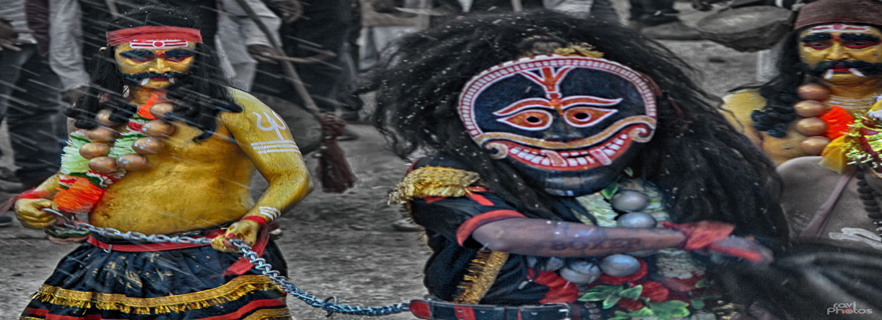
Hill Jatra is amongst the traditional festivals celebrated in the state of Uttarakhand, especially in Pithoragarh district of Kumaon Region. Hill Jatra is a prominent mask dance celebrated in the Pithoragarh district of Uttarakhand, primarily as a festival for pastoralists and agriculturalists. During this festival, various characters such as bulls, deer, chital, and the Lakhia Bhoot don masks and come to the field. The literal meaning of Hill Jatra is “the festival of mud,” and it is celebrated during the monsoon season. With a history of approximately 500 years, this festival originated from the Soraar (Mahakali) region of Nepal and has since spread to the valley. It is also known as an agricultural festival, showcasing women planting rice and farmers herding bulls. The main roles are performed by men, and the festival culminates with the arrival of the Lakhia Bhoot, regarded as the 12th follower(Gan ) of Lord Shiva, who blesses people with happiness, prosperity, and well-being.
Hill Jatra Folk Story
Honoring Nature and Culture in Pithoragarh
The Glorious Tale of the Brave Mahar Brothers
The festival of Hill Jatra is deeply intertwined with the tale of the brave Mahar brothers, whose courage and valor have been passed down through generations in the village of Kumor. This story hails from ancient times in Pithoragarh when a man-eating tiger terrorized the forests. The fear of this tiger gripped the entire region, making it impossible for people to venture outside. In desperation, the king announced that whoever would slay the tiger would be rewarded handsomely.
Answering this challenge were the four brave Mahar brothers—Kunwar Singh, Chahaj Singh, Jakhan Singh, and Bin Singh—who courageously ventured into the forest and killed the tiger. Their bravery impressed the king, and in recognition of their valor, he organized a grand ceremony in their honor. During the ceremony, the king promised to reward the brothers and asked them to request anything they desired.
The eldest brother, Kunwar Singh, asked for the land that stretched as far as they could see around them. The king generously granted this land, and over time, this area came to be known as ‘Kurmaur,’ which later evolved into the present-day village of Kumor. Similarly, the second brother, Chahaj Singh, requested the land of Chensor, Jakhan Singh claimed the region of Jakhni, and Bin Singh was granted the area of Bin. These places, to this day, are named after these brave Mahar brothers.
The Nepal Connection
Another well-known legend surrounding the Mahar brothers involves their journey to Nepal, where they participated in the famous Indra Jatra festival. During the festival, a particular buffalo was to be sacrificed, but the buffalo’s horns were so large that they curved back over half its body, making it nearly impossible to perform the ritual. The king of Nepal was troubled, as the sacrifice was essential to the festival’s success.
The Mahar brothers took on this challenge. One of the brothers climbed to a high point and lured the buffalo by showing it fresh grass. As soon as the buffalo raised its head to eat, another brother swiftly beheaded it with a khukri. Impressed by their cleverness and bravery, the king offered them a reward. Instead of material gifts, the brothers requested permission to celebrate this festival in their village and also asked for the masks used in the festival. The king happily granted their wish, and thus the tradition of Hill Jatra began in Kumor.
The Blessings of Lakhiyabhut
At the heart of Hill Jatra is Lakhiyabhut, also known as Lakhiyadev, the primary character of the festival. Lakhiyabhut is believed to be an attendant of Lord Shiva, and it is said that by worshipping and organizing this festival, Lakhiyabhut is pleased. His blessings protect the village and the surrounding area from any calamities, ensure good harvests, and prevent drought.
In Nepal, this festival is known as ‘Indra Jatra,’ where it blends elements of faith, folk life, and humor. The festival features performances where only men take on the roles of the main characters, and through these masked plays, the deep cultural traditions of the rural community come to life. When Lakhiyabhut arrives at the festival grounds, the entire event is imbued with a sense of devotion. His presence is believed to bring wealth, prosperity, and happiness, and his blessings elevate the spiritual and cultural significance of the celebration.
Thus, the legacy of the brave Mahar brothers, the land of Kumor, and the tradition of Hill Jatra have been kept alive through generations. Each year, the festival is celebrated with great enthusiasm and reverence, marking it as a significant cultural and religious event for the people of the region.
The Hill Jatra festival stands as a vibrant testament to the rich cultural heritage of Uttarakhand, particularly in the Pithoragarh district. Rooted in the traditions of pastoralists and agriculturalists, this celebration not only honors the connection between the community and the land but also highlights the significance of nature in their lives. Through its colorful rituals, expressive performances, and the revered presence of characters like the Lakhia Bhoot, Hill Jatra fosters a sense of unity and shared identity among the participants. As the festival attracts thousands of visitors, both from within the country and abroad, it continues to evolve, bridging the past with the present while ensuring that the values of joy, prosperity, and community spirit are passed down through generations. In essence, Hill Jatra is more than just a festival; it is a heartfelt celebration of life, resilience, and cultural richness.