Garhwali Culture
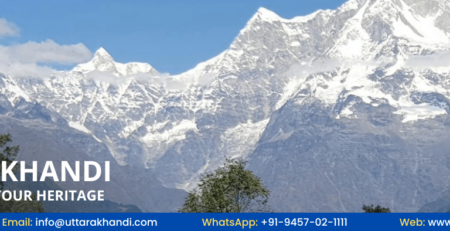
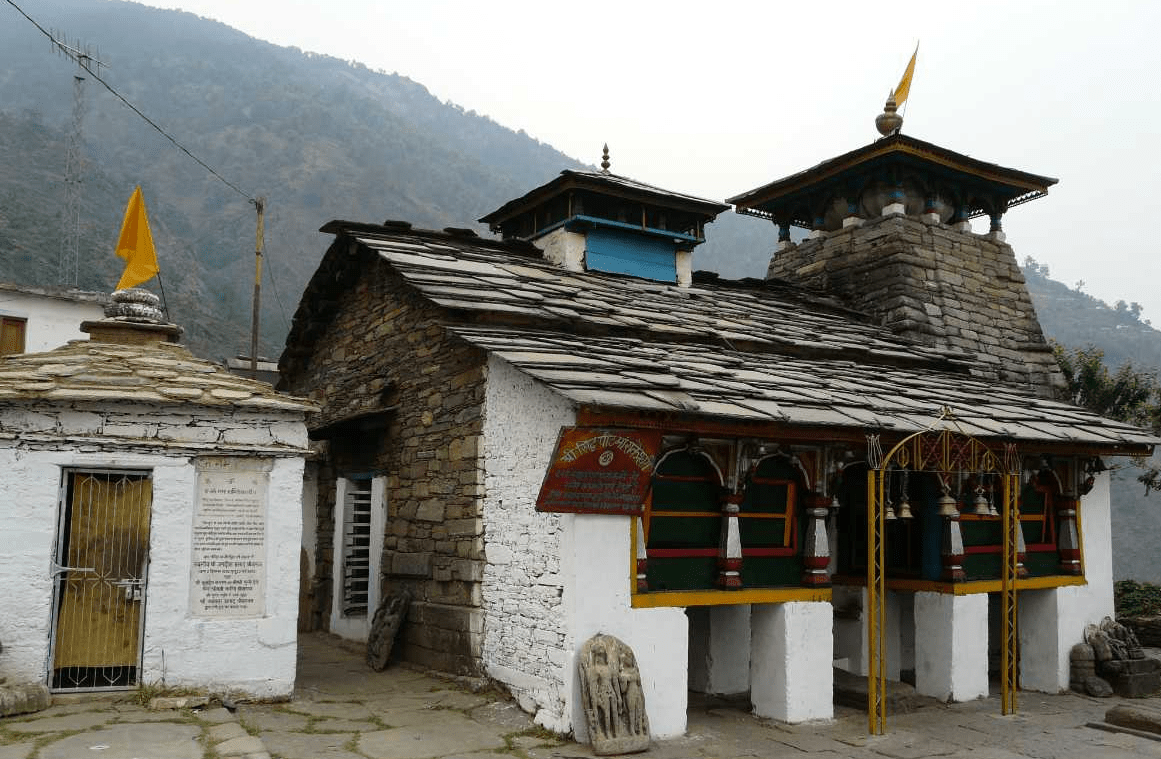
Garhwal is a beautiful place marked by the tall mountains, cold weather and green valleys. People from all over the country visit the place to meditate and attain peace in a life full of so much chaos. The very ancient wood carving can be seen even today on some of the doors as well temples of Garhwal. All the places such as Ransi temple, Srinagar temple, Chandpur fort, Padukeshwar and Devalgarh temple comprise of architectural remains even today.
The Himalayan foothills are home to the state territory and administrative district of Garhwal in Uttarakhand. Tibet is its northern neighbor; Kumaon is to its east; Uttar Pradesh is to its south; and Himachal Pradesh is to its west. As part of it, you’ll find the districts of Chamoli, Haridwar, Pauri Garhwal, Dehradun, Rudraprayag, Uttarkashi, and Tehri Garhwal. Pauri City serves as the administrative hub for the Garhwal Division. It is a stunning location distinguished by its high mountains, chilly climate, and lush valleys. Visitors come here from all across the nation to contemplate and find serenity.
The people of the Garhwal region consist of different ethnicities such as Rajputs, Brahmins, Tribal ( Jaunsari of Jaunsar- Bawar, Jadhs of Uttarkashi, Van Gujars, Marchas of Chamoli (Mana and Niti valleys), Bhotias ). Rajputs and Bhrahmins are considered to have migrated from the different places because of the Mughal invasion.
ETYMOLOGY
Anyone whose linguistic, cultural, ancestral, or genetic origins are from the Garhwal Himalayas is referred to as “Garhwali” in current parlance. Their ethnic name, Garhwal or Gadwal, is derived from these words. The word “Garhwalprecise”‘s etymology is uncertain. The name is thought to have originated from the title “Garh-wala” (owner of forts) bestowed upon the monarch Mayal, who is credited with uniting 52 principalities to form the kingdom in the fourteenth century. The domain of Mayal is claimed to have acquired the name “Garhwal” during this conquest, probably as a result of the numerous forts in the area.
HISTORY
The Garhwal region was previously said to as having 52 fortresses. During that time, Garhwal was ruled by 52 rulers. They were independent and had separate states. In addition to these 52 bastions, there were a few smaller ones that belonged to Sardars or Thokdars (erstwhile title). The Chinese traveller Hiuen Tsang mentioned a few of these. India received Hiuen Tsang in the sixth century.
These rulers once engaged in conflict with one another. These strongholds are thought to have maintained their existence for about 250 years in the ninth century, but subsequently the Pawar dynasty monarchs took advantage of their rivalry and by the 15th century the kings of these strongholds were vanquished and came under the control of the Pawar dynasty. Raja Ajaypal Singh of the Pawar
dynasty, who vanquished all the rulers and created the map of Garhwal, was in charge of this. Palace of Srinagar Garhwal (1882) In the Geological Survey of India, Garhwal, these strongholds are still proudly referenced today, and the locals are still connected to those strongholds.

LANGUAGE
The Garhwali language belongs to the Pahari Subgroup of the Indo Aryan language. Garhwali or Gadwali languages refer to the regional tongues used by the residents of Garhwal. The numerous regions of Garhwal have their own varieties of the language.
Garhwali is the main language spoken here. Garhwali language has a number of dialects too including Jaunsari, Marchi, Jadhi and Sailani. The Garhwali language is believed to have originated from a combination of- Sauraseni Prakrit, Sanskrit and Western or Central Pahari language. Garhwal is inhabited by people belonging to a number of ethnic groups and castes. These include Rajputs who are believed to belong to Aryan origin, Brahmins who migrated after the Rajputs or later, tribals of Garhwal who stay in the Northern tracts and comprise of Jaunsaris, Jadhs, Marchas and Van Gujars.
The major religion followed by the Garhwali people is Hinduism and the majority of population consists of Brahmins. The main languages spoken here are Hindi, Kumaoni, Garhwali, Bhotiya and Jaunsari.
RELIGION
Hindus make up the majority of residents of Garhwal. There are also Muslims, Sikhs, Christians, and Buddhists living in this area. The majority of Garhwal is comprised of religious environments and landscapes. Their purity is connected to the gods and other mythical figures, sages, and historical myths. Garhwal’s environment and natural surroundings have had a significant impact on religion. Local deities and deities are also highly revered in this mountainous region, in addition to worshipping numerous versions of Vishnu and Shiva throughout the region.
It’s Very Difficult To Describe Garhwal Or Gadhwal In Few Words. This Place Has Worldwide Reorganization As Devbhoomi As Here You Can Find A Majority Of Temples, Holy Shrines, Spirituality, Tourism And Pilgrimage.
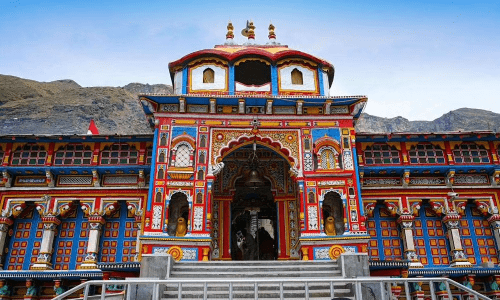
Garhwal Region Is Surrounded By Splendid Beauty Of Snow-Capped Himalayan Peaks, Heavenly Rivers And Awesome Valley That Are The Major Attraction Of Garhwal. Along With That The Intense Woods, Prosperous Heritage And Friendly People Are Additionally Defines The Natural Beauty Of Garhwal. It Is Bordered On The North By Tibet, On The South By Uttar Pradesh, On The East By Kumaon Region And On The West By Himachal Pradesh. Pauri Or Pauri Garhwal Is The Administrative Division Of Uttarakhand.
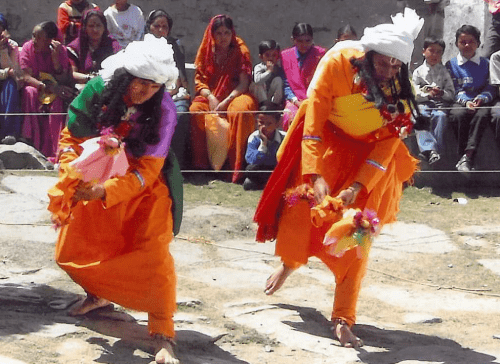
Garhwali Culture
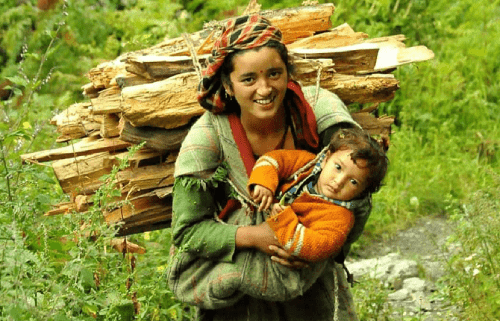
The culture of Garhwal presents an interesting blend of the indigenous population and traditions of other immigrants that settled here periodically. The local people of the region are associated with many tribes and work hard to earn their living. Folk dance and music forms an integral part of the people and culture of Garhwal.
In Garhwal, many festivals are observed. Numerous of these festivals also have well-known fairs. These fairs make a significant contribution to preserving the ambiance of intercommunal harmony. In addition to this, the culture here offers several opportunities for growth and interaction.
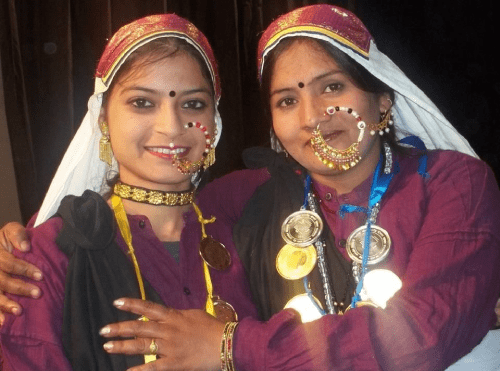
Women typically wear saris tied in a specific fashion in the Garhwal region of this Northern state, with the pallu coming from the front and knotted on the shoulder, and a fabric waistline. Women find this to be convenient as it makes carrying food simpler and does not obstruct their ability to work in the fields. To keep the women warm in the past, the sari was paired with a full-sleeved Angra (blouse) with silver buttons. In order to carry the harvest and shield their hair from harm, they also put on a headscarf.
A married woman was expected to wear hansuli, a silver necklace known as chareu,guloband, black beads, and silver pendants that resemble modern chokers. A married woman was expected to wear hansuli, a silver neck ornament, guloband, a black beaded silver necklace called chareu, silver payal, silver necklace, silver dhagula (bracelet), and bichuye. These items are all still worn today (toe rings). For
a married woman, sindoor was also necessary in addition to bindi. A Gulaband is still a defining characteristic of a married woman nowadays. It has a maroon or blue band with gold square bits set on it as the design element.
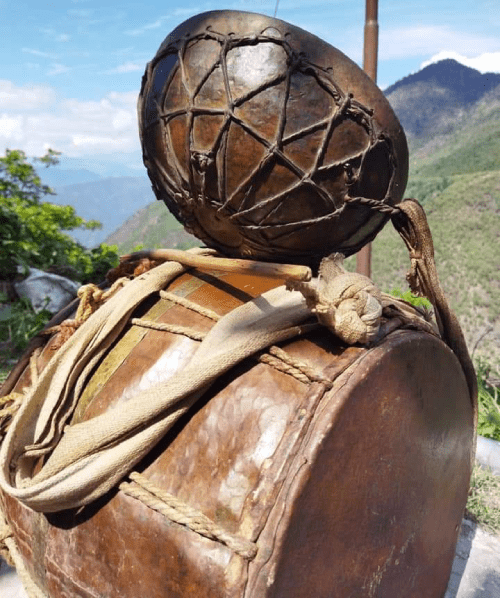

Depending on their age, Garhwali men typically dress either a kurta and pyjama or a kurta and churidar. In the neighbourhood, this is the most typical outfit. The younger guys wear this together with a topi, while the older men wear pagadis to be warm. After the influence of the British, more men began to wear suits. Wool is utilised for clothing in colder regions and cotton is used for clothing in warmer parts, depending on the local climate. The traditional wedding dress for the groom is still a yellow dhoti and kurta.
FOOD
A local food from the state of Uttarakhand is called garhwali cuisine. Typically grain and cereal based, composed of basic ingredients, and prepared using the best cooking techniques, minimum seasoning, and simple temperings to create savoury, satiating meals. Garhwali cuisine uses a balanced amount of fats in its recipes, using ghee to flavour lentils, mustard oil for greens, and vegetable oil for
other foods. Few spices are utilised. Asafeotida, ginger, garlic, and chilies are favourites. Garhwali cuisine is unique because of a few regional indigenous spices. In a same way, jakhiya, a tiny seed that resembles mustard, is used to season food, giving it a delicious, nutty bite. And a common herb for tempering dals is jambu, also known as pharan. Some recipes including chutneys also use bhanjeera and bhaang (hemp) seeds.
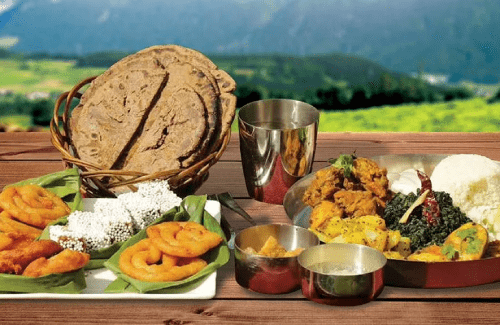
Traditional grains like jhangora (barnyard millet), which are turned into savoury and sweet porridges, provide the starch for the cuisine. Rotis with red rice made from unpolished mandua (finger millet) flour. Later came corn, wheat flour, and white basmati rice. Protein is found in a dizzying array of pulse, lentil, and lentil dishes.