Adi Shankaracharya in Uttarakhand
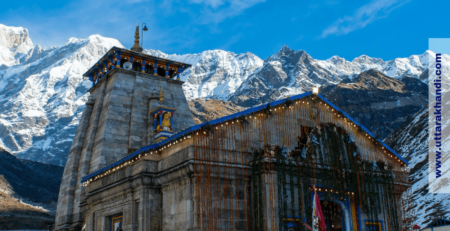
Adi Shankaracharya visited Uttarakhand to revive Hinduism and re-establish the Char Dham pilgrimage. He founded the Jyotirmath Peeth in Joshimath and renovated the Kedarnath Temple. His spiritual journey in the Himalayas reinforced Advaita Vedanta, leaving a lasting legacy. His samadhi is believed to be in Kedarnath.
Adi Shankaracharya visited Uttarakhand in the 8th century CE to revive Hinduism and re-establish pilgrimage traditions. He played a crucial role in restoring the Kedarnath and Badrinath temples, reinforcing their spiritual significance. He also founded the Jyotirmath Peeth in Joshimath, a key center for Advaita Vedanta teachings. His visit strengthened the Char Dham Yatra, making it a major Hindu pilgrimage. It is believed that he attained Mahasamadhi in Kedarnath at the age of 32. His legacy continues through these sacred sites, which attract millions of devotees every year.
🚩 Brahman alone is real, the world is an illusion, and the individual self is not different from Brahman – Adi Shankaracharya
Adi Shankara, also known as Adi Shankaracharya, was a Hindu philosopher, theologian, and spiritual reformer who lived during the 8th century CE (traditionally dated 788–820 CE). At a young age, he revived Hinduism and Vedic traditions, which were declining due to the influence of Buddhism and Jainism. He is best known for Advaita Vedanta, a non-dualistic school of philosophy that teaches that the individual soul (Atman) and the ultimate reality (Brahman) are one.
🚩 Fact: He traveled across India by foot before the age of 32, debating scholars and re-establishing Hindu temples.
Early Life and Birth
-
Birthplace: Kaladi, Kerala, India
-
Year of Birth: 788 CE (traditional belief)
-
Parents: Shivaguru and Aryamba
-
Caste: Nambudiri Brahmin
-
Age when he mastered the Vedas: 8 years old
Adi Shankara was born in Kaladi, Kerala, to Shivaguru and Aryamba, who were devoted to Lord Shiva. His parents prayed for a son, and according to legend, Lord Shiva blessed them with Shankara, who was destined to become a Jagadguru (world teacher).
🚩 Fact: His father passed away when he was just three years old, making his mother his sole caretaker.
Adi Guru Shankaracharya Visit to Uttarakhand: A Journey of Spiritual Revival
His visit to Uttarakhand was a landmark event in Indian religious history, as he not only re-established ancient pilgrimage traditions but also reinforced the spiritual significance of this sacred land. Uttarakhand, known as Devbhoomi (Land of the Gods), became an integral part of his spiritual mission, where he revived key Hindu temples, organized monastic institutions, and solidified pilgrimage routes that remain vital even today.
Shankaracharya Age During His Visit
Adi Shankaracharya is believed to have lived for only 32 years (788–820 CE). Despite his short lifespan, his contributions to Hindu philosophy and religious practices were immense. He undertook his spiritual journey at a very young age, leaving home at eight to become a monk. By the age of 12, he had mastered the Vedas, and by 16, he had composed profound commentaries on Hindu scriptures. His visit to Uttarakhand likely occurred between his late 20s and early 30s, when he was at the peak of his mission to revive Sanatan Dharma. His travels through the Himalayas were part of his broader effort to restore ancient temples and ensure that spiritual learning centers flourished.
Sacred Places Associated with Adi Shankaracharya in Uttarakhand
1.Badrinath Dham: Restoring the Seat of Lord Vishnu
Shankaracharya is credited with re-establishing the Badrinath Temple, one of the four Char Dhams (sacred pilgrimage sites) in Hinduism. The temple, dedicated to Lord Vishnu as Badri Vishal, had lost its importance over time, and idol worship had diminished.
-
Shankaracharya retrieved the idol of Lord Badri Vishal from the Narad Kund, a natural hot water spring, and reinstalled it inside the temple.
-
He reorganized the priesthood, ensuring that only Brahmins from Kerala (Nambudiri priests) would perform the rituals, a tradition that continues to this day.
-
He re-established the Char Dham Yatra, making Badrinath a central part of this pilgrimage circuit.
-
His efforts ensured that the temple remained active as a major religious site for Hindus from all over India.
Even today, before the temple closes for winter, the idol is ceremoniously taken to Joshimath, a tradition said to have been started by Shankaracharya himself.
2.Kedarnath: The Journey to Shiva’s Abode
Adi Shankaracharya is also believed to have visited and revived the Kedarnath Temple, one of the twelve Jyotirlingas (sacred shrines of Lord Shiva).
-
At the time of his visit, the temple was in disrepair, and rituals were irregular. He revived Vedic traditions and made Kedarnath one of the most important pilgrimage sites.
-
He composed hymns in praise of Lord Shiva, strengthening the philosophical connection between Shiva and the teachings of Advaita Vedanta.
-
It is believed that he established a monastic system to oversee the temple’s administration and ensure that rituals continued in a structured manner.
-
The Kedarnath shrine became an essential stop in the Panch Kedar pilgrimage, a journey across five Shiva temples in Uttarakhand.
Shankaracharya visit to Kedarnath cemented its status as a divine energy center, attracting millions of devotees even today.
3. Jyotirmath (Joshimath): Establishing a Matha for Vedantic Teachings
One of Shankaracharya greatest contributions was the establishment of Jyotirmath (Joshimath Peeth), one of the four cardinal mathas (monastic institutions) in India.
-
Jyotirmath was set up as a center for Advaita Vedanta, where monks and scholars could study and propagate Hindu philosophy.
-
It played a crucial role in training spiritual leaders and priests, ensuring the continuous spread of Vedic knowledge.
-
Even today, the Shankaracharya of Jyotirmath is regarded as a key spiritual leader in Hinduism.
-
The matha also serves as the winter seat of Lord Badri Vishal, where the idol from Badrinath is worshipped when heavy snowfall closes the temple.
Shankaracharya establishment of Jyotirmath ensured that Uttarakhand remained a major center for spiritual learning.
4. Tunganath and Rudraprayag: Strengthening the Spiritual Foundations
During his travels, Shankaracharya is believed to have visited Tunganath, the highest Shiva temple in the world, and other spiritually significant places like Rudraprayag, reinforcing the traditions of Sanatan Dharma.
-
Tunganath, a key temple in the Panch Kedar circuit, was revived by him to preserve the spiritual significance of Lord Shiva in the Himalayas.
-
He strengthened the Pancha Prayag (Five Confluences) pilgrimage, which includes Rudraprayag, where the Alaknanda and Mandakini rivers meet.
-
His teachings at these places emphasized the importance of merging worldly knowledge with spiritual wisdom, much like the rivers merging at the confluences.
Shankaracharya Samadhi in Kedarnath
According to legend, Adi Shankaracharya attained Mahasamadhi (a state of conscious departure from the body) near the Kedarnath Temple at the young age of 32.
-
It is believed that he walked into the Himalayan caves near Kedarnath and was never seen again.
-
His final resting place (Samadhi Sthal) remains a revered pilgrimage site near the Kedarnath temple.
-
In 2021, a grand statue of Adi Shankaracharya was unveiled at Kedarnath, symbolizing his everlasting influence on Hindu spirituality.
Impact of His Visit on Uttarakhand
Adi Shankaracharya visit left a profound and lasting impact on Uttarakhand, transforming it into a significant religious hub. His contributions included:
-
Reviving the Char Dham Yatra, which continues to attract millions of devotees every year.
-
Restoring temple worship traditions, ensuring that Hindu rituals remained pure and unbroken.
-
Establishing Jyotirmath, which remains an important center for Hindu philosophy and learning.
-
Strengthening Hindu philosophy through the teachings of Advaita Vedanta, promoting the idea that the soul (Atman) and the ultimate reality (Brahman) are one.
-
Preserving pilgrimage routes, many of which still follow the paths he took during his travels.
Adi Guru Shankaracharya contributions to Uttarakhand were instrumental in shaping its religious and spiritual identity. Even today, his legacy lives on in the temples, monastic traditions, and philosophical teachings that continue to guide millions of spiritual seekers.
Renunciation and Becoming a Monk
At the age of 8, Adi Shankara renounced worldly life and set out to find a guru (spiritual teacher). He traveled to the banks of the Narmada River, where he met Guru Govindapada, a great sage. Under Govindapada’s guidance, he learned the secrets of Advaita Vedanta and how to attain self-realization.
🚩 Fact: His mother initially opposed his decision to become a monk, but he convinced her by showing a divine crocodile miracle he stepped into the river, and a crocodile appeared. He told his mother that if she allowed him to take sannyasa, the crocodile would leave him unharmed. She agreed, and the crocodile disappeared.
Shankaracharya Travels and Revival of Hinduism
By the time he was 12 years old, Shankara had become a scholar of Sanskrit and philosophy. He then began traveling across Bharat (India) to debate scholars, correct misinterpretations of Hindu texts, and re-establish temple traditions.
🚩 Fact: By the age of 16, he had written commentaries (Bhashyas) on the Upanishads, Bhagavad Gita, and Brahma Sutras, which remain the foundation of Hindu philosophy today.
Major Literary Works
Adi Shankara was a prolific writer and composed several texts that remain fundamental to Hinduism.
Commentaries (Bhashyas)
-
Brahma Sutra Bhashya – His most significant work, explaining Advaita Vedanta.
-
Bhagavad Gita Bhashya – A commentary aligning the Gita with Advaita philosophy.
-
Upanishad Bhashyas – Commentaries on major Upanishads, such as Isha, Kena, and Katha.
🚩 Fact: His Bhagavad Gita Bhashya is one of the oldest commentaries on the Gita.
Stotras (Devotional Hymns)
-
Bhaja Govindam – Urging people to seek spiritual wisdom over material wealth.
-
Nirvana Shatakam – A poem emphasizing self-realization and liberation.
🚩 Fact: “Bhaja Govindam” was composed in Kashi (Varanasi) after he saw an old man still focused on grammar rules instead of seeking spiritual enlightenment.
Establishment of Four Mathas (Peethas)
To preserve Sanatan Dharma, Shankaracharya founded four monastic centers (mathas) across India. Each matha had a leader who would continue the teachings of Advaita Vedanta.
| Matha Name | Location | Associated Veda |
|---|---|---|
| Jyotirmath | Uttarakhand (North) | Atharva Veda |
| Sharada Peeth | Karnataka (South) | Yajur Veda |
| Govardhan Peeth | Odisha (East) | Rig Veda |
| Dwaraka Peeth | Gujarat (West) | Sama Veda |
🚩 Fact: These mathas continue to function today and are regarded as centers of Hindu learning.
Final Years and Samadhi
At the age of 32, Adi Shankaracharya attained Mahasamadhi (left his mortal body). There are multiple theories regarding the place of his samadhi (final resting place):
-
Kedarnath, Uttarakhand (widely accepted)
-
Kanchipuram, Tamil Nadu (alternative belief)
🚩 Fact: In 2021, a 12-foot statue of Adi Shankaracharya was installed near Kedarnath Temple to honor his contributions to Hinduism.
❓ FAQs on Adi Shankaracharya
✅ Who was Adi Shankaracharya, and why is he important?
🔹 Adi Shankaracharya was a Hindu philosopher, theologian, and spiritual reformer who lived in the 8th century CE. He played a crucial role in reviving Advaita Vedanta and reestablishing Sanatan Dharma (Hinduism) at a time when Buddhism and other philosophies were gaining dominance in India. His teachings emphasized the oneness of the soul (Atman) with the supreme reality (Brahman).
✅ When and where was Adi Shankara born?
🔹 He was born in Kaladi, Kerala, in 788 CE (according to traditional belief). His parents were Shivaguru and Aryamba, who were ardent devotees of Lord Shiva.
✅ What is Advaita Vedanta, and what did Adi Shankaracharya teach?
🔹 Advaita Vedanta is a non-dualistic school of Hindu philosophy that teaches that Brahman (the ultimate reality) is the only truth, and the material world is an illusion (Maya). Adi Shankara taught that the individual self (Atman) is not different from Brahman, and liberation (Moksha) can be attained through self-realization and knowledge (Jnana).
✅ At what age did Adi Shankaracharya take sannyasa (renounce worldly life)?
🔹 He took sannyasa (monastic vows) at the tender age of 8 after convincing his mother and left home in search of a spiritual guru.
✅ Who was Adi Shankaracharya guru?
🔹 His guru was Govindapada, a great sage and disciple of Gaudapada, who taught him the deep secrets of Vedanta philosophy. He met him on the banks of the Narmada River and stayed with him for several years, mastering the scriptures.
✅ What are the four Mathas (Peethas) established by Adi Shankaracharya?
🔹 To ensure the preservation of Hindu philosophy and teachings, he established four monastic centers (Mathas) in India, each responsible for different Vedic traditions:
🔸 Jyotirmath (Uttarakhand – North) – Governs Atharva Veda
🔸 Sharada Peeth (Karnataka – South) – Governs Yajur Veda
🔸 Govardhan Peeth (Odisha – East) – Governs Rig Veda
🔸 Dwaraka Peeth (Gujarat – West) – Governs Sama Veda
✅ What were Adi Shankaracharya major literary contributions?
🔹 He wrote detailed commentaries (Bhashyas) on key Hindu scriptures, including:
🔸 Brahma Sutras – Systematic explanation of Vedanta philosophy
🔸 Bhagavad Gita – Commentary on the teachings of Lord Krishna
🔸 Principal Upanishads – Explained deep spiritual knowledge
🔹 He also composed devotional hymns and stotras like:
🔸 Bhaja Govindam – A call to renounce material desires
🔸 Nirvana Shatakam – A powerful expression of Advaita philosophy
✅ How did Adi Shankaracharya influence Hinduism?
🔹 He unified various Hindu sects and traditions, reinstated temple worship, and helped preserve Sanatan Dharma at a time when India was witnessing a decline in Vedic traditions due to the rise of Buddhism and Jainism.
✅ What was the significance of Adi Shankaracharya philosophical debates?
🔹 Adi Shankara traveled across India, engaging in scholarly debates to establish the supremacy of Advaita Vedanta. His most famous debate was with Mandan Mishra, a great proponent of the Mimamsa school. Adi Shankara not only won the debate but also convinced Mandan Mishra and his wife, Ubhaya Bharati, to become his disciples.
✅ Where did Adi Shankaracharya attain Mahasamadhi?
🔹 Adi Shankara is believed to have left his mortal body at Kedarnath at the age of 32. However, some accounts suggest he spent his final days in Kanchipuram, Tamil Nadu.
✅ What is Adi Shankaracharya legacy today?
🔹 His teachings continue to influence Hindu philosophy and spirituality. Many organizations, including the Ramakrishna Mission, Chinmaya Mission, and ISKCON, draw inspiration from his works. In 2021, a 12-foot statue of Adi Shankara was installed at Kedarnath in his honor.
✅ Did Adi Shankaracharya visit Uttarakhand?
🔹 Yes, Adi Shankaracharya traveled across India and visited Uttarakhand, where he played a significant role in reviving Hinduism and establishing spiritual centers.
✅ What was the purpose of Adi Shankaracharya visit to Uttarakhand?
🔹 He came to re-establish Sanatan Dharma, revive Vedic traditions, and restore temples that had been neglected. His journey was also aimed at promoting Advaita Vedanta and unifying Hindu beliefs.
✅ Which important places did Adi Shankaracharya visit in Uttarakhand?
🔹 He traveled to various sacred sites, including:
🔸 Kedarnath – Where he attained Mahasamadhi
🔸 Badrinath – Revived the Badrinath temple and reinstated Lord Vishnu’s idol
🔸 Jyotirmath (Joshimath) – Established one of the four main mathas (peethas)
🔸 Haridwar & Rishikesh – Spread Advaita Vedanta philosophy
✅ What did Adi Shankaracharya do at the Kedarnath Temple?
🔹 He revived and restored the Kedarnath Temple, which had been in ruins. He helped bring back its spiritual importance and ensured the practice of daily worship continued.
✅ Did Adi Shankaracharya attain Mahasamadhi in Uttarakhand?
🔹 Yes, according to traditional beliefs, Adi Shankaracharya attained Mahasamadhi at Kedarnath at the age of 32. A Shankaracharya Samadhi Shrine is located behind the Kedarnath temple in his honor.
✅ What is the significance of Jyotirmath in Uttarakhand?
🔹 Jyotirmath (Joshimath) is one of the four mathas established by Adi Shankaracharya. It is the spiritual and learning center of Atharva Veda and continues to be an important pilgrimage site.
✅ How did Adi Shankaracharya contribute to the Badrinath Temple?
🔹 He rediscovered Lord Vishnu’s idol in the Alaknanda River and placed it back in the Badrinath temple. He also organized priests (Rawal) to maintain daily worship.
✅ What impact did Adi Shankaracharya visit have on Uttarakhand’s spiritual heritage?
🔹 His visit revived many ancient temples, pilgrimages, and Vedic traditions. Even today, his influence can be seen in the Char Dham Yatra, which he helped re-establish.
✅ Is there a statue of Adi Shankaracharya in Uttarakhand?
🔹 Yes, in 2021, a 12-foot statue of Adi Shankaracharya was installed at Kedarnath to honor his contributions to Hinduism.
🚩 Fact: Adi Shankaracharya spiritual journey in Uttarakhand helped shape it as the Land of Gods (Devbhoomi) and strengthened its position as a sacred pilgrimage destination.
Adi Shankaracharya visit to Uttarakhand was a defining moment in Hindu spiritual history. His contributions in reviving Sanatan Dharma, restoring temples, and spreading Advaita Vedanta continue to shape the religious and philosophical landscape of India. By re-establishing Kedarnath, Badrinath, and Jyotirmath, he ensured that Uttarakhand remained a sacred center of pilgrimage and spiritual learning. His legacy lives on, inspiring seekers and devotees who visit these holy sites to this day. The Shankaracharya Samadhi at Kedarnath stands as a symbol of his wisdom, devotion, and unwavering commitment to Dharma.