About Uttarakhand – Dev Bhumi Uttarakhand
Uttarakhand, a state in northern India crossed by the Himalayas, is known for its Hindu pilgrimage sites. Rishikesh, a major centre for yoga study, was made famous by the Beatles’ 1968 visit. The city hosts the evening Ganga Aarti, a spiritual gathering on the sacred Ganges River. The state’s forested Jim Corbett National Park shelters Bengal tigers and other native wildlife.
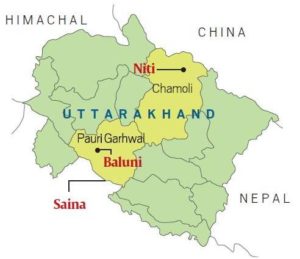
Uttarakhand was formed on the 9th November 2000 as the 27th State of India, when it was carved out of northern Uttar Pradesh. Located at the foothills of the Himalayan mountain ranges, it is largely a hilly State, having international boundaries with China (Tibet) in the north and Nepal in the east. On its north-west lies Himachal Pradesh, while on the south is Uttar Pradesh. It is rich in natural resources especially water and forests with many glaciers, rivers, dense forests and snow-clad mountain peaks.
It is blessed with a rare bio-diversity, inter-alia, 175 rare species of aromatic & medicinal plants are found in the State. It has almost all major climatic zones, making it amenable to a variety of commercial opportunities in horticulture, floriculture and agriculture. It has a vast tourism potential in adventure, leisure, and eco-tourism.Char-dhams, the four most sacred and revered Hindu temples of Badrinath,Kedarnath, Gangotri and Yamunotri are nestled in the mighty mountains. It’s truly God’s Land (Dev Bhoomi). Dehradun is the Capital of Uttarakhand. It is one of the most beautiful resort in the submountain tracts of India, known for its scenic surroundings. The town lies in the Dun Valley, on the watershed of the Ganga and Yamuna rivers.
Uttarakhand is a very popular pilgrimage site, seeing as it is the originating spot of the Ganga and the Yamuna, two of the most sacred rivers for Hindus. Uttarakhand is home to the Char Dhams, which are four of the most pious sites of pilgrimage revered by the Hindus ? Gangotri, Yamunotri, Kedarnath, and Badrinath. Thousands of tourists visit Uttarakhand annually to pay homage to the Char Dhams.Ancient temples, forest reserves, national parks, hill stations, and mountain peaks welcome you in the calm, cooling air of Uttarakhand and the joy doubly increases as we reveal that you can visit some of the famous hill stations of India in Uttarakhand. Mussoorie, Nainital, Dhanaulti, Lansdowne, Sattal, Almora, Kausani, Bhimtal, and Ranikhet are ever embracing hill stations in the state best for all kinds of trips be it a family holiday or a honeymoon.
What is Uttarakhandi?
Uttarakhandi is an online platform showcasing Uttarakhand’s rich culture, cuisine, education, entertainment, events, and vibrant people. It offers an in-depth exploration of the state’s unique heritage, natural beauty, and spiritual essence. Read More
Uttarakhandi is a vibrant platform dedicated to celebrating the culture, tourism, and lifestyle of Uttarakhand. It offers a unique blend of information on the traditions, festivals, and local customs of both Garhwal and Kumaon. From exploring the region’s rich folklore and music to covering the latest news and events, Uttarakhandi connects people to the heart of Uttarakhand. It serves as a window into the diverse heritage of the state, providing insights into Garhwali and Kumaoni culture while keeping the community updated with all the latest happenings.
The state is also a hub for adventure tourism and pilgrimage, attracting millions of visitors every year. Below are some commonly asked questions and their detailed answers to help you learn more about this incredible state:
What is the capital of Uttarakhand?
The capital of Uttarakhand is Dehradun. It is situated in the Doon Valley, surrounded by the Shivalik Hills. Dehradun is known for its scenic beauty, pleasant climate, and being the gateway to the hill stations of Uttarakhand like Mussoorie.
What is the capital of Uttarakhand?
The capital of Uttarakhand is Dehradun. It is situated in the Doon Valley, surrounded by the Shivalik Hills. Dehradun is known for its scenic beauty, pleasant climate, and being the gateway to the hill stations of Uttarakhand like Mussoorie.
Does Uttarakhand have 2 capitals?
Yes, Uttarakhand has 2 capitals. They are the summer capital at Gairsain and winter capital at Dehradun.
Why is Uttarakhand called “Dev Bhoomi”?
Uttarakhand is known as “Dev Bhoomi” or the “Land of Gods” due to its many Hindu pilgrimage sites like Kedarnath, Badrinath, Haridwar, and Rishikesh, attracting millions of devotees annually.
Which is the largest city in Uttarakhand?
Dehradun is the capital and the largest city of the Indian state of Uttarakhand. It is also the most populated city in the state.
When was the state of Uttarakhand formed?
Uttarakhand was formed on November 9, 2000, when it was carved out of the northern part of Uttar Pradesh. It was created primarily to bring administrative attention to the hilly and remote areas of the region.
What was Uttarakhand’s former name?
Before it became a state, Uttarakhand was known as Uttaranchal. The name was changed to Uttarakhand in 2007, which means ‘Northern Land,’ reflecting the state’s location in the northern part of India.
What is the state bird of Uttarakhand?
The state bird of Uttarakhand is the Himalayan Monal (Lophophorus impejanus). This bird is known for its vibrant and colorful plumage and is found in the higher altitudes of the state.
What is the state animal of Uttarakhand?
The state animal of Uttarakhand is the Musk Deer (Moschus chrysogaster). It is an elusive species found in the higher altitudes of the state, particularly in the mountainous regions.
What is the state flower of Uttarakhand?
The state flower of Uttarakhand is Brahma Kamal (Saussurea obvallata). This beautiful flower is found in the high-altitude areas of the Himalayas and is sacred to Hindus.
What is the state tree of Uttarakhand?
The state tree of Uttarakhand is Buransh (Rhododendron arboreum). It is known for its striking red flowers and is found in the hills of Uttarakhand, symbolizing the beauty and richness of the state’s flora.
Which famous religious site is located in Uttarakhand?
Uttarakhand is home to many famous religious sites, with Kedarnath, Badrinath being one of the most well-known. Kedarnath is part of the Char Dham Yatra, which is a sacred pilgrimage for Hindus.
Name a major lake in Uttarakhand.
Naini Lake, located in Nainital, is one of the most famous lakes in Uttarakhand. The lake is surrounded by hills and is a popular spot for boating and tourism.
Which famous national park is located in Uttarakhand?
Jim Corbett National Park is located in Uttarakhand and is one of the oldest national parks in India. It is famous for its Bengal tigers and rich biodiversity, making it a significant tourist destination.
Who was the first Chief Minister of Uttarakhand?
The first Chief Minister of Uttarakhand was Nityanand Swami. He served from 2000 to 2001, following the formation of the state.
How many districts are there in Uttarakhand?
Uttarakhand is divided into 13 districts. These districts are further divided into two regions, Garhwal and Kumaon, each of which has its distinct cultural and geographical characteristics.
What is the highest peak in Uttarakhand?
Nanda Devi is the highest peak in Uttarakhand, standing at 7,816 meters above sea level. It is the second-highest peak in India and is part of the Garhwal Himalayas.
What is the main folk dance of Uttarakhand?
Click here for info
What is the main folk song of Uttarakhand?
Click here for info
Which major festival is celebrated in Uttarakhand?
Click here for info
What is the main language spoken in Uttarakhand?
Hindi is the principal language spoken in Uttarakhand. However, regional languages such as Garhwali and Kumaoni are also widely spoken, reflecting the state’s diverse cultural heritage.
Which major river flows through Uttarakhand?
The Ganga River, which is one of the most sacred rivers in Hinduism, flows through Uttarakhand. It originates from the Gangotri Glacier and is an essential part of the state’s religious and cultural identity.
What is the largest dam in Uttarakhand?
The Tehri Dam is the largest in Uttarakhand. It is located on the Bhagirathi River and serves as a multi-purpose project for irrigation, hydroelectric power generation, and flood control.
How many divisions are there in Uttarakhand?
Uttarakhand is divided into two administrative divisions: Garhwal and Kumaon. Each division has its own cultural traditions and geographical features.
Which is the longest tunnel in Uttarakhand?
The longest tunnel in Uttarakhand is the Rishikesh–Karnaprayag Railway Tunnel, which is 6,657 meters long. The tunnel is part of a larger project that includes three other tunnels, bridges, and stations. The project is intended to reduce travel time between Rishikesh and Karnaprayag from seven hours to two hours.
Which is the most famous fort in Uttarakhand?
Pithoragarh Fort is one of the town’s most popular monuments in Uttarakhand. This fort, which is close to the place, offers spectacular views of the Kali Kumaon. According to documents, this fort was built by Gorkhas after the town was invaded in 1789.
Which town in Uttarakhand is known as the ‘City of Lakes’?
Nainital is known as the ‘City of Lakes’ because of its beautiful Naini Lake and several other small lakes in the region. It is a popular hill station for tourists.
What is the main dish famous in Uttarakhand?
Click here for more info
What is the main industry in Uttarakhand?
Tourism is the main industry in Uttarakhand. The state’s natural beauty, religious sites, and adventure activities attract visitors from all over the world.
What is the tallest waterfall in Uttarakhand?
The tallest direct waterfall in Uttarakhand is Tiger Falls, which is 312 ft tall.
Which major religious scripture is associated with Uttarakhand?
The Manas Khand, part of the Skanda Purana, is an important religious scripture associated with Uttarakhand. It describes the sacred geography and pilgrimage sites in the state.
Which is the first university of Uttarakhand?
G.B.Pant University of Agriculture and Technology was established in 1960 as University in erstwhile Uttar Pradesh and Uttarakhand inherits it as the oldest University.
What is the biodiversity of Uttarakhand like?
Uttarakhand is home to a rich array of flora and fauna, including evergreen oaks, rhododendrons, and conifers. Many plants in the state are believed to have significant medicinal value.
What are the famous pilgrimages in Uttarakhand?
Uttarakhand is known as “Devbhumi” (Land of the Gods) due to its numerous sacred sites. Major pilgrimage sites include Kedarnath, Badrinath, Haridwar, and Yamunotri.
Which is the highest Shiva temple in the world?
The Tungnath Temple, located in Uttarakhand, is the highest Shiva temple in the world. It stands at an altitude of 3,680 meters (12,073 feet).
What is Mana Village known for?
Mana Village is located near the Indo-China border and is the last Indian village before the international border. It is famous for its scenic beauty and historical significance.
How many UNESCO heritage sites are there in Uttarakhand?
Uttarakhand, a small province of India, is home to two UNESCO World Heritage Sites Valley of Flowers and Nanda Devi National Park and the Kumbh Mela, a cultural festival inscribed on UNESCO’s Intangible Cultural Heritage list.
What is the highest peak in Uttarakhand?
The highest peak in Uttarakhand is Nanda Devi, which is the highest peak entirely located in India. It stands at an elevation of 7,816 meters (25,643 feet) above sea level.
What is the significance of Nanda Devi National Park?
It is dominated by the peak of Nanda Devi, which rises to over 7,800 m. No people live in the park, which has remained more or less intact because of its inaccessibility. It is the habitat of several endangered mammals, especially the snow leopard, Himalayan musk deer and bharal.
Which rivers originate in Uttarakhand?
Uttarakhand is home to the origins of two of the most sacred rivers in Hinduism – the Ganges and the Yamuna. The Ganges originates from the holy mountain Gangotri, and the Yamuna originates from the Yamunotri glacier.
What is the oldest national park in India?
Jim Corbett National Park, located in the Nainital district of Uttarakhand, is the oldest national park in India. Established in 1936, it was created to protect the Royal Bengal Tiger.
What is the Valley of Flowers famous for?
The Valley of Flowers, located in the Garhwal region of Uttarakhand, is famous for its breathtaking variety of flowers, medicinal plants, and rare species. It is also a UNESCO World Heritage Site and a popular tourist destination.
Where was the first Agricultural University of India established?
The Govind Ballabh Pant University of Agriculture and Technology, established in Pantnagar in 1960, was the first Agricultural University of India. It played a significant role in India’s Green Revolution.
What is the significance of Kedarnath Temple?
The Kedarnath Temple is one of the 12 Jyotirlingas of Lord Shiva and a revered Hindu pilgrimage site located in the Garhwal region of Uttarakhand.
Which language is officially recognized in Uttarakhand?
Uttarakhand is the only state in India that has Sanskrit as its official language.
What is the literacy rate of Uttarakhand?
Uttarakhand has a literacy rate of 79.6%, which is higher than the national average of 74.04% (according to the 2011 census).
What is the significance of Lakshman Jhula?
Lakshman Jhula is a famous suspension bridge in Rishikesh. It is believed to be built at the spot where Lord Lakshman crossed the Ganga River using jute ropes.
What is the Tehri Dam known for?
The Tehri Dam is a multi-purpose rock and earth-fill embankment dam on the Bhagirathi River in New Tehri, Tehri Garhwal district in Uttarakhand, India. With a height of 260.5 m, it is the tallest dam in India and the 13th-tallest dam in the world.
What is the Champawat Tiger known for?
The Champawat Tiger was a man-eating tigress that killed an estimated 436 people in the Kumaon region of India and Nepal between 1900 and 1907.
Where is Mana Village located?
Mana Village in the Chamoli district is the last Indian village before the Sino-Indian border, located just 24 km from the international border.
What is the significance of Hemkund Sahib?
Gurdwara Hemkund Sahib is a Sikh place of worship (gurdwara) and pilgrimage site in Chamoli district, Uttarakhand, India. It is devoted to Guru Gobind Singh (1666–1708), the tenth Sikh Guru, and finds mention in Dasam Granth.